




01. Edit your temporary guardianship without court florida online
Type text, add images, blackout confidential details, add comments, highlights and more.

Type text, add images, blackout confidential details, add comments, highlights and more.

Draw your signature, type it, upload its image, or use your mobile device as a signature pad.

Send guardianship florida via email, link, or fax. You can also download it, export it or print it out.
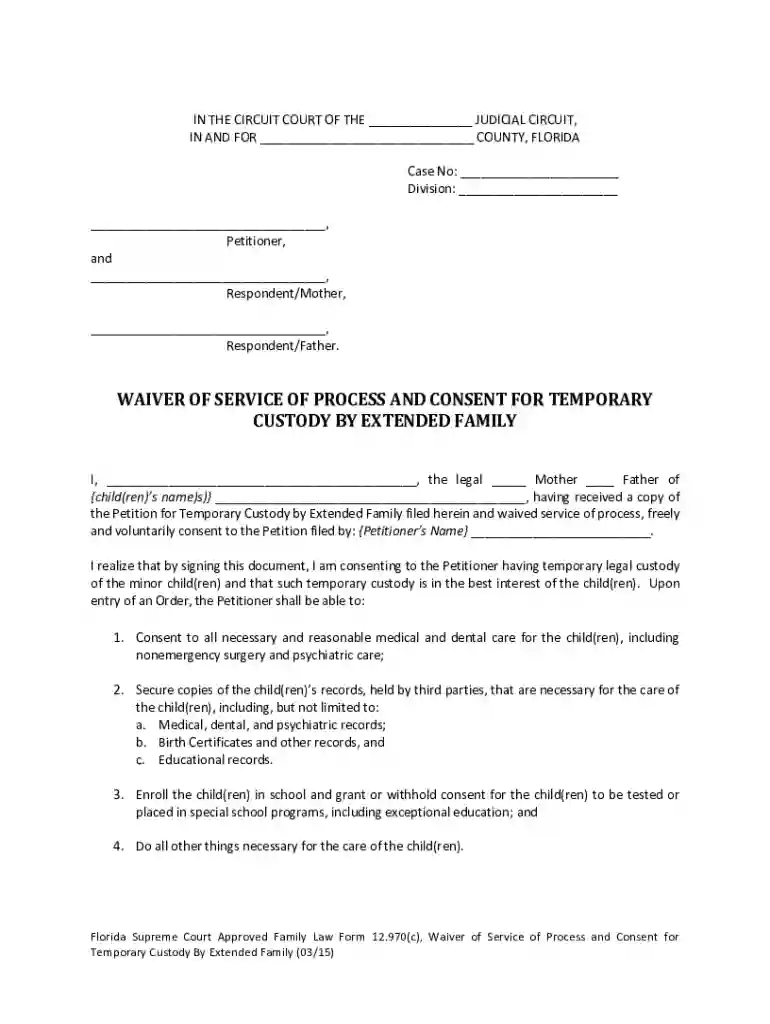
A temporary guardianship agreement form in Florida is a legal document that allows a parent or legal guardian to assign temporary custody of their minor child to another individual, often a family member or close friend. This arrangement is essential in circumstances where the parent is unable to care for the child due to various reasons such as illness, military deployment, or absence for extended periods. The agreement is mainly intended to provide stability and care for the child, ensuring their needs are met during the period of guardianship.
The purpose of the temporary guardianship document is to legally recognize the appointed guardian's authority, granting them specific rights to make decisions regarding the child's welfare, education, and health care. This form serves both legal and practical purposes, establishing an official record that can be referred to in case of disputes or emergencies.
It's crucial to clarify that this guardianship is temporary in nature and typically does not alter the legal status of the parent or guardian. It is designed to be flexible, enabling the parent to revoke or amend the agreement if their situation changes.
Using the temporary guardianship agreement form in Florida involves several steps to ensure that the arrangement is legally binding and recognizes the intended guardianship. Here are the key elements of using this form effectively:
Identification of Parties: The agreement must clearly identify the parent or legal guardian, the temporary guardian, and the child involved. This ensures that all parties are aware of their roles and responsibilities.
Duration of Guardianship: Specify the period during which the temporary guardianship will be in effect. This period should reflect the anticipated duration of the parent's absence but can be extended if necessary.
Rights and Responsibilities: Clearly outline the specific rights granted to the temporary guardian. This includes making decisions regarding the child's health care, education, and general well-being.
Signatures and Notarization: For the agreement to be legally binding, it typically requires the signatures of the parent and the temporary guardian, along with a notary public's acknowledgment. This adds a layer of legal credibility.
Filing with the Court: While not always required, filing the agreement with the local circuit court can help protect the guardian's rights and provide a public record of the arrangement.
Completing the temporary guardianship agreement form requires attention to detail. The process typically follows these structured steps:
Obtain the Form: You can obtain a Florida temporary guardianship agreement form from reliable sources such as legal offices, family law assistance centers, or online legal resources.
Fill in Personal Information: Complete the form with accurate personal details. This includes names, addresses, and contact information for all parties involved, including the child.
Define the Arrangement: Clearly state the terms of the agreement, including the duration of guardianship and the extent of rights and responsibilities granted to the temporary guardian.
Review the Document: It is essential to review the completed form for accuracy and completeness, ensuring that all necessary sections are filled out.
Sign and Notarize: Arrange to have the document signed in front of a notary public. This step is critical for verifying the identities of the signatories and for legal validation.
Distribute Copies: Once notarized, provide copies of the agreement to the temporary guardian and keep a copy for your records. If filed with the court, submit the necessary copies as required.
The temporary guardianship agreement contains several crucial elements that must be included to ensure the document's effectiveness and legal standing. These key components include:
Identification of All Parties: Names and identification numbers (if applicable) for the parent or guardian, temporary guardian, and minor child.
Duration of Guardianship: A clear indication of how long the guardianship will last, including specific start and end dates.
Scope of Authority: This section details what decisions the guardian is authorized to make on behalf of the child, which could range from educational decisions to medical care.
Termination Clause: A provision outlining how the guardianship can be terminated, including conditions under which the parent may revoke the agreement or procedures for extending it.
Signatures and Notary: The signatures of the parent and guardian, accompanied by a notary's acknowledgment, to verify legitimacy and consent.
Understanding the terminology associated with a temporary guardianship agreement is crucial for anyone considering or entering into this legal arrangement. Here are some important terms:
Guardian: An individual appointed to make decisions about the child's welfare and provide care during the agreed-upon guardianship period.
Parental Rights: The legal rights retained by the parent despite the temporary guardianship, emphasizing that the parent's authority is not permanently relinquished.
Custody: This refers to the legal relationship between the guardian and the child during the guardianship period, encompassing physical and legal custody responsibilities.
Revocation: The process by which the parent may withdraw the temporary guardianship agreement before its specified end date.
Notarization: The act of having a notary public witness and authenticate the signatures on the guardianship agreement, lending it legal credibility.
The legal use of the temporary guardianship agreement form in Florida is guided by state laws and regulations. To ensure compliance and effectiveness, consider the following:
State Statutes: Familiarize yourself with Florida statutes governing guardianship to understand the legal framework surrounding temporary guardianship arrangements.
Recognizing Limitations: Understand that this document does not confer permanent custody—it's specifically for temporary situations and needs.
Judicial Authority: In some cases, a court may need to review and approve the guardianship agreement, especially if other legal disputes arise or if there are concerns regarding the suitability of the guardian.
Documentation: Keep a well-documented record of all communications and actions taken regarding the guardianship, as this may be needed if the situation requires judicial intervention.
Legal Counsel: Seek advice from a legal professional specializing in family law to ensure the agreement meets all state requirements and adequately protects all parties’ interests.
We've got more versions of the temporary guardianship without court florida form. Select the right temporary guardianship without court florida version from the list and start editing it straight away!
At DocHub, your data security is our priority. We follow HIPAA, SOC2, GDPR, and other standards, so you can work on your documents with confidence.
This form is to be completed and signed by a parent who agrees to grant temporary custody of a minor child or child(ren) to an extended family member andRead more
We hereby authorize the Guardian to exercise any and all rights and responsibilities and do any and all acts appropriate for a legal Guardian of a minor childRead more


