







Definition & Meaning
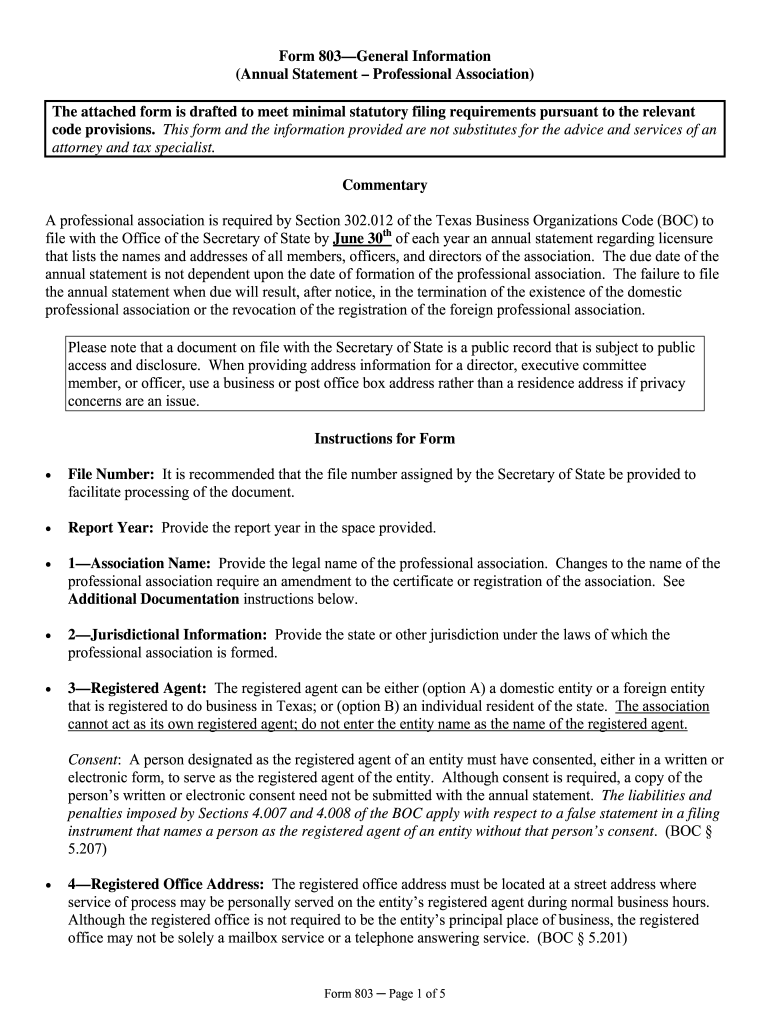
Form 803, known officially as the Annual Statement for Professional Associations in Texas, plays a vital role in maintaining the legal standing of professional associations within the state. Required by the Texas Business Organizations Code, this form involves collecting and submitting fundamental details about the members, officers, and directors of the association. Its primary purpose is to ensure transparency and maintain an accurate public record of the entity's composition and activities. By adhering to this requirement, associations can demonstrate compliance with state regulations, avoiding potential administrative issues.
Steps to Complete the Form 803
Completing Form 803 involves a systematic process that ensures all necessary information is accurately captured.
-
Gather Required Information: Before beginning the form, collect details about the association's members, officers, and directors. This includes names, addresses, and roles within the organization.
-
Follow Instructions Carefully: Each section of Form 803 provides specific instructions on how to fill out the required details. Pay close attention to these directions to avoid mistakes that could cause delays.
-
Fill in the Details: Input the collected information into the corresponding sections of the form. Ensure that the data entered is up-to-date and reflective of the current state of the association.
-
Review for Accuracy: Double-check the completed form to ensure all information is correct and complete. Errors or omissions can lead to processing delays or compliance issues.
-
Signature and Submission: The form must be signed by an authorized individual. Once signed, submit the form via the preferred method, which might vary between online, mail, or in-person submissions depending on the state’s current processing capabilities.
Filing Deadlines / Important Dates
Form 803 must be submitted by June 30 each year. Missing this deadline can lead to significant repercussions, including the potential termination or revocation of the association's registration in Texas. To avoid penalties, associations should mark this date prominently on their calendar and begin preparing their submission well in advance.
- Submission Reminder: It's beneficial to set reminders months before the deadline to allow sufficient time for preparation, completion, and any unforeseen delays.
- Consequence Awareness: Educate all relevant parties within the association about the importance of this deadline to ensure accountability and legal compliance.
Who Typically Uses the Form 803
The primary users of Form 803 are Texas-based professional associations that are required by law to submit annual information updates. This typically includes various professionals organized under associations, such as legal, medical, architectural, and engineering firms. These entities rely on the form to maintain their standing with state regulators, ensuring the continuity of their operations.


Key Elements of the Form 803
Several critical elements must be included in Form 803 to ensure compliance:
- Member Information: Details regarding the current members of the association, including names and contact information.
- Officer and Director Information: Identification of the current officers and directors responsible for governance.
- Changes in Composition: Updates on any changes in the membership or leadership of the organization since the last filing.
- Address and Contact Details: Accurate addresses for official correspondence and notification purposes.
Legal Use of the Form 803
Form 803 serves as a legal document under the Texas Business Organizations Code, providing an official record of a professional association's structure. This documentation is essential for:
- Regulatory Compliance: Ensuring the association adheres to state regulations regarding transparency and public accountability.
- Legal Standing: Maintaining the entity’s registered status within Texas to legally operate within the professional landscape.
- Public Record: Offering a publicly accessible record of association leadership for clients, partners, and regulatory bodies.
Penalties for Non-Compliance
Failing to submit Form 803 by the stipulated deadline can result in significant penalties, reflecting the importance of adherence to state reporting requirements. Consequences of non-compliance may include:
- Revocation of Registration: The association risks losing its legal standing in Texas, which can severely restrict its operations.
- Monetary Fines: Financial penalties may be applied as deterrents to ensure future compliance.
- Reinstatement Costs: Associations that are revoked must undertake a reinstatement process, which can be both time-consuming and costly.
State-Specific Rules for the Form 803
Texas imposes specific rules regarding the filing and content of Form 803, aligning with the state's business organization legal structure:
- Jurisdictional Requirement: Form 803 is applicable only to professional associations registered in Texas.
- Content Requirements: Detailed instructions provided with the form set out the framework for necessary content, ensuring consistent and comprehensive submissions across various entities.
- Privacy Considerations: While public disclosure of certain information is required, the state provides guidance on how to manage sensitive information, such as addresses, to protect privacy.
Form Submission Methods (Online / Mail / In-Person)
Associations can choose from different methods for submitting Form 803, allowing flexibility based on their needs and resources:
- Online Submission: The most convenient method, providing a streamlined process with instant acknowledgment of receipt.
- Mail: Traditional mailing remains available for those who prefer or require this method, needing sufficient lead time for postal delays.
- In-Person: Suitable for those who prefer direct interaction or need to clarify submission queries, although this option might depend on current state office policies regarding public access.
Important Terms Related to Form 803
Understanding key terminology used in Form 803 is crucial for completing it accurately:
- Professional Association: A business entity comprised of licensed professionals organized under Texas law.
- Officer: An individual holding a leadership role within the association, responsible for its strategic direction and decisions.
- Director: Members of the association's board responsible for governance and policy-setting.
- Submission Deadline: Refers to the final date by which the form must be filed to the state to avoid penalties.




