




01. Edit your form online
Type text, add images, blackout confidential details, add comments, highlights and more.

Type text, add images, blackout confidential details, add comments, highlights and more.

Draw your signature, type it, upload its image, or use your mobile device as a signature pad.

Send it via email, link, or fax. You can also download it, export it or print it out.
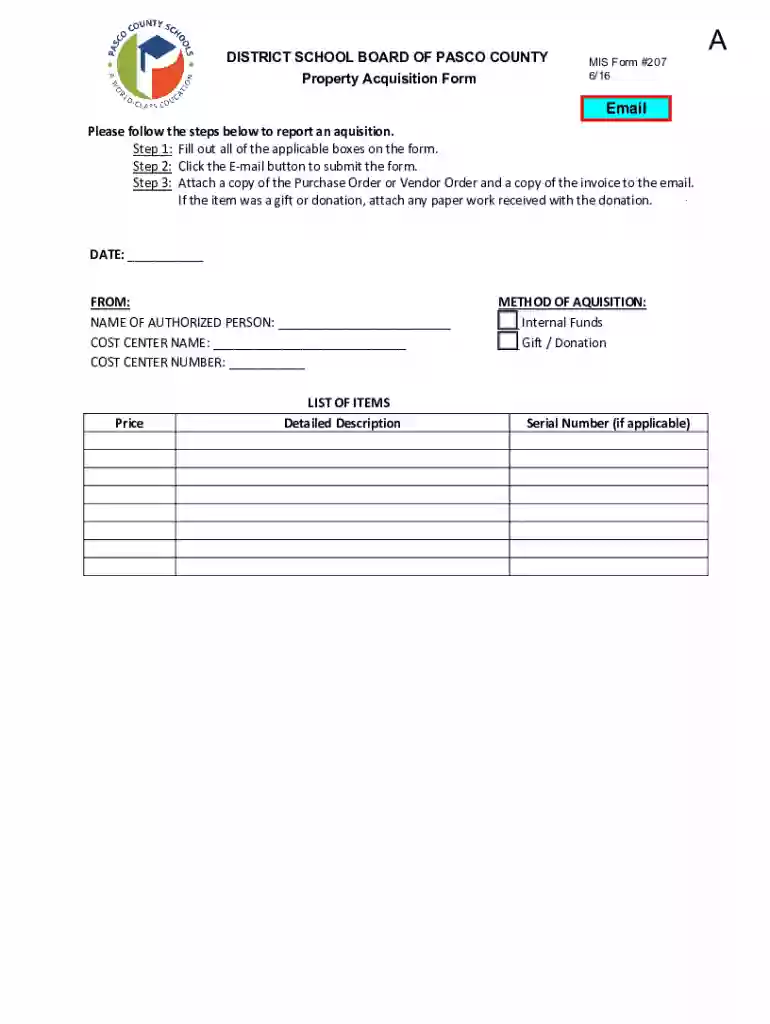
The PDF Property Control Procedures for Pasco County Schools is an essential document detailing the processes involved in managing tangible personal property within the school district. It outlines comprehensive guidelines for tagging, tracking, and accounting for property items. The procedures ensure the district maintains accurate records and complies with legal and financial standards.
Items classified as 'Taggable Property' include various assets that need identification and tracking. The criteria typically involve:
This classification ensures efficient inventory management and accountability for school assets.
The procedures for receiving and tagging items at Central Receiving are critical components:
These steps are essential to maintain an organized inventory and prevent loss or theft.
Implementing guidelines for equipment checkout ensures responsible asset usage by employees and students:
Adhering to these guidelines fosters accountability and efficient resource allocation.
Transferring property within the district involves a structured process:
These steps ensure accurate tracking and assignment of responsibility.
When disposing of assets, follow these procedures to ensure compliance:
Proper disposal practices are vital for regulatory compliance and financial accountability.
Conducting an annual inventory is crucial:
An annual inventory ensures data accuracy and identifies discrepancies early.
The document includes various forms that streamline property management:
Using these forms ensures consistency and thorough documentation.
The key elements provide a framework for effective property management:
These elements are integral to maintaining orderly asset management within the district.
Compliance with legal requirements is foundational:
Legal compliance reduces risks and ensures public accountability.
Practical examples demonstrate effective procedure application:
These real-world scenarios highlight procedure importance and benefits.
The procedures involve various stakeholders:
Understanding these roles fosters collaboration and efficient property management.


Effective integration with document management software enhances efficiency:
Proper software use ensures streamlined operations and improved data accuracy.
While the procedures apply specifically to Pasco County Schools, understanding potential state regulations is vital:
These considerations ensure comprehensive compliance and operational harmony.
By following these detailed sections, the Pasco County Schools can maintain an organized, compliant, and effective asset management system, ensuring transparency and accountability across the district.
We've got more versions of the PDF Property Control Procedures - Pasco County Schools form. Select the right PDF Property Control Procedures - Pasco County Schools version from the list and start editing it straight away!
At DocHub, your data security is our priority. We follow HIPAA, SOC2, GDPR, and other standards, so you can work on your documents with confidence.
This disaster preparedness plan outlines the steps that should be taken before, during, and after a disaster to ensure the safety and well quickly. a detailed
Pasco County Solid Waste Resource Recovery power station is an operating power station of at least 31-megawatts (MW) in Pasco County, Florida, United States


