




01. Edit your telegraphic transfer online
Type text, add images, blackout confidential details, add comments, highlights and more.

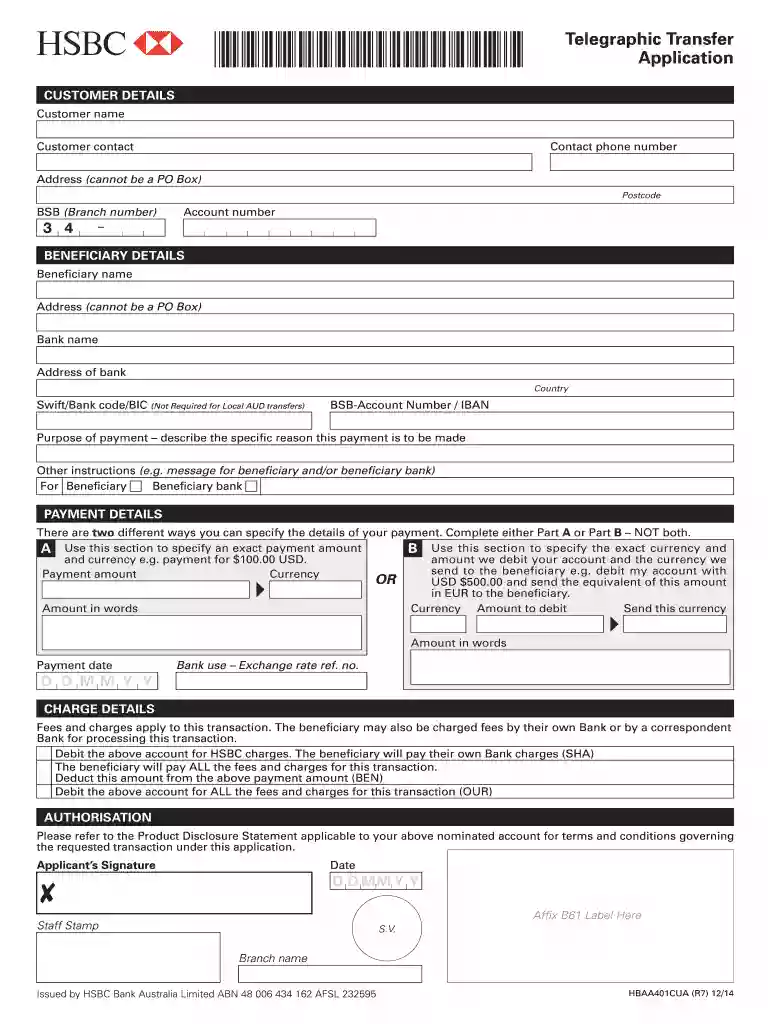
Type text, add images, blackout confidential details, add comments, highlights and more.

Draw your signature, type it, upload its image, or use your mobile device as a signature pad.

Send telegraphic transfer receipt via email, link, or fax. You can also download it, export it or print it out.
A telegraphic transfer receipt is a formal document provided to individuals or businesses when they initiate a telegraphic transfer, commonly referred to as a wire transfer. This receipt serves as proof of the transaction and typically includes vital information such as the sender's and recipient's details, the amount transferred, the currency used, and any applicable fees. It is crucial evidence for both accounting and auditing purposes.
The telegraphic transfer receipt often contains the following key elements:
This receipt not only verifies that a wire transfer has taken place but also provides the details necessary for reconciling accounts and ensuring the accuracy of financial records.
Using a telegraphic transfer receipt can significantly enhance your financial management and record-keeping processes. Here are key steps on how to effectively utilize this receipt:
Document Verification: When you receive your telegraphic transfer receipt, promptly verify that all information is accurate, including sender and recipient details, amount, and transaction reference number.
Record Keeping: Store the receipt in an organized manner, either physically or digitally. Keeping a record helps in tracking your financial transactions for future reference or for accounting purposes.
Compliance and Audit Trail: Utilize the receipt to maintain compliance with financial regulations. If you are subject to audits or financial reviews, having a clear record of wire transfers, validated by the receipt, can facilitate smoother processes.
Tax Documentation: The telegraphic transfer receipt can serve as a supporting document for tax filings if the transaction relates to deductible expenses. Include the receipt with your documentation to substantiate your claims.
Handling Discrepancies: In the event of disputes concerning the transaction, the receipt acts as crucial evidence to support your case. You can refer to the details on the receipt when communicating with banks or financial institutions.
Filling out a telegraphic transfer receipt correctly is essential for ensuring that transfers are processed without delays. Here are the steps to complete the receipt effectively:
Provide Sender Information: Fill in your full name, address, and account number. Ensure that records match those at your bank.
Enter Recipient Information: Include the beneficiary's name, account number, and address. Verify these details with the recipient to avoid transfer issues.
Specify Transaction Amount: Indicate the amount you wish to send, along with the currency type. For instance, specify whether the transaction is in USD or another currency.
Include Details of Fees: Clearly mention any transaction fees that may apply, such as those for international transfers. This ensures transparency regarding the total cost to the sender and recipient.
Authorization: Sign the receipt and date it to authorize the transaction. This step is crucial as it signifies that you consent to the transfer under the stated conditions.
Understanding the terminology used in conjunction with telegraphic transfers is essential for effective communication and management. Below are some critical terms:
A solid understanding of these terms aids in navigating the transfer process smoothly and helps in making informed decisions regarding international and domestic transactions.
The telegraphic transfer receipt is not only a transactional document but also carries legal significance. Its proper use and understanding are crucial to comply with legal and regulatory frameworks. Here are essential points about the legal use of the receipt:
Proof of Transaction: The receipt serves as legal evidence that a transaction has occurred. If disputes arise regarding payment, this document can substantiate claims of payment.
Regulatory Compliance: For businesses, maintaining accurate records of financial transactions, including telegraphic transfers, is vital for compliance with financial regulations, anti-money laundering laws, and taxation requirements.
Contractual Agreements: In situations where payment is tied to contractual obligations (such as business agreements, service payments, or product purchases), the telegraphic transfer receipt can fulfill part of these legal requirements by documenting that payment has been made.
Audit Trail: Having a clear audit trail, supported by telegraphic transfer receipts, can be beneficial in case of financial audits. It establishes an accurate financial history that may be required for legal scrutiny or investigations.
Incorporating these legal aspects into your financial practices ensures that the handling of telegraphic transfer receipts is both compliant and strategic.
Practical application of the telegraphic transfer receipt in real-world scenarios can provide insight into its utility. Here are several examples:
Buying International Goods: A U.S.-based business may need to make a payment to a supplier in another country. The company uses a telegraphic transfer to ensure the supplier receives payment in their local currency. The receipt serves as proof of payment for accounting records and compliance with IRS regulations.
Paying for Services Abroad: An individual hiring a contractor to perform work overseas utilizes a telegraphic transfer for payment. The recipient provides a receipt to document the transaction, which the payer retains for personal record-keeping and possible tax deductions.
Investing in Foreign Markets: Investors making purchases in overseas stock markets may rely on telegraphic transfers to move funds. The receipt provides transaction verification, important for tracking investment capital and compliance with financial regulations.
These examples highlight the diverse scenarios in which a telegraphic transfer receipt plays a foundational role in maintaining effective financial management and compliance.
We've got more versions of the telegraphic transfer form. Select the right telegraphic transfer version from the list and start editing it straight away!
At DocHub, your data security is our priority. We follow HIPAA, SOC2, GDPR, and other standards, so you can work on your documents with confidence.
Dec 13, 2021 Until receipt of the correct EFT information, any invoice shall be deemed not to be a valid invoice. If the EFT information changes afterRead more
If service is made by U.S. Postal Service certified or express mail, the Secretary shall maintain the confirmation of receipt or of attempted delivery, andRead more


