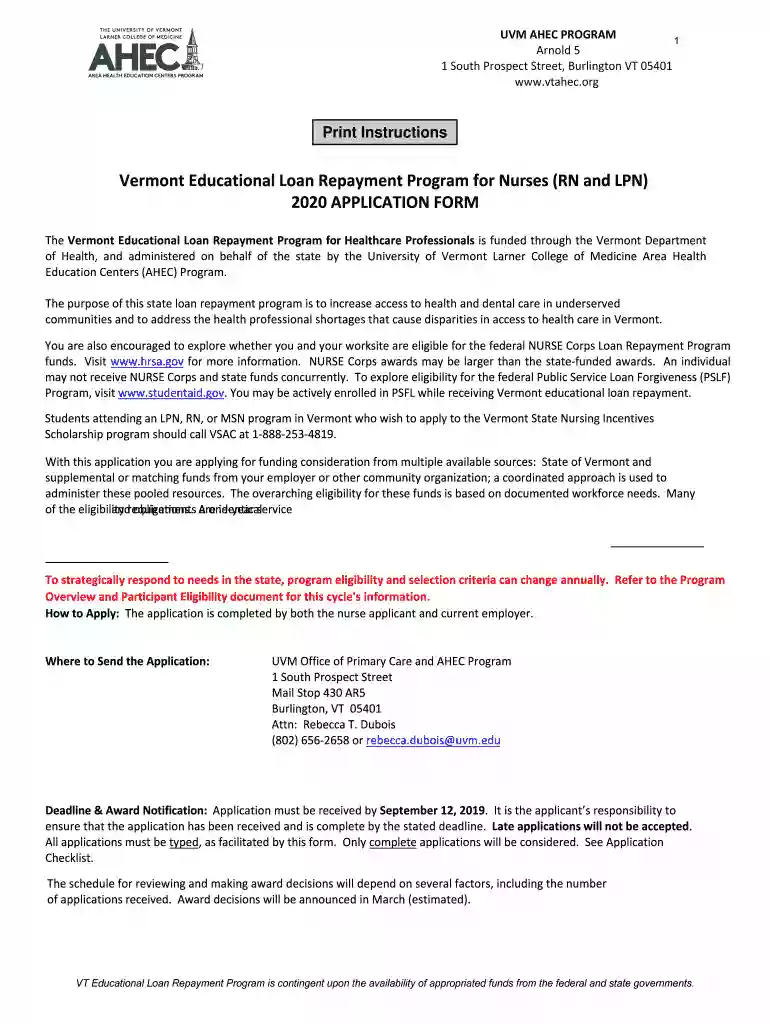
Definition & Meaning
The Area Health Education Centers (AHEC) Program at the Larner College of Medicine at The University of Vermont aims to improve healthcare delivery in rural and underserved areas through educational initiatives. It focuses on enhancing the skills of healthcare professionals and facilitating patient access to medical services in Vermont. This program is critical for bridging the healthcare gap in regions that struggle with access to adequate medical care by fostering collaboration between educational institutions and healthcare facilities.

Key Elements of the AHEC Program
- Educational Support: AHEC provides easy access to clinical training and healthcare educational resources to healthcare professionals in underserved communities.
- Community Engagement: Through partnerships, AHEC engages communities to support local healthcare needs and increase workforce diversity.
- Workforce Development: The program targets the expansion and retention of healthcare professionals in Vermont by working closely with various educational and healthcare institutions.
How to Use the AHEC Program
- Identify Needs: Assess community-specific healthcare needs and areas lacking in medical services.
- Partner with AHEC Centers: Collaborate with regional AHEC centers to address gaps through tailored educational programs and support.
- Access Resources: Utilize AHEC’s educational tools and support for healthcare workforce development and retention strategies in underserved areas.
Who Typically Uses the AHEC Program
- Healthcare Educators: Utilize AHEC resources to enhance educational offerings for training healthcare professionals.
- Medical Students and Residents: Participate in AHEC-supported programs to gain experience in rural and underserved settings.
- Healthcare Professionals: Engage in continuing education opportunities to improve skills and adapt to the specific needs of underserved populations.
Eligibility Criteria
- Geographical Focus: Healthcare providers and facilities situated in underserved or rural areas in Vermont.
- Professional Type: Open to a wide range of healthcare professionals, including nurses, dentists, and physicians.
- Educational Institutions: Schools and colleges involved in healthcare education looking to engage in community-focused health programs.
Steps to Complete the Program
- Application Submission: Interested parties need to submit an acknowledgment form indicating interest in partnering with the AHEC program.
- Participation Approval: Await confirmation of involvement from AHEC coordinators who will outline specific requirements and expectations.
- Implementation: Begin using AHEC resources in line with agreed objectives to improve community healthcare access and education.
- Feedback Process: Engage in regular discussions with AHEC staff to provide feedback and suggest improvements for ongoing initiatives.
Benefits of the AHEC Program at Larner College of Medicine
- Access to cutting-edge medical education and training resources.
- Strengthening of community healthcare services through targeted interventions.
- Increased opportunities for healthcare professionals to gain rural healthcare experience.
State-Specific Rules and Implementation
- Vermont Medicaid Policies: Programs must align with state healthcare regulations, such as Vermont Medicaid guidelines, to qualify for certain state-sponsored programs.
- Rural Health Objectives: Initiatives should align with Vermont's healthcare development goals, emphasizing the enhancement of services in rural areas.
Penalties for Non-Compliance
While the AHEC program is designed to support rather than penalize, participants are expected to fulfill all agreed responsibilities. Non-compliance, such as failure to reach educational objectives or misuse of resources, can result in program adjustment or removal of access to certain resources.
Important Dates and Deadlines
- Annual Planning Sessions: Typically conducted before the start of the academic year to align objectives and prepare resources.
- Quarterly Progress Reviews: These involve evaluation sessions held every quarter to assess progress and realignment where necessary.