
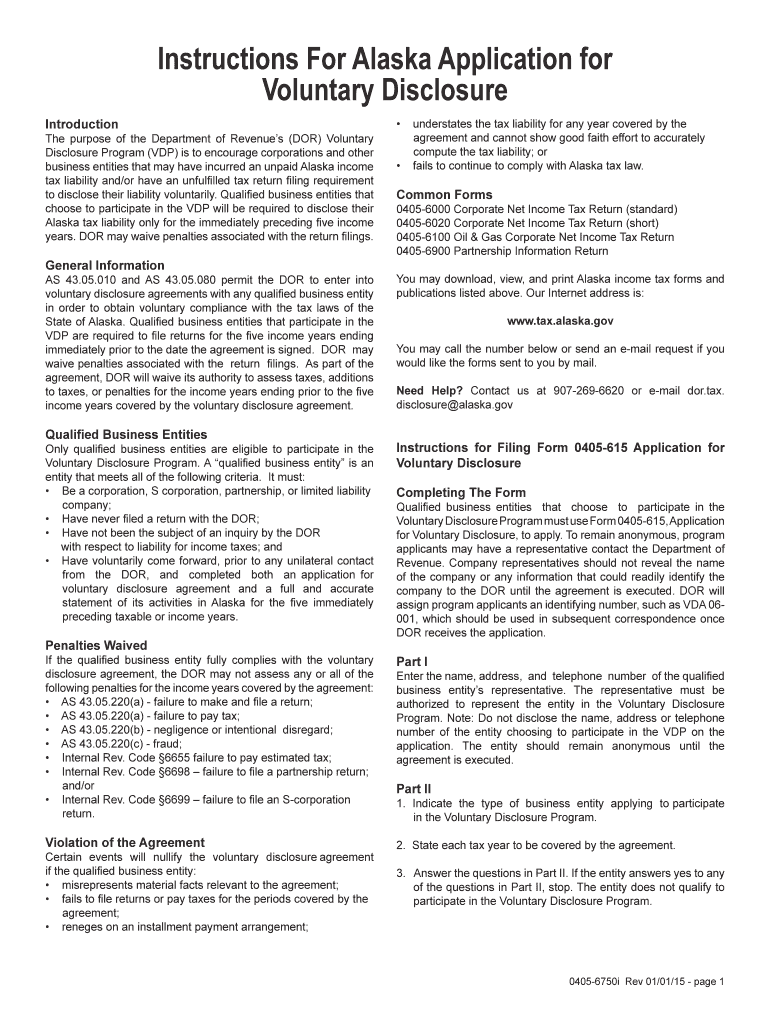







Definition and Meaning of Alaska Tax Forms
Alaska tax forms, such as those required for compliance with the Alaska Department of Revenue, are documents used by individuals and businesses to report their income and financial activities within the state. These forms are crucial for maintaining transparency in financial transactions and ensuring that all taxable income is properly reported. The Alaska Voluntary Disclosure Program (VDP), for example, helps entities rectify their tax liabilities by voluntarily disclosing unpaid taxes or unfiled returns, thus avoiding penalties.
How to Use Alaska Tax Forms
Using Alaska tax forms involves several steps, from identifying the correct form based on your tax situation to filling out the required information accurately. The forms typically require details about income, deductions, and credits applicable under Alaska tax law. While completing these forms, it’s crucial to understand the specific instructions provided for each section to ensure compliance. For entities considering the VDP, it’s important to provide all relevant information for the past five income years to take advantage of penalty waivers.
How to Obtain Alaska Tax Forms
Alaska tax forms can be obtained through various channels to accommodate different preferences and circumstances. They are readily available online via the Alaska Department of Revenue’s official website, providing a convenient option for digital access. Additionally, paper copies can be requested by mail or picked up at local revenue offices. For those preferring in-person assistance, visiting an Alaska Department of Revenue office is recommended, where staff can provide guidance on form selection and filing requirements.
Steps to Complete Alaska Tax Forms
- Identify the Right Form: Determine which form applies to your situation, such as income tax, business entity, or voluntary disclosure.
- Gather Required Information: Collect financial records, previous tax returns, and documentation detailing income and deductions.
- Fill Out the Form: Complete the form by entering all necessary information. Ensure accuracy to prevent delays or issues.
- Review and Verify: Double-check entries for correctness and ensure all sections are completed.
- Submit the Form: Choose an appropriate submission method, such as online filing, mailing, or in-person delivery.
Who Typically Uses Alaska Tax Forms
Alaska tax forms are utilized by a wide range of individuals and entities, including residents with income from Alaska, businesses operating within the state, and those with specific financial interests subject to state taxes. Corporations, partnerships, and LLCs particularly benefit from these forms to stay compliant with state tax obligations. The Voluntary Disclosure Program is particularly beneficial for entities that have unreported tax liabilities and wish to rectify their compliance issues without incurring penalties.
Important Terms Related to Alaska Tax Forms
- Voluntary Disclosure Program (VDP): A process that allows taxpayers to come forward voluntarily to report previously unpaid taxes, potentially avoiding penalties.
- Income Tax: Tax levied on personal or business income within the state.
- Business Entity Types: Categories like LLC, Corporation, or Partnership that determine specific tax filing requirements and obligations.
Legal Use of Alaska Tax Forms
Tax forms in Alaska are legal documents mandated by the state for the accurate reporting of income and tax liabilities. These forms should be used responsibly and truthfully, as falsification or omission of necessary information can lead to legal penalties or sanctions. The correct usage of the forms ensures compliance with Alaska’s tax laws and aids in maintaining the integrity of financial reporting.
Key Elements of Alaska Tax Forms
- Personal and Business Information: Details such as name, address, and business structure are fundamental to establishing the taxpayer's identity and eligibility.
- Income Reporting: Accurate representation of earnings, whether from employment, investment, or business operations.
- Deductions and Credits: Information on allowable deductions and credits as per Alaska tax code, which can reduce overall tax liability.
State-Specific Rules for the Alaska Tax
Understanding Alaska-specific tax rules is crucial when completing state tax forms. Unlike many other states, Alaska does not impose a state sales tax or income tax on individuals, which can simplify the filing process for residents. However, corporations and business entities must adhere to state regulations and may still be subject to specific taxes, such as the corporate income tax. Being aware of these nuances ensures compliance and avoids unnecessary complications during the filing process.




