
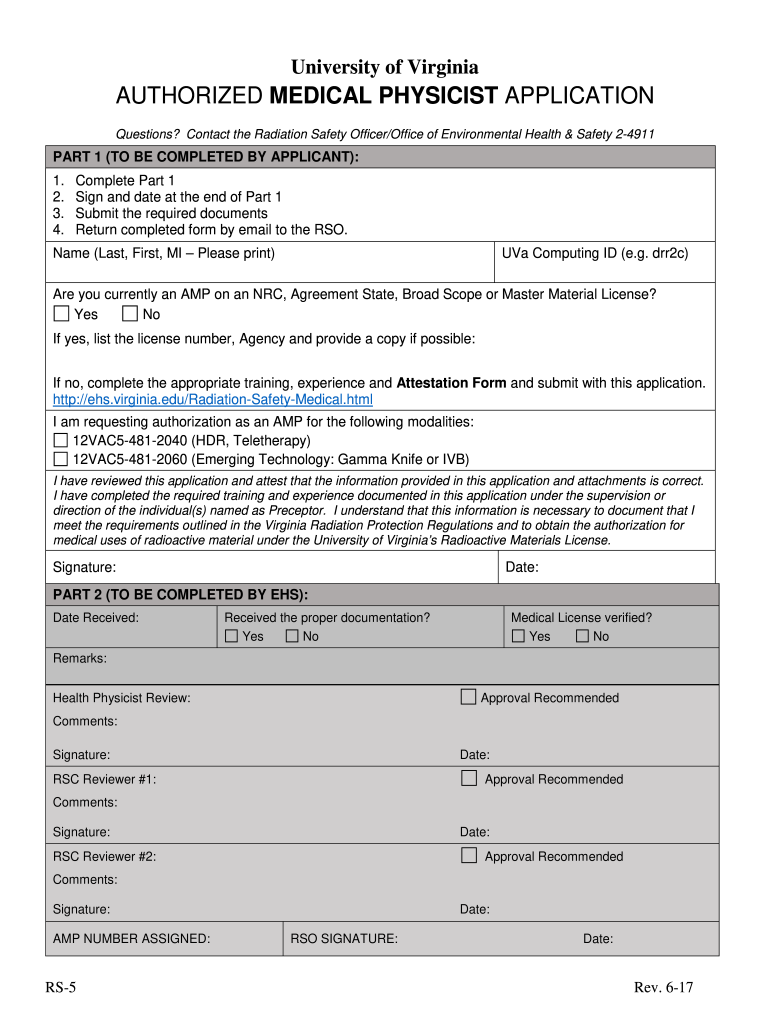







Definition and Meaning of Radiation Safety Officer Qualifications
Radiation Safety Officer (RSO) qualifications are a set of requirements that individuals must meet to oversee the safe use of radiation in medical facilities. The primary role of an RSO is to ensure compliance with federal and state regulations, protecting both staff and patients from unnecessary exposure to radiation. These qualifications encompass educational credentials, work experience, and specific training in radiation safety protocols.
Educational Background
Prospective RSOs typically need a degree in a relevant scientific discipline, such as physics, health physics, or radiological science. Advanced degrees, such as a master's or doctorate, may be preferable in larger or more specialized medical facilities.
Professional Experience
Experience in a medical or scientific field where radiation is used is critical. Many facilities require RSOs to have several years of practical experience, demonstrating competence in managing radiation safety.
Specialized Training
RSOs must complete specialized training programs that focus on radiation physics, safety procedures, regulations, and emergency response. This training needs to be documented and kept current with ongoing professional development.
Steps to Complete the Radiation Safety Officer Qualifications
Achieving RSO qualifications involves several structured steps. Each step ensures that candidates are well-prepared for the responsibilities of the role.
-
Educational Attainment
- Obtain a degree in a relevant field.
- Pursue higher education if necessary, based on the facility's requirements.
-
Experience Gaining
- Secure roles in environments where radiation is used.
- Gain practical, hands-on experience in radiation safety management.
-
Specialized Training Completion
- Enroll in accredited radiation safety courses.
- Update skills with continuing education programs.
-
Certification and Documentation
- Obtain any required certifications from recognized bodies.
- Keep thorough records of all training and certifications.
Key Elements of RSO Qualifications
The qualifications for an RSO are multi-faceted and tailored to ensure comprehensive radiation safety management within medical facilities.
Regulatory Knowledge
Familiarity with federal and state laws governing radiation usage is crucial. This includes understanding the Nuclear Regulatory Commission (NRC) regulations and Occupational Safety and Health Administration (OSHA) guidelines.
Safety Protocol Implementation
RSOs must be adept at developing and implementing safety protocols, including equipment maintenance, safety training programs for staff, and emergency response procedures.
Risk Assessment Skills
Regular risk assessments are required to identify potential sources of radiation leaks or contamination within the facility. Proper assessment ensures timely corrective actions.
Legal Use and Compliance
Legal aspects of RSO responsibilities are guided by stringent compliance obligations. Understanding these is vital to avoid legal repercussions for the facility.
Federal and State Regulations
RSOs play a key role in ensuring compliance with relevant regulations. Regular audits and updates on legal requirements help maintain adherence to standards.
Reporting and Documentation
Maintaining accurate records and submitting reports to regulatory bodies ensures transparency. This is crucial for legal compliance and in the event of inspections.
Required Documents for RSO Qualification
Several documents are integral to the RSO qualification and subsequent practice. These documents demonstrate compliance and preparedness for the role.
Proof of Education
- Copies of degrees and transcripts.
- Certificates from additional relevant education.
Training Certificates
- Documents from completed radiation safety courses.
- Records of continuing professional development.
Work Experience Validation
- Letters from previous employers confirming relevant experience.
- Job descriptions detailing past responsibilities related to radiation safety.
Form Variants and Alternatives
There are instances where different forms or qualifications may be applicable, depending on the facility's size, the type of medical procedures conducted, and the state regulations.
Facility-Specific Requirements
Some facilities may have their own additional requirements or forms that RSOs need to complete. These could involve internal safety protocols unique to their operations.
State-Specific Variants
Each state may have its distinct set of forms or additional certification requirements. Knowledge of these differences is necessary for proper compliance.
Application Process and Approval Time
The process of becoming an RSO involves several steps, and the time required for approval can vary significantly between facilities and states.
Application Submission
- Complete all necessary documentation and forms.
- Submit applications to relevant regulatory bodies.
Approval Timeline
- The duration for application review and approval may vary.
- Facilities often provide a time frame for processing applications, which could range from weeks to months.
Software Compatibility for Managing Radiation Safety
Utilizing relevant software can streamline radiation safety management, helping RSOs efficiently handle their tasks.
Integrated Safety Management Tools
Many facilities employ specialized software to track radiation levels, manage safety protocols, and facilitate compliance reporting.
Compatibility with Document Management Systems
RSOs could benefit from systems like DocHub to manage necessary documentation and ensure secure record-keeping, offering easy access and collaboration for multidisciplinary teams.




