




01. Edit your form online
Type text, add images, blackout confidential details, add comments, highlights and more.

Type text, add images, blackout confidential details, add comments, highlights and more.

Draw your signature, type it, upload its image, or use your mobile device as a signature pad.

Send it via email, link, or fax. You can also download it, export it or print it out.
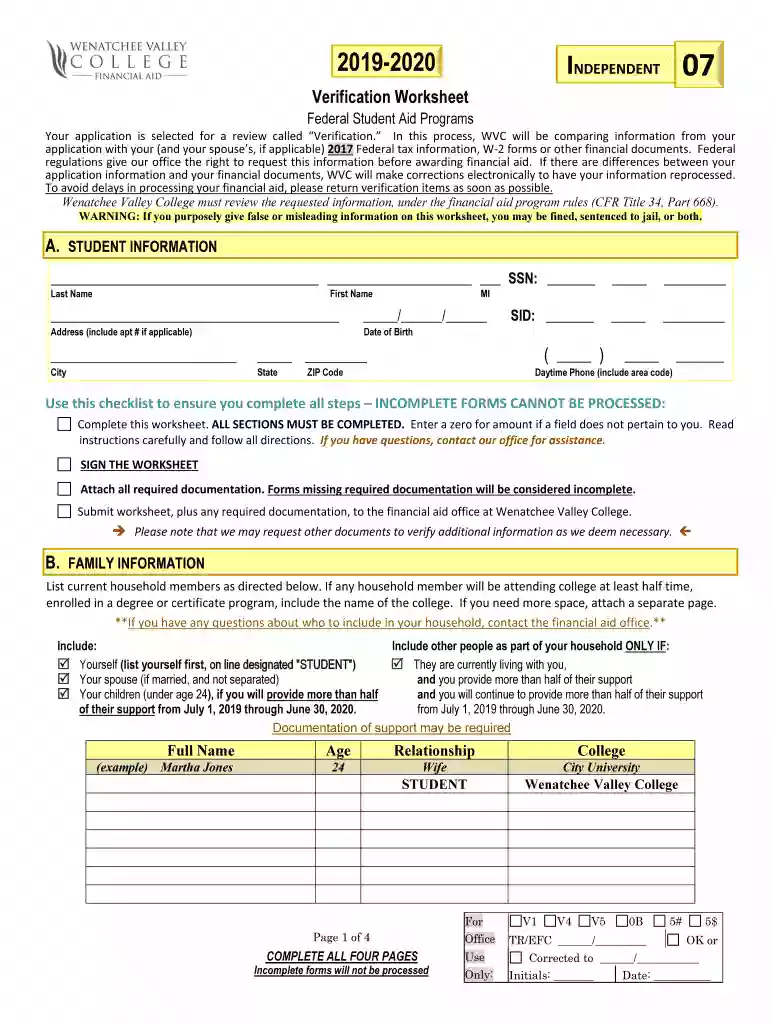
The FAFSA verification process is a common procedure in the financial aid landscape, ensuring that the information provided on your Free Application for Federal Student Aid (FAFSA) is accurate and complete. When selected, you're required to submit documentation to verify the data you reported. This step is crucial for maintaining integrity in the distribution of aid, ensuring that resources are allocated to eligible students based on verified needs.
Obtaining the verification form typically involves receiving notification from your institution or the Department of Education that you have been selected. This notification will provide instructions on accessing the necessary documents, which may be available through your school's financial aid office or via an online portal. Ensure you have credentials ready for any secure platform, as verification requires sensitive data.
Documents required for verification can vary based on what data needs confirmation. Typically, you'll need:
FAFSA verification is a process used predominantly by students applying for financial aid who have discrepancies or specific criteria in their applications. This includes:


FAFSA verification materials can be submitted in multiple ways, depending on school policy:
Ensure you use a secure method, particularly when dealing with sensitive information, such as tax documents.
Failure to comply with FAFSA verification requests can have significant consequences:
The transition to digital submissions has simplified the FAFSA verification process. Digital versions allow for quicker processing times and reduce the risk of lost documentation. However, some institutions may still provide paper options for students unable to access electronic resources. It is advised to use digital formats whenever possible for their efficiency and traceability.
The IRS Data Retrieval Tool plays a critical role in the verification process. It allows applicants to seamlessly import their tax information into the FAFSA application, reducing errors and streamlining verification needs. However, not all tax filers can use this tool, particularly those with complex filings or recent amendments to their tax returns.
Each institution sets specific deadlines for completing the FAFSA verification process. These are crucial for ensuring timely disbursement of financial aid. Missing a deadline may forfeit your ability to receive aid for the semester, making adherence to these timelines essential for all financial aid applicants.
Even if selected for verification, it doesn't necessarily mean you are ineligible for aid. Selection can be random or based on specific criteria such as discrepancies in income reporting. All applicants should be prepared to undergo verification as part of maintaining eligibility for federal student aid programs.

We've got more versions of the What to Do If You're Selected for FAFSA Verification form. Select the right What to Do If You're Selected for FAFSA Verification version from the list and start editing it straight away!
At DocHub, your data security is our priority. We follow HIPAA, SOC2, GDPR, and other standards, so you can work on your documents with confidence.
Apr 2, 2026 If there is a change in a result you have already submitted, you can submit the new code using the above ; and Verification of identity result
If you are selected for Verification, you must complete the process in its entirety before your FAFSA is considered to be complete. Not everyones FAFSA isRead more
Capella Progress Reward scholarships and other financing opportunities are available to eligible new and returning students. Call us: 1-866-561-9754 Request


