







Definition and Purpose of the Marked Gasoline and Diesel Oil Permit
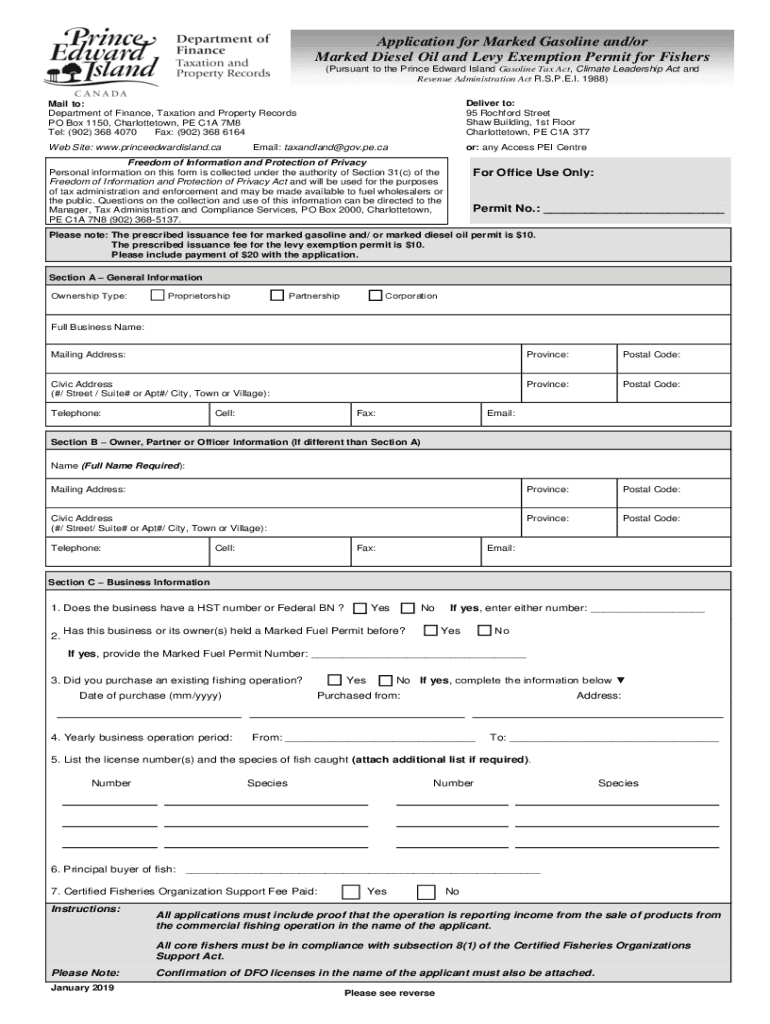
The "Prince Edward Island Canada Application for Marked" refers to an application process for obtaining a permit to use marked gasoline and/or marked diesel oil with a levy exemption permit, primarily aimed at fishers in Prince Edward Island, Canada. The purpose of this permit is to allow qualified individuals and businesses to purchase specialized fuels at a reduced cost for specific qualified activities, such as commercial fishing operations. This application form necessitates thorough information on the applicant’s identity, business operations, and intended fuel use.
Eligibility Criteria for the Permit
Eligibility for the Prince Edward Island Marked Gasoline and Diesel Oil Permit is confined to certain types of users, mainly within the fishing industry, which underscores the importance of understanding who qualifies. Applicants mainly consist of proprietors or entities engaged in commercial fishing activities, as verified by ownership details and business registration information. To qualify, applicants must demonstrate their engagement in eligible activities through documented evidence, possibly including business registration numbers or certifications.


Key Elements of the Application Form
The application form for marked gasoline and diesel oil consists of several key components that applicants need to complete accurately. These components include fields for ownership details, such as the name and contact information of the applicant, business information including business registration number, and specific details about fuel storage and usage. Furthermore, a section on certifications ensures that only those committed to adhering to Prince Edward Island’s regulatory standards complete the form.
Steps to Complete the Application Form
To successfully complete the Prince Edward Island application form for marked fuel permits, applicants are required to go through several steps:
-
Gather Required Information: Collect all necessary documents and details, including business registration info and evidence of qualifying activity.
-
Fill Out the Application: Insert information in all mandatory fields, noting fuel storage plans and usage thoroughly.
-
Payment: Attach the application fee, generally in the amount of $20, as stipulated in the application instructions.
-
Submit the Form: Once completed and double-checked for accuracy, submit the application via the instructed submission methods, ensuring compliance with all stated guidelines.
Legal Use and Compliance with Privacy Regulations
Legal compliance regarding the use of marked fuels is strictly enforced ensuring that marked gasoline and diesel oil are utilized only for allowable activities under the relevant regulations. The process includes adherence to privacy regulations outlined in Prince Edward Island’s laws, signifying that any personal and business information provided is protected under privacy statutes. This legal framework guarantees that applicants’ information is employed solely for the purpose of permit processing.
Important Terms and Conditions
Several terms associated with the application are vital for understanding relational contexts within the application. Terms such as "marked gasoline" and "marked diesel oil" are specific fuel types that are colored or tagged to indicate their tax-exempt status for particular uses. Other crucial notions involve "levy exemption," which refers to the absence of certain taxes typically associated with the fuels’ standard purchase.
Submission Methods: Online, Mail, and In-Person Options
Applicants may possess multiple methods for submitting their Prince Edward Island marked fuels permit application. Common methods include:
- Online Submission: Preparing and submitting scanned documents through official web platforms.
- Mail-In Submission: Sending completed forms and attached documents via postal mail to designated government addresses.
- In-Person Delivery: Hand-delivering the application paperwork to government offices, where it can be processed directly.
Each submission method provides distinct advantages and considerations, catering to various applicant preferences and logistical constraints.
Comparison of Digital and Paper Versions
Understanding the differences between digital and paper versions of the permit application offers flexibility to applicants on Prince Edward Island. While the digital version allows for real-time editing, submission, and rapid response, a paper version might be preferable for those less comfortable with technology or requiring a more tangible form of documentation. Applicants might choose based on their technology access, comfort with digital interfaces, or ease of access to postal services for mail-based submissions.
Examples and Case Studies on Using the Permit
Identifying successful use cases can provide potential applicants insights into the benefits of the marked gasoline and diesel permit. For instance, fishers have significantly reduced operational costs by availing levy exemptions on marked fuels, directly enhancing their business viability. In a typical scenario, a commercial fisherman operating in the North Shore of Prince Edward Island cites reduced fuel costs leading to expanded fishing operations under stricter budget controls. These examples emphasize the positive economic impact of effectively managing application and compliance processes for such permits.
Penalties for Non-Compliance
Failure to adhere to the laws surrounding the correct usage of marked fuels can result in stiff penalties, highlighting the importance of understanding both procurement and usage terms. Non-compliance may lead to financial penalties, permit revocation, or severe legal action subject to Prince Edward Island laws. Compliance audits are routine, ensuring that marked fuels are used appropriately, with severe repercussions for misuse.
Business Types That Benefit Most
The primary beneficiaries of the Prince Edward Island Marked Gasoline and Diesel Oil Permit include commercial fishing operations. They benefit from tax and levy exemptions that enhance operational efficiency. By lowering fuel costs, these businesses can maintain competitive pricing while ensuring sustainable practices. Other marine-based industries may also find this permit favorable depending on their specific alignment with the eligibility criteria and operational areas.
IRS Guidelines and Relationship to Canadian Tax Systems
While primarily a Canadian endeavor, understanding the relationship of this permit to general tax guidelines helps maintain oversight. Although IRS guidelines do not directly affect the permit process in Prince Edward Island, understanding international regulatory frameworks provides extensive business benefits, particularly for U.S-based operations extending services or collaborations into the Canadian market. Cross-border regulations, contractual obligations, and shared resource management dictate careful adherence to consumption and documentation norms.




