




01. Edit your form online
Type text, add images, blackout confidential details, add comments, highlights and more.

Type text, add images, blackout confidential details, add comments, highlights and more.

Draw your signature, type it, upload its image, or use your mobile device as a signature pad.

Send it via email, link, or fax. You can also download it, export it or print it out.
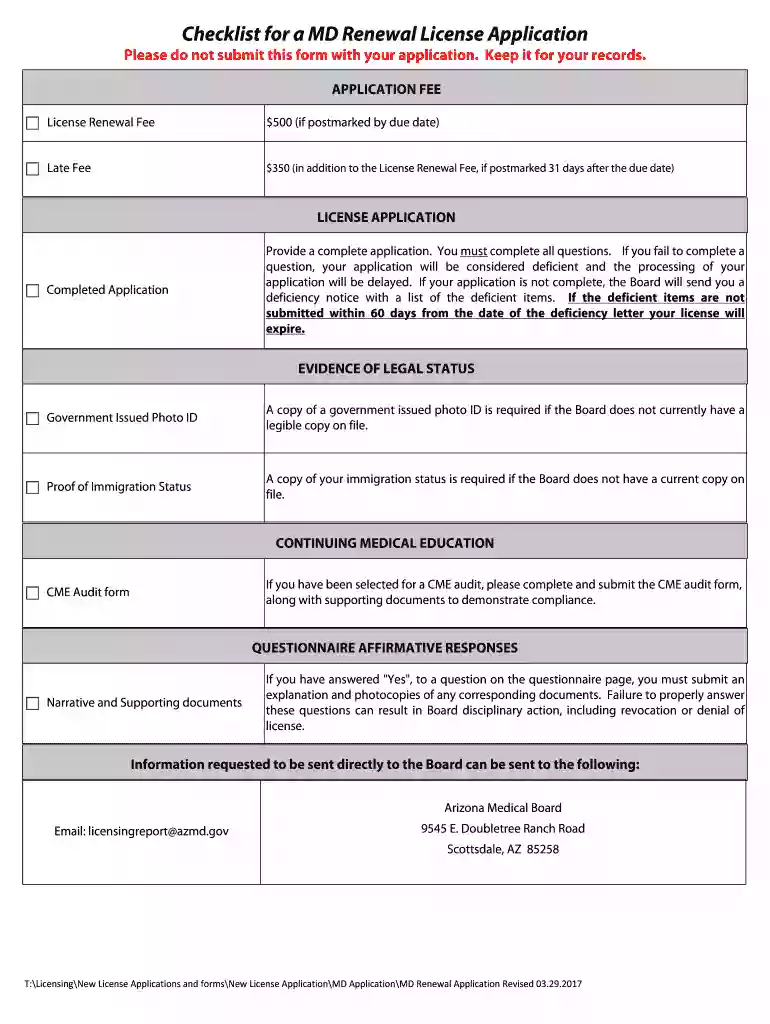
The "License Renewal Fee" is a financial charge required to maintain the validity of a professional or business license. In many jurisdictions, this fee is mandatory for professionals like medical doctors, lawyers, or business owners who wish to renew their licenses beyond the initial period. The fee ensures compliance with state regulations and contributes to administrative processes, such as monitoring and evaluating professional conduct. Failure to pay the fee may result in the suspension or revocation of the license, impacting the ability to legally practice or operate.
Understanding how to effectively use the license renewal fee involves knowing when and how to make the payment to ensure uninterrupted licensure. Typically, license holders receive a notice outlining the due date and the amount required. Payment can often be made online through governmental portals, via mail, or in person at designated offices. It's crucial to follow the outlined procedure precisely, as some states may require additional documentation or information during the renewal process. Staying organized and keeping records of all transactions is advisable to avoid discrepancies and facilitate future renewals.
Understanding terminology is vital when dealing with license renewals. Terms like "continuing education," "renewal period," and "processing fee" are often used in the context of license renewals. "Continuing education" refers to ongoing professional development required to maintain a license. The "renewal period" is the timeframe within which the fee and any accompanying documentation must be submitted. A "processing fee" might be an additional charge for handling the renewal application. Familiarity with these terms ensures a smoother renewal process and helps prevent misunderstandings.
The legal framework around the license renewal fee aims to ensure that only qualified individuals or entities continue to hold active licenses. The fee acts as part of regulatory oversight performed by state or federal agencies, which mandate the renewal to maintain high standards of professional practice. Legal use implies timely payment of the fee and the fulfillment of all renewal criteria, such as compliance with ethical standards and continuing education. Failure to adhere to the legal requirements might result in penalties, including fines or license suspension.
Several key elements define the structure and process of the license renewal fee:
Understanding these elements ensures the renewal process is completed accurately and efficiently.
Each state may have unique rules regarding the license renewal process, reflecting differences in regulation and administrative procedures. Some states may offer grace periods post the due date without penalties, while others might require additional documentation or fee structures based on professional categories. For example, Arizona might necessitate continuing medical education credits for medical doctors. It is crucial to consult state-specific resources or the appropriate licensing board to fully understand these regulations and avoid potential pitfalls.
Real-world examples illustrate the practical application of the license renewal fee. A medical doctor in Arizona may encounter requirements such as continuing medical education compliance alongside their renewal fee. A business operating as an LLC might need to pay a fee to the state treasury to maintain its business license, ensuring compliance with state regulations. These scenarios underscore the importance of prompt fee payment and thorough understanding of the associated obligations to smoothly carry out professional or business activities.
Submitting the appropriate documents is often necessary when renewing a license. Required documents can vary depending on the profession and state regulations, but common ones include:
Ensuring all required documents are submitted correctly and on time helps prevent delays in the renewal process.
We've got more versions of the License Renewal Fee form. Select the right License Renewal Fee version from the list and start editing it straight away!
At DocHub, your data security is our priority. We follow HIPAA, SOC2, GDPR, and other standards, so you can work on your documents with confidence.
The MCTD fee is $1.00 for every 6 months the permit or driver license will be in effect. Additional Fees. Fee to replace a driver license or learner permit:Read more
Most Texas drivers pay a $25 surcharge to apply for or renew their driver license every six years. However, these fees can vary depending on the type andRead more


