







Definition and Meaning
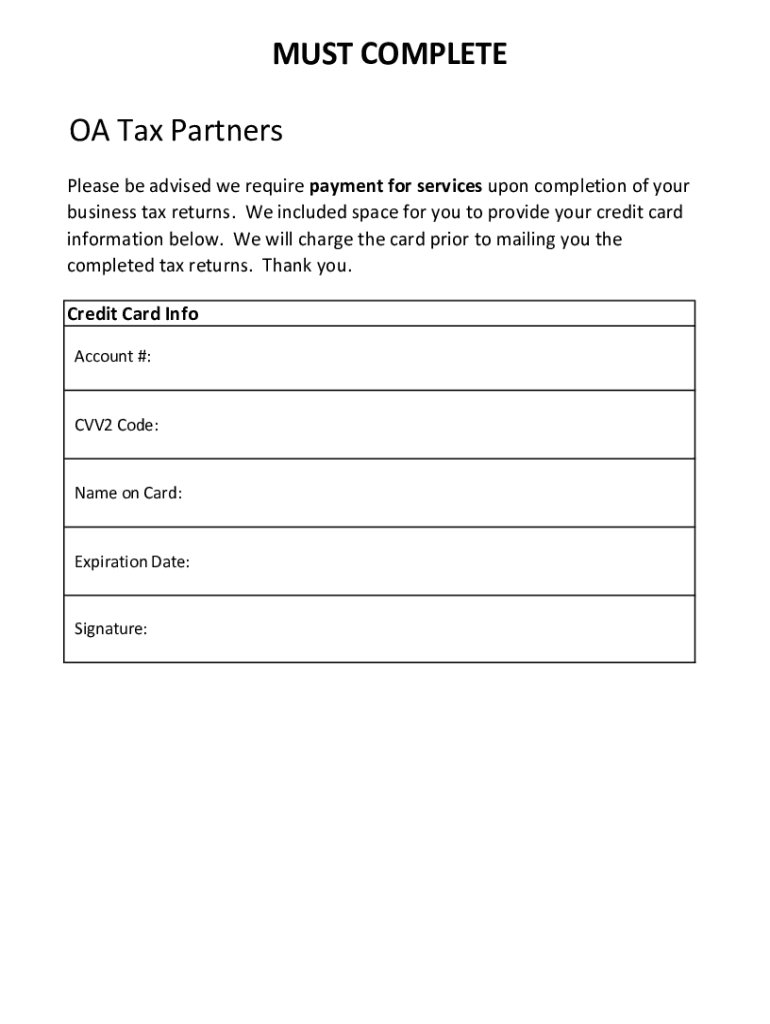
The "chamberofcommerce united-statesnew-yorkOA Tax Partners in Commack, NY -" form is a crucial document primarily used by businesses in the United States to manage their tax submissions. This form assists the office of OA Tax Partners in collecting business tax information efficiently, ensuring compliance with federal and state tax laws. Typically, it covers aspects such as reporting income, expenses, and specific usage information, including vehicle mileage, integral to the financial year's tax assessments.
Steps to Complete the Form
Completing the form involves several steps that require careful attention to detail.
-
Gather Necessary Documents:
- Collect all financial records, including income statements and expense receipts.
- Prepare documentation related to vehicle use and other deductible items.
-
Filling Out Business Information:
- Accurately input your business details, such as name, address, and tax identification number.
- Indicate the type of business entity you operate, such as LLC, partnership, or corporation.
-
Complete Financial Sections:
- Provide detailed accounts of income and expenses for the fiscal year.
- Ensure vehicle usage is recorded, with odometer readings and mileage logs where applicable.
-
Review and Sign:
- Thoroughly review the form for any errors or omissions.
- Sign and date the form to confirm the accuracy of the provided information.
-
Submission:
- Submit the form via the method approved by OA Tax Partners, often either via mail or electronically.
Who Typically Uses the Form
The form is predominantly utilized by small to medium-sized businesses operating as S-Corporations, partnerships, and multi-member LLCs in the United States, especially those in and around New York. These entities rely on the form to report yearly financial activities to their tax service providers efficiently, ensuring all necessary information is available for accurate tax return filings. Tax consultants and accountants also use the form to verify that clients meet compliance requirements and deadlines.

Key Elements of the Form
Several crucial elements define the functionality and necessity of the form:
- Business Identification: Sections that require precise business details facilitate correct tax processing.
- Financial Reporting: Mandatory fields for income, expenses, and vehicle use ensure comprehensive data collection.
- Certification and Authorization: Includes sections for consent, authorized signatures, and verification of information accuracy.
- Submission Guidelines: Clear instructions on how to submit the form, catering to different versions (electronic or paper-based).
Filing Deadlines and Important Dates
Professional tax preparers and business owners must be vigilant about specific deadlines:
- Annual Tax Deadlines: Businesses must align their submission of this form with federal and state tax return deadlines.
- Extension Requests: If an extension is necessary, the form must reflect that appropriately, ensuring compliance with IRS rules.
Adhering to these timelines ensures the business avoids penalties and maintains good standing with tax authorities.
Required Documents
Completing this form necessitates certain documents, such as:
- Income Statements: Year-end or quarterly financial statements.
- Expense Receipts: Documentation justifying any claimed deductions.
- Mileage Logs: Required for vehicle expense claims.
These documents support reported figures and need to be consistent with tax records.
Legal Use of the Form
Form usage is governed by both federal and state tax laws, ensuring legitimate tax reporting and compliance. Businesses must adhere to these legal frameworks to avoid penalties or audits. OA Tax Partners requires the completed form for accurate tax filings, providing a safeguard against common errors during tax season. The form is definitive in maintaining transparency and accountability in business operations.
Software Compatibility and Digital Integration
Utilization of tax preparation software like TurboTax or QuickBooks can enhance efficiency:
- Import Features: These platforms often allow businesses to import data directly from this form, minimizing manual entry errors.
- Digital Safeguards: Encryption and secure data sharing options ensure compliance with legal standards and protect sensitive information.
By leveraging such digital tools, businesses streamline their tax preparation processes, aligning with modern compliance needs and technological advancements.




