




01. Edit your form online
Type text, add images, blackout confidential details, add comments, highlights and more.

Type text, add images, blackout confidential details, add comments, highlights and more.

Draw your signature, type it, upload its image, or use your mobile device as a signature pad.

Send it via email, link, or fax. You can also download it, export it or print it out.
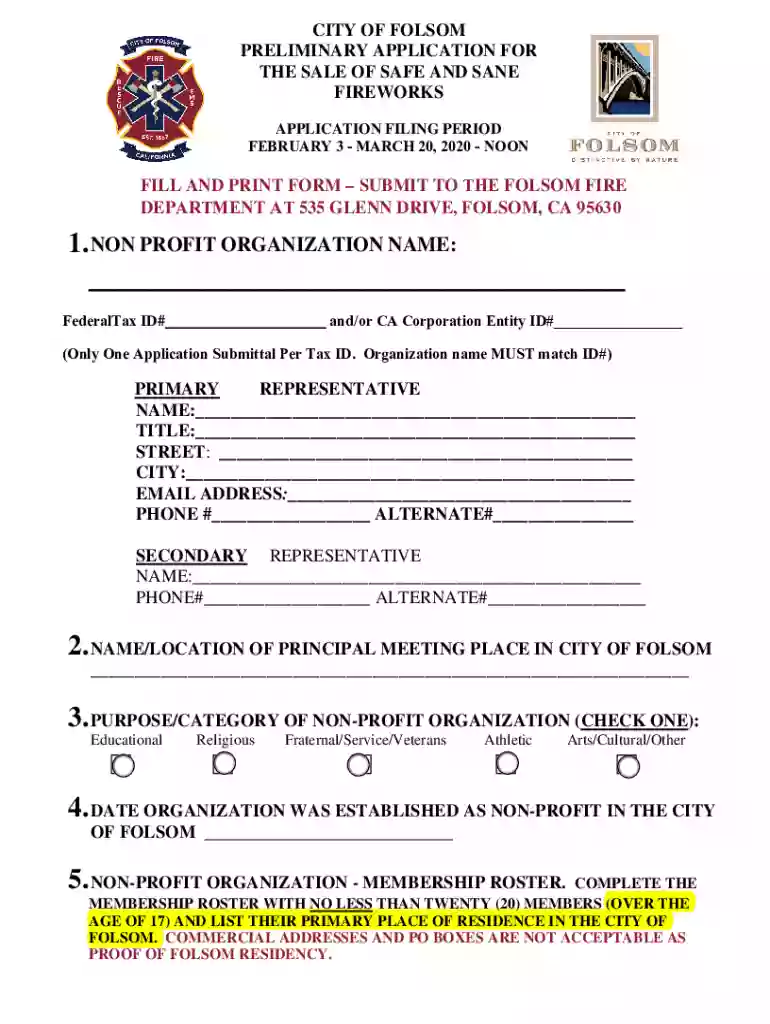
The "NON PROFIT ORGANIZATION NAME: Tax ID (Only One Application" form is a specialized application designed for non-profit organizations operating in the United States. Its primary purpose is to provide these organizations with a structured mechanism to apply for a Tax Identification Number (Tax ID), a crucial identifier in the context of legal and financial activities. This form is essential for non-profits wishing to engage in transactions such as opening bank accounts, handling payroll, and procuring goods and services. By obtaining a Tax ID, non-profits can establish credibility and compliance with IRS regulations.
The form consists of several critical sections that require detailed information from the applicant organization:
Completing the "NON PROFIT ORGANIZATION NAME: Tax ID (Only One Application" requires careful attention to detail to ensure accuracy and compliance. Here are the recommended steps:
Understanding the terminology associated with the application process enhances the organization's ability to complete and process the form effectively:
Acquiring a Tax ID is a foundational step for non-profit organizations for several reasons:
The IRS provides specific guidelines to ensure the proper application and use of Tax IDs for non-profit organizations. Adhering to these guidelines is crucial to avoid penalties and ensure complete compliance. Key points include:
While the form itself might not have a strict filing deadline, obtaining a Tax ID should be prioritized shortly after the establishment of a non-profit organization to avoid operational delays. Key considerations include:
Organizations have multiple submission methods to choose from when applying for a Tax ID:
Tech-savvy organizations can leverage document management platforms, like DocHub, to streamline the completion and submission of the "NON PROFIT ORGANIZATION NAME: Tax ID (Only One Application." With its capabilities to view, annotate, and fill forms digitally, DocHub ensures the process is efficient and secure, especially when managing sensitive organizational information.
We've got more versions of the NON PROFIT ORGANIZATION NAME: Tax ID (Only One Application form. Select the right NON PROFIT ORGANIZATION NAME: Tax ID (Only One Application version from the list and start editing it straight away!
| Versions | Form popularity | Fillable & printable |
|---|---|---|
| 2025 | 4 Satisfied (34 Votes) | |
| 2025 | 4.8 Satisfied (31 Votes) | |
| 2025 | 4.3 Satisfied (34 Votes) | |
| 2025 | 4.2 Satisfied (34 Votes) | |
| 2025 | 4.6 Satisfied (55 Votes) | |
| 2025 | 4.5 Satisfied (44 Votes) | |
| 2025 | 4.2 Satisfied (37 Votes) | |
| 2025 | 4.7 Satisfied (34 Votes) | |
| 2024 | 4.3 Satisfied (21 Votes) | |
| 2024 | 4.6 Satisfied (51 Votes) | |
| 2024 | 4.5 Satisfied (23 Votes) | |
| 2024 | 4.8 Satisfied (29 Votes) | |
| 2024 | 4.1 Satisfied (28 Votes) | |
| 2024 | 4.9 Satisfied (51 Votes) | |
| 2024 | 4.4 Satisfied (31 Votes) |
At DocHub, your data security is our priority. We follow HIPAA, SOC2, GDPR, and other standards, so you can work on your documents with confidence.
The online search tool allows you to search for an organizations tax exempt status and filings in the following data bases: Form 990 series returns; Form 990-NRead more
The frequently asked questions (FAQs) below expand upon the examples provided in Notice 2014-21 and apply those same longstanding tax principles to additionalRead more
May 20, 2026 Use this tool to get an EIN directly from the IRS in minutes for free. Answer questions and submit the application.Read more


