
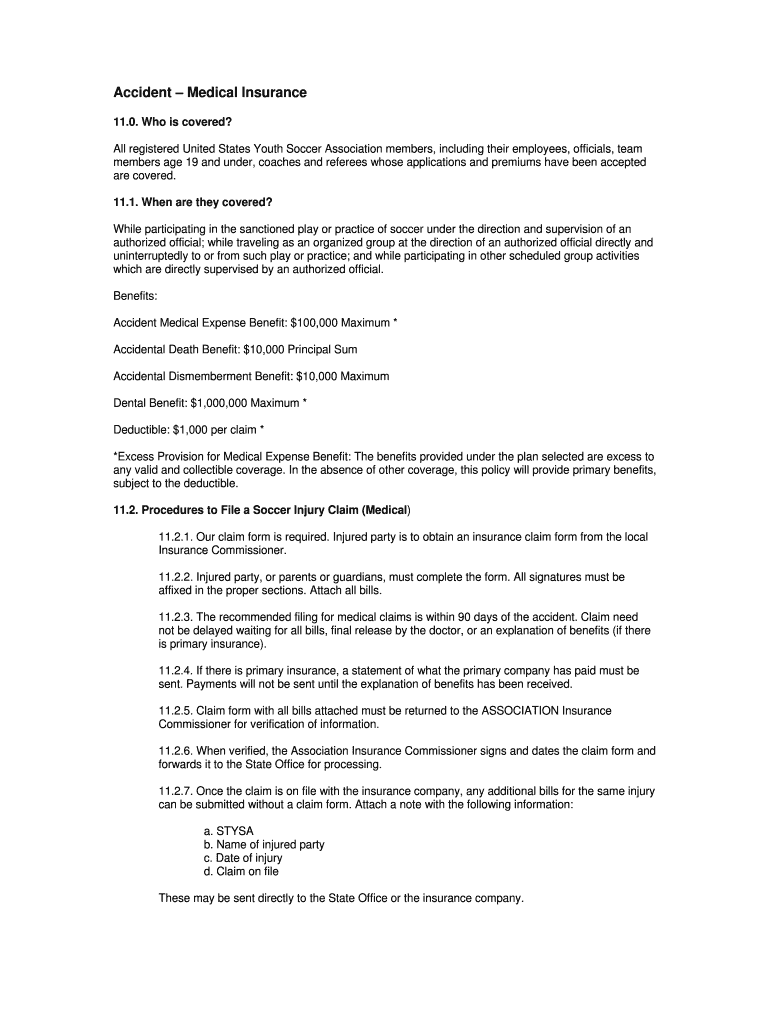







Definition & Meaning
Accident medical insurance is a type of coverage that provides financial protection for medical expenses resulting from accidental injuries. It is designed to cover costs such as hospital stays, surgical procedures, and other related healthcare services that might not be fully covered by standard health insurance. This form of insurance ensures that individuals and families are protected from unexpected medical costs due to accidents, without bearing the total financial burden themselves. It is particularly beneficial for people participating in high-risk activities or sports, offering a safety net for unforeseen incidents.
Key Elements of Accident Medical Insurance
Accident medical insurance policies typically include several critical elements that determine coverage scope and benefits:
- Medical Expense Coverage: This includes hospital visits, medication, rehabilitation, and surgery costs.
- Accidental Death and Dismemberment Benefits: Provides financial compensation in the event of death or severe injury like loss of limb or sight.
- Coverage Limits: Refers to the maximum amount the policy will pay per incident or throughout the policy term.
- Deductibles and Co-pays: The out-of-pocket expenses policyholders must pay before the insurance coverage kicks in.
- Exclusions: Specific conditions or activities not covered under the policy, like injuries sustained during illegal actions.
How to Use Accident Medical Insurance
Using accident medical insurance involves understanding the claims process to ensure you receive the benefits uninterrupted:
- Immediate Care: Receive immediate medical attention after an accident.
- Documentation: Keep thorough records, including medical bills, accident reports, and physician statements.
- Claim Form: Fill out the insurance claim form honestly, detailing the accident circumstances and incurred expenses.
- Submission: Submit these documents to the insurance provider, following the prescribed method (online or postal mail).
- Follow-up: Regularly contact the insurer to check on the status of the claim and provide any additional documentation if requested.
Steps to Complete the Accident Medical Insurance Form
Completing an accident medical insurance form accurately is crucial for timely approval. Follow these steps:
- Personal Information: Fill in your name, contact details, and policy number carefully.
- Accident Details: Provide a clear and precise account of the accident, including time, date, and location.
- Medical Information: Enter all details relevant to the medical treatment received, including healthcare provider information.
- Cost Breakdown: Document all expenses associated with the accident, such as medical bills and prescriptions.
- Signatures: Ensure all required signatures are present to avoid processing delays.
- Submission: Submit your form according to the instructions provided by the insurance company and keep a copy for personal records.
Who Typically Uses Accident Medical Insurance
Accident medical insurance is popular among various groups who seek additional financial protection:
- Sports Enthusiasts: Individuals engaged in high-impact sports like skiing, football, or skateboarding.
- Outdoor Adventurers: Hikers, mountain climbers, or those involved in extreme sports activities.
- Parents: Families with active children who participate in organized sports.
- Travelers: People traveling to regions with high accident risks or limited healthcare facilities.
- Employers: Organizations offering employee benefits that include accident coverage.
Important Terms Related to Accident Medical Insurance
Understanding these terms is vital when dealing with accident medical insurance:
- Premium: The amount you pay regularly to maintain your insurance coverage.
- Beneficiary: The person who receives benefits in the event of the policyholder’s death.
- Claim: A request for payment based on the terms of the policy.
- Underwriting: The process insurance companies use to assess the risk of insuring you.
- Rider: An additional clause to the policy that offers extra coverage for specific scenarios.
Legal Use of Accident Medical Insurance
Accident medical insurance policies adhere to specific legal requirements and conditions:
- ESIGN Act Compliance: Electronic signatures on documents must be legally binding under federal law.
- Privacy Laws: Insurance providers must protect your personal data under the Health Insurance Portability and Accountability Act (HIPAA).
- Dispute Resolution: Outlines procedures for resolving conflicts between policyholders and insurers.
- Regulatory Oversight: Policies are subject to state insurance regulations, ensuring consumer protection and fairness.
Example Scenarios of Using Accident Medical Insurance
Different scenarios highlight the application of accident medical insurance:
- Outdoor Incidents: A hiker breaks an ankle on a Rocky Mountains trail. The insurance covers emergency medical evacuation and hospitalization costs.
- Sporting Mishaps: A soccer player suffers a concussion during a match. The policy covers diagnostic tests and rehabilitation therapy.
- Home Accidents: A child falls from a tree while playing, requiring a surgical procedure. Coverage includes hospitalization and post-operative care.
- Travel Injuries: A tourist accidentally slips in a hotel bathroom. The insurance covers immediate medical attention abroad and follow-up treatments back home.




