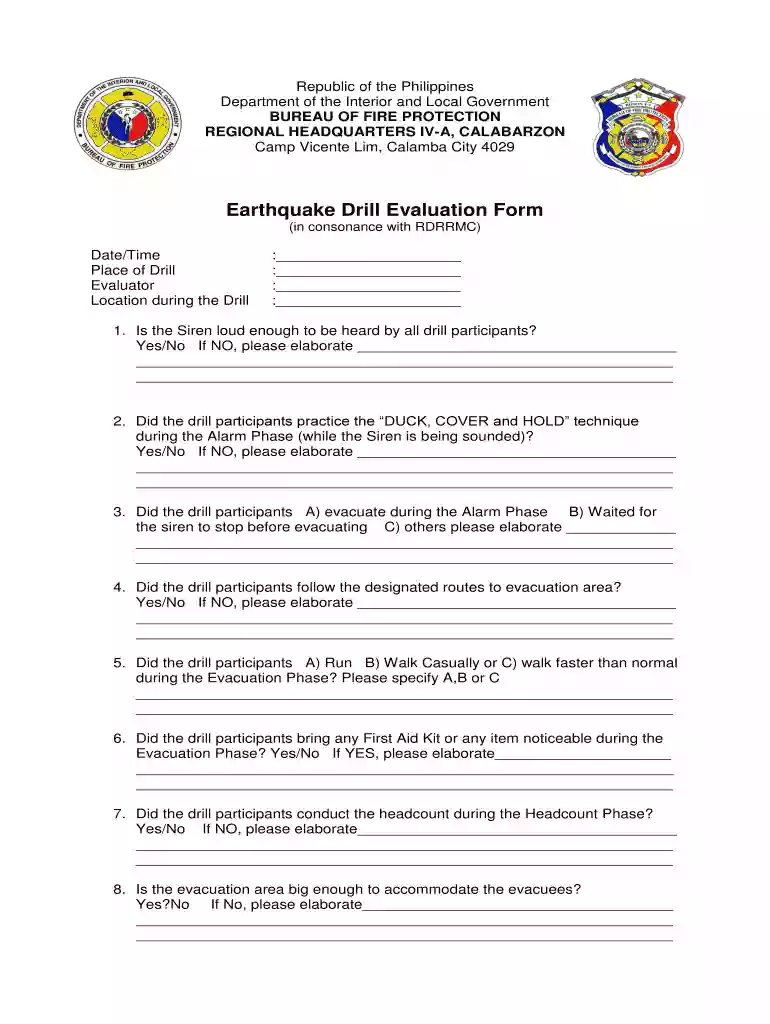
Definition and Significance of the Earthquake Drill Template
An earthquake drill template is a structured document designed to guide organizations and communities in conducting earthquake preparedness drills. This tool assists in planning, executing, and evaluating drills to ensure that participants are adequately prepared for real-life earthquake scenarios. It provides a framework for recording critical aspects of the drill, including objectives, participant roles, evacuation routes, and feedback forms. The significance of using a standardized template lies in its ability to promote consistency and thoroughness in preparedness efforts, ultimately contributing to safer environments.
Key Components of the Earthquake Drill Template
- Objectives: Clearly defined goals for what the drill aims to achieve, such as improving response times or familiarizing participants with emergency protocols.
- Phases of the Drill: Outline the various stages of the drill, typically including preparation, execution, evaluation, and feedback.
- Participant Roles: Designate responsibilities for individuals involved, such as coordinators, safety officers, and participants.
- Evaluation Criteria: Specify metrics to assess the effectiveness of the drill, including participant behavior, adherence to safety procedures, and overall engagement.
How to Use the Earthquake Drill Template
Utilizing the earthquake drill template effectively requires consideration of several steps to maximize its benefits. Begin by customizing the template to fit the specific needs of your organization or community. This may involve modifying the objectives, phases, and evaluation criteria to ensure relevance.
Steps to Implement the Template
Preparation:
- Review and adapt the template to align with your specific disaster response protocols, focusing on unique challenges relevant to your location.
- Ensure that all participants are informed about the upcoming drill and understand its purpose.
Execution:
- Conduct the drill according to the outlined phases in the template, ensuring that all roles are filled and participants follow prescribed procedures.
- Facilitate communication among participants to enable a coordinated response.
Evaluation:
- After the drill, use the evaluation criteria in the template to gather feedback and assess performance.
- Identify strengths and weaknesses in the response to inform future drills and enhance overall preparedness.
How to Obtain the Earthquake Drill Template
Accessing an earthquake drill template can vary depending on whether you're utilizing a digital version or a paper copy. Various government agencies, educational institutions, and emergency management organizations may provide downloadable templates for public use.
Common Sources for the Template
- Government Websites: Many state and federal emergency management agencies, such as the Federal Emergency Management Agency (FEMA), offer comprehensive resources including templates.
- Educational Institutions: Schools often have specific templates tailored for student and staff safety drills; these can frequently be downloaded from institutional websites.
- Emergency Services Organizations: Local fire departments or community preparedness organizations may provide customizable templates along with training materials.
Steps to Complete the Earthquake Drill Template
Completing the earthquake drill template involves several key actions to ensure that all necessary information is recorded. Following a systematic approach can enhance clarity and utility.
Components to Fill Out in the Template
- Drill Date and Time: Indicate when the drill will take place to facilitate scheduling.
- Location: Specify the site of the drill, highlighting evacuation routes and safety zones.
- Participants: Record names and roles of all participants to track involvement and responsibilities.
- Evaluation Findings: After the drill, detail observations regarding participant behavior and adherence to procedures, using checklists or feedback forms as necessary.
- Feedback and Recommendations: Collect thoughts from participants on how the drill went and suggestions for improvement.
Importance of Using the Earthquake Drill Template
Implementing an earthquake drill template is crucial for enhancing preparedness and response strategies within communities and organizations.
Benefits of a Standardized Template
- Consistency: A uniform approach to drills ensures that everyone involved understands their roles and responsibilities, leading to more effective training outcomes.
- Evaluation and Improvement: By documenting the drill process and outcomes, organizations can identify gaps in preparation and training, leading to constructive modifications before an actual event occurs.
- Regulatory Compliance: Many states have requirements for conducting regular drills; using a template can facilitate compliance with these regulations.
Target Audience for the Earthquake Drill Template
The earthquake drill template is relevant for various entities, each with specific needs and objectives regarding emergency preparedness.
Typical Users Include
- Schools: Establishing protocols for student and staff safety during a hypothetical earthquake scenario.
- Businesses: Implementing safety drills for employees to enhance workplace preparedness.
- Community Organizations: Engaging local residents in disaster preparedness to ensure collective safety.
- Government Agencies: Coordinating responses and evaluations at municipal and state levels to improve community resilience.
Important Terms Related to the Earthquake Drill Template
Familiarizing participants with key terminology can facilitate effective communication and understanding during preparedness drills.
Essential Terms Include
- Evacuation Routes: Defined paths for safely exiting a building during an emergency.
- Safety Zones: Designated areas where individuals can gather safely after an evacuation.
- After Action Report: A document created post-drill to analyze performance, identify strengths, and suggest improvements.
Legal Considerations for the Earthquake Drill Template
Understanding the legal framework surrounding earthquake preparedness is essential for organizations to maintain compliance and safeguard participants.
Relevant Legal Aspects
- Occupational Safety: Many states have regulations requiring businesses to provide a safe working environment, including preparation for earthquakes.
- State Mandates: Certain jurisdictions may impose specific requirements for emergency preparedness drills, which may include the use of templates for documentation.
This concise structure aims to address the essential features and considerations surrounding the earthquake drill template, making it a versatile tool for enhancing safety preparedness across various environments.