Certified Registered Nurse Anesthetist (CRNA) Contracting 2026

Get Form
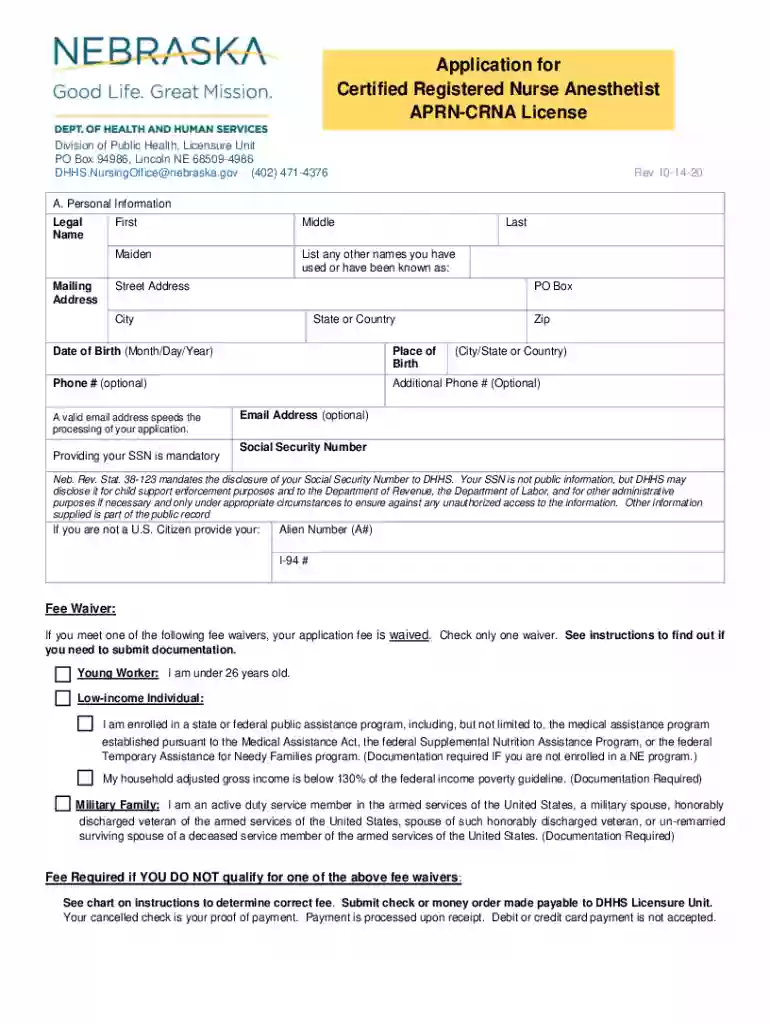
Certified Registered Nurse Anesthetist (CRNA) Contracting Preview on Page 1

Here's how it works

01. Edit your form online
Type text, add images, blackout confidential details, add comments, highlights and more.

02. Sign it in a few clicks
Draw your signature, type it, upload its image, or use your mobile device as a signature pad.

03. Share your form with others
Send it via email, link, or fax. You can also download it, export it or print it out.

Definition & Meaning

Certified Registered Nurse Anesthetist (CRNA) Contracting refers to professional agreements where certified individuals provide anesthesia care as independent contractors. CRNAs are advanced practice registered nurses who have completed specialized training in anesthesia. These contracts define the terms, conditions, and responsibilities between the CRNA and healthcare facilities or anesthesiology groups. Contracting offers flexibility in work settings, schedule, and compensation, allowing CRNAs greater control over their professional practice.

How to Use the CRNA Contracting

Utilizing CRNA contracting involves understanding the terms of engagement and ensuring compliance with regulatory standards. CRNAs must evaluate contracts carefully, focusing on scope of work, compensation terms, liability insurance, and termination clauses. Collaboration with legal experts is advisable to negotiate favorable terms and safeguard practice rights. It is also essential to maintain professional credentials, including licensure and certification, to fulfill contractual obligations effectively.

Steps to Complete the CRNA Contracting

  1. Assess Opportunities:

    • Research potential employers or agencies offering CRNA contracts.
    • Evaluate the reputation and requirements of the contracting entity.
  2. Review Contract Terms:

    • Examine compensation rates, work hours, and benefits.
    • Ensure malpractice insurance coverage is included or independent provision is required.
  3. Negotiate Conditions:

    • Discuss adjustments to terms that better meet personal and professional goals.
    • Consider consulting with a healthcare attorney for contract review.
  4. Finalize Agreement:

    • Sign the contract after mutual agreement on all terms.
    • Retain a copy of the contract for personal records.
  5. Fulfill Contractual Duties:

    • Maintain compliance with job requirements, including licensure and continuing education.
    • Adhere to ethical and professional standards in providing anesthesia care.

Important Terms Related to CRNA Contracting

  • Malpractice Insurance: Coverage protecting CRNAs against claims of professional negligence or malpractice.
  • Scope of Practice: Defined duties and responsibilities CRNAs are authorized to perform under the contract.
  • Independent Contractor: Designation that typically exempts CRNAs from employee benefits but provides flexibility in work settings.
  • Termination Clause: Terms under which either party can end the contract, often including notice periods and conditions.

Legal Use of the CRNA Contracting

Contracts must comply with federal and state regulations governing anesthesia practice. CRNAs must ensure adherence to the Health Insurance Portability and Accountability Act (HIPAA) standards for patient privacy and the Controlled Substances Act for medication management. Contracts should explicitly outline compliance with these legal frameworks to avoid disputes or legal consequences.

Key Elements of the CRNA Contracting

  • Compensation Structure: Clear breakdown of payment terms, including hourly rates, overtime, and bonus structures.
  • Work Environment: Specifications of practice settings, whether hospitals, clinics, or private practices.
  • Duration and Renewal: Length of the contract and any provisions for renewal or extension.
  • Responsibilities and Duties: Explicit listing of services to be performed, ensuring alignment with training and experience.

Required Documents

CRNAs must provide several essential documents when entering into contracts:

  • Licensure Verification: Current state licensure confirming authorization to practice as a CRNA.
  • Certification Credentials: Proof of certification from the National Board of Certification and Recertification for Nurse Anesthetists (NBCRNA).
  • Professional References: Contact details of previous employers or peers who can vouch for the CRNA’s competence and work ethic.
  • Continuing Education Records: Documentation of ongoing education necessary to fulfill licensure requirements.

Form Submission Methods (Online / Mail / In-Person)

While related to contracts rather than forms, submission of contracting documents can be performed through various methods:

  • Online Platforms: Securely emailing scanned copies of signed contracts to contracting entities.
  • Mail: Sending certified or priority mail to ensure receipt by involved parties.
  • In-Person Delivery: Hand-delivering documents for immediate confirmation and response, useful in tightly-knit professional communities.

This exhaustive overview ensures that CRNAs and contracting bodies understand the intricacies of contracting, facilitating well-informed decision-making and legal compliance.

See more Certified Registered Nurse Anesthetist (CRNA) Contracting versions

We've got more versions of the Certified Registered Nurse Anesthetist (CRNA) Contracting form. Select the right Certified Registered Nurse Anesthetist (CRNA) Contracting version from the list and start editing it straight away!
Versions Form popularity Fillable & printable
2022 4.8 Satisfied (154 Votes)
2020 4.2 Satisfied (30 Votes)
2019 4.3 Satisfied (53 Votes)
be ready to get more

Complete this form in 5 minutes or less

Get form

Got questions?

We have answers to the most popular questions from our customers. If you can't find an answer to your question, please contact us.
Contact us
Yes, as soon as you get into independent practice the pay increases substantially. An independent CRNA can easily make 250k-300k. However, there is a downside to this pay. You will live in a smaller city and often work quite a bit of call.
Flagstar Bank CRNAs across the country are eligible for the physician mortgage loan with Flagstar Bank. This program offers 0% down for up to $1 million and 5% down for up to $1.5 million for qualifying borrowers. However, you must be within 10 years of starting your career as a CRNA to qualify.
The average Annual Salary for Anesthesiologists is $540k Anesthesiologist Salaries show docHub variation, with total compensation averaging $540k, but ranging from $332k (5%-ile) to over $800k (95%-ile).
Certified Registered Nurse Anesthetists (CRNAs)/nurse anesthesiologists can work as a W2 employee or 1099 independent contractor. These designations impact tax and contractual status but do not impact scope of practice or ability to practice autonomously.
Top Paying Work Settings for CRNAs Outpatient Care Centers - $263,960. General Medical and Surgical Hospitals - $230,150. Specialty (except Psychiatric and Substance Abuse) Hospitals - $229,980. Home Health Care Services - $216,040. Offices of Physicians - $207,630.

Security and compliance

At DocHub, your data security is our priority. We follow HIPAA, SOC2, GDPR, and other standards, so you can work on your documents with confidence.

Learn more
ccpa2
pci-dss
gdpr-compliance
hipaa
soc-compliance
be ready to get more

Complete this form in 5 minutes or less

Get form