




01. Edit your form online
Type text, add images, blackout confidential details, add comments, highlights and more.

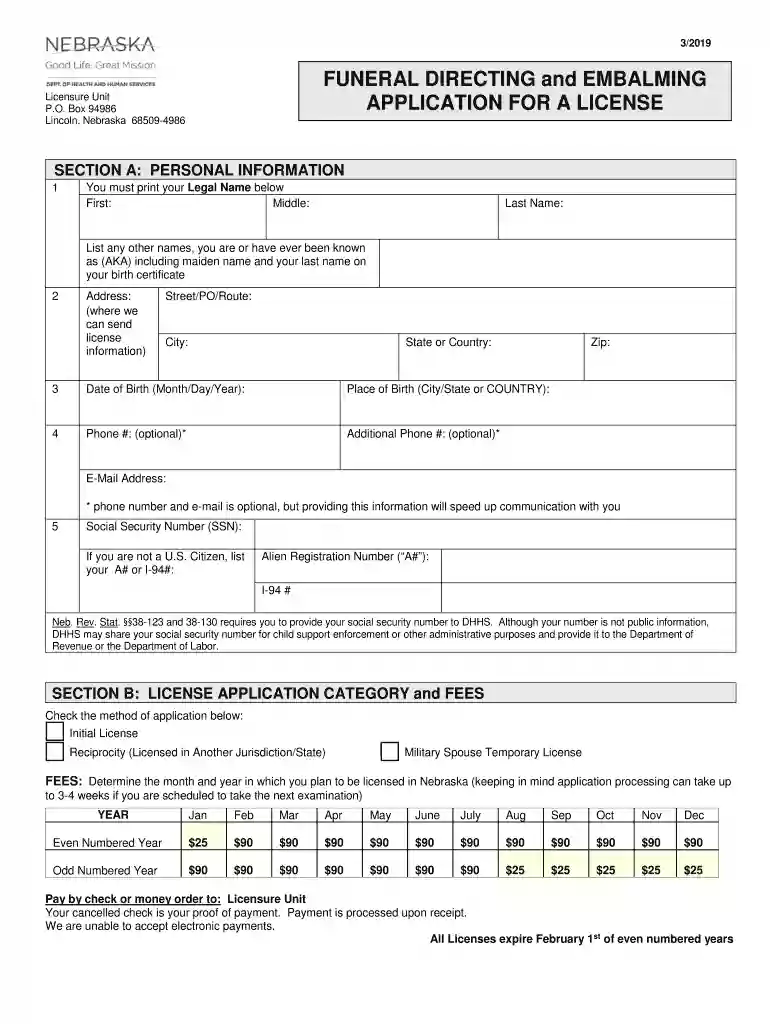
Type text, add images, blackout confidential details, add comments, highlights and more.

Draw your signature, type it, upload its image, or use your mobile device as a signature pad.

Send it via email, link, or fax. You can also download it, export it or print it out.
The "Application for a Funeral Directing and Embalming License" is a formal document required to legally practice funeral directing and embalming within a particular state. This application ensures that candidates possess the necessary qualifications, skills, and ethical standards required for the profession. Understanding the importance of this application is crucial, as it regulates who is permitted to handle sensitive tasks, like the preparation of deceased bodies and conducting funeral services.
The application process typically involves a combination of educational qualifications, practical apprenticeship, and passing professional examinations.
To qualify for a Funeral Directing and Embalming License, applicants must meet a variety of criteria that highlight their competence and reliability in this sensitive field. These criteria include:


Applicants may need to provide proof of good moral character. This can involve character references and a background check to verify the individual's integrity and ethical standing.
Completing the application for a Funeral Directing and Embalming License involves several detailed steps to ensure thorough vetting and preparation of candidates:
Each state in the U.S. can have unique requirements and procedures for the licensure of funeral directors and embalmers. Understanding these state-specific rules is crucial for compliance:
In Nebraska, for instance, the application process might include specific state educational standards and unique filing procedures. Nebraska may also offer temporary licenses for military spouses awaiting permanent relocation.
Gathering the correct documentation is vital to prevent delays in application processing. Required documents typically include:
Submitting complete and accurate documentation helps avoid application rejection and ensures a smoother approval process.
The application form ensures legal adherence to state standards and is fundamental in maintaining industry integrity and consumer protection. Its use ensures:
There are multiple ways to submit this application, each varying by state:
The approval time for a Funeral Directing and Embalming License can vary:
Some states may offer expedited processing for an additional fee, which can be beneficial for applicants in urgent need of licensure.
We've got more versions of the Application for a Funeral Directing and Embalming License form. Select the right Application for a Funeral Directing and Embalming License version from the list and start editing it straight away!
At DocHub, your data security is our priority. We follow HIPAA, SOC2, GDPR, and other standards, so you can work on your documents with confidence.
To complete the licensure application, you must do the following: The Cemetery and Funeral Bureau requires all applicants to be fingerprinted; please submit aRead more
should contact Dr. Ennis by emailing to jennis@jeffersonstate.edu. There is a deadline to have all pre-requisites and an application by October 30, 2026. nis@


