




01. Edit your form online
Type text, add images, blackout confidential details, add comments, highlights and more.

Type text, add images, blackout confidential details, add comments, highlights and more.

Draw your signature, type it, upload its image, or use your mobile device as a signature pad.

Send it via email, link, or fax. You can also download it, export it or print it out.
The term "The students or spouses children if the student or spouse will provide more than half of their support" refers to individuals who are dependents of either a student or the student’s spouse, where the student or spouse is financially responsible for more than half of the child's support. In the context of financial aid and tax documentation, this definition is crucial as it determines eligibility and allowances related to federal student aid and specific tax credits or deductions.
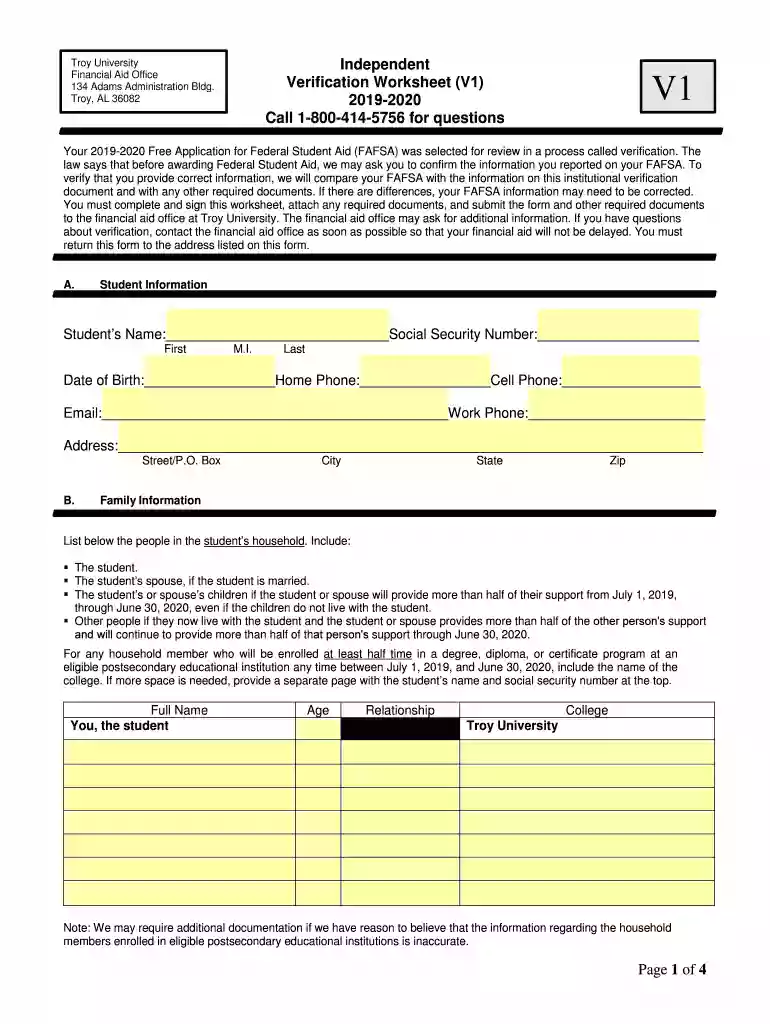
This form requires detailed verification of dependency and financial support. The main sections typically include the student’s information, their spouse’s details (if applicable), and information on each dependent child.
To qualify, the student or spouse must provide more than half of the financial support for their children during the current academic or tax year. Support can include housing, food, education, and medical expenses.


Understanding these terms helps clarify the role of the form in taxation or aid applications, illustrating why accurate data submission is crucial.
The IRS provides specific guidelines on how to determine if one is providing more than half of a dependent’s support. These guidelines are essential for ensuring compliance in tax filing and obtaining any applicable financial aid.
Documentation proving support level may include tax returns, payroll stubs, and receipts from purchases related to the child’s upkeep.
Forms can generally be submitted online, mailed, or, in some cases, provided in person. Each method requires careful attention to detail to ensure effective and timely filing.
Failing to accurately complete or file the form can result in loss of financial aid, tax penalties, or both. It is crucial to understand the potential implications and ensure adherence to requirements.
By understanding the requirements and intricacies of the form related to providing more than half of a dependent child's support, students and spouses ensure that they maintain compliance and capitalize on available benefits.
We've got more versions of the The students or spouses children if the student or spouse will provide more than half of their suppo form. Select the right The students or spouses children if the student or spouse will provide more than half of their suppo version from the list and start editing it straight away!
At DocHub, your data security is our priority. We follow HIPAA, SOC2, GDPR, and other standards, so you can work on your documents with confidence.
If a dependent students parents are unmarried and living together, both parents will be contributors, will need to have separate FSA IDs, and need to provideRead more
Apr 2, 2026 The student is paying child support to the spouse, but it isnt enough to provide more than half the childs support. The spouse and childRead more


