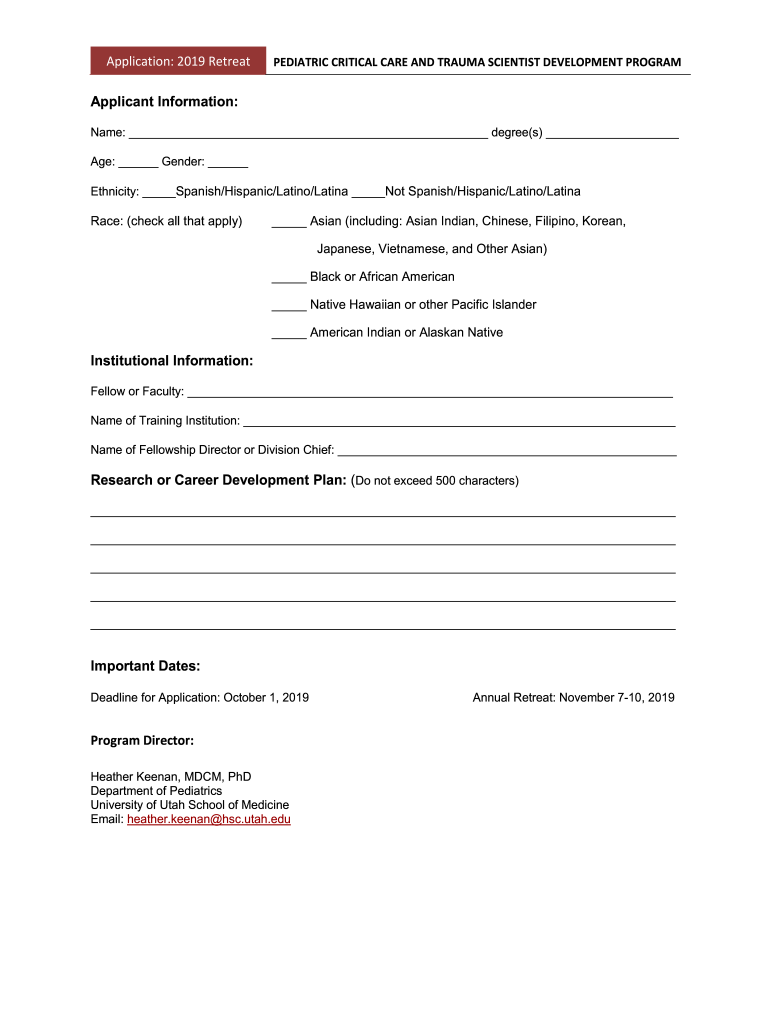







Definition and Meaning of the Pediatric Critical Care and Trauma Scientist Development Program
The Pediatric Critical Care and Trauma Scientist Development Program (PCCTSDP) is a national initiative dedicated to the training and development of pediatric critical care and trauma physician scientists. The primary goal of this program is to enhance the field of research in pediatric critical care and trauma by providing structured educational and resource support to emerging scientists.
- Primary Focus: The program targets individuals such as third-year fellows or junior faculty members working in accredited institutions.
- Scope of Study: Participants are expected to engage in comprehensive research projects that contribute to the advancement of pediatric critical care medicine.
- Geographical Emphasis: Particular attention is given to candidates from IDeA States, which are regions with historically low National Institutes of Health (NIH) funding.
This program is critical for advancing both the knowledge and practical skills required to conduct impactful research in pediatric critical care and trauma.
Steps to Complete the Pediatric Critical Care and Trauma Scientist Development Program
Completing the PCCTSDP involves a series of systematically organized steps designed to ensure that participants gain the maximum benefit from their engagement in the program.
- Eligibility Check: Verify that you meet the eligibility criteria, particularly as a third-year fellow or junior faculty in an accredited program.
- Research Proposal: Develop a comprehensive research plan that outlines objectives, methodology, and expected outcomes.
- Application Submission: Submit your completed application form, along with the research proposal and any required documentation, such as a letter of support from your Fellowship Director.
- Selection and Approval: Applications are reviewed, and selected candidates are notified regarding their acceptance into the program.
Participants should adhere strictly to these steps to ensure a smooth and successful application process.
How to Obtain the Pediatric Critical Care and Trauma Scientist Development Program
The process for obtaining participation in the PCCTSDP requires careful preparation and submission of relevant documentation.
- Gather Required Documents: Ensure you have all necessary documents, including academic records, a research proposal, and a support letter from your Fellowship Director.
- Understand Submission Requirements: Be aware of the application deadline, which historically has been on October 1, with notification following thereafter.
- Submit Application: Completed applications must be submitted through the appropriate channels as specified by the program guidelines.
Who Typically Uses the Pediatric Critical Care and Trauma Scientist Development Program
The PCCTSDP is designed for a specific audience within the medical community.
- Participant Profile: Third-year fellows or junior faculty who are embarking on a career in pediatric critical care and trauma research are the primary users of this program.
- Institutional Affiliations: Those affiliated with accredited programs, particularly in less funded IDeA States.
- Career Goals: Individuals aiming to conduct significant research and contribute to advancements in pediatric critical care medicine.
Understanding who the program serves can help target efforts for successful participation.


Key Elements of the Pediatric Critical Care and Trauma Scientist Development Program
Several essential components define the structure and function of the PCCTSDP.
- Research Training: In-depth training in research methodologies pertinent to pediatric care and trauma.
- Mentorship: Guidance from experienced professionals in the field to foster career development.
- Funding and Resources: Access to resources and funding necessary to support extensive research projects.
These elements are core to fostering a fruitful educational and practical experience within the program.
Application Process and Approval Time
The application and approval process for the PCCTSDP is rigorous and structured to identify the most promising candidates.
- Create an Application: Develop an application that includes all requested information and ensure clarity and precision in the research proposal.
- Submit Before Deadline: Ensuring timely submission by October 1 ensures that applications will be considered during the annual selection.
- Approval Notification: Successful candidates are typically notified after a thorough review of their application materials.
Applicants must adhere to these timelines strictly to increase their chance of acceptance.
Eligibility Criteria for the Pediatric Critical Care and Trauma Scientist Development Program
Eligibility for the PCCTSDP is based on several specific criteria that applicants must meet.
- Professional Standing: Applicants must be either third-year fellows or junior faculty members in accredited programs.
- Geographical Considerations: Preference may be given to those from IDeA States, which are regions with historically low NIH funding.
- Research Ambitions: A demonstrated commitment to research in pediatric critical care and trauma is essential.
Meeting these criteria is necessary to be considered for the program.

Important Dates and Filing Deadlines
Understanding the timeline for application is crucial for potential participants in the PCCTSDP.
- Application Deadline: Historically set as October 1, this date is the final deadline for submission of applications for the program year.
- Annual Retreat: An annual retreat for successful applicants is scheduled for early November, providing an opportunity for networking and learning.
Adherence to these timelines is imperative for program participation.
Examples of Successful Research Projects in the PCCTSDP
Examples of research projects from the PCCTSDP can provide insights into the types of work being pursued and accomplished under the program.
- Clinical Outcomes: Research investigating improvements in clinical outcomes for critically ill children.
- Innovative Therapies: Projects exploring cutting-edge therapies for trauma in pediatric patients.
These examples highlight the program’s role in fostering impactful research that advances pediatric critical care.