







Definition and Meaning of the BIA-ALCL Patient Assistance Fund
The BIA-ALCL Patient Assistance Fund, initiated by organizations including the American Society for Aesthetic Plastic Surgery (ASAPS) and the Plastic Surgery Foundation (PSF), is a financial aid program aimed at supporting patients diagnosed with breast implant-associated anaplastic large cell lymphoma (BIA-ALCL). Designed specifically for those who are either underinsured or uninsured, this fund seeks to alleviate the economic burden by covering surgical treatment costs that are not sufficiently covered by insurance. Patients must reside in the United States and have a confirmed diagnosis of BIA-ALCL, allowing them to access necessary medical procedures that might otherwise be financially inaccessible.
Eligibility Criteria for Applicants
To qualify for assistance through the BIA-ALCL Patient Assistance Fund, applicants must meet specific eligibility requirements. These include:
- Residency in the United States.
- A confirmed medical diagnosis of BIA-ALCL.
- Being either uninsured or having exhausted all insurance options regarding BIA-ALCL-related treatment. Applicants must demonstrate that their medical treatments are not adequately covered by insurance and agree to essential protocols involving patient and surgeon reporting and the sharing of medical information.


Application Process and Approval Time
Eligible individuals seeking financial support can apply through a structured application process specifically designed for the BIA-ALCL Patient Assistance Fund. The steps typically involve:
- Obtaining and completing the appropriate application form from the relevant organizing society.
- Submitting proof of diagnosis and financial need, along with any required supporting documentation.
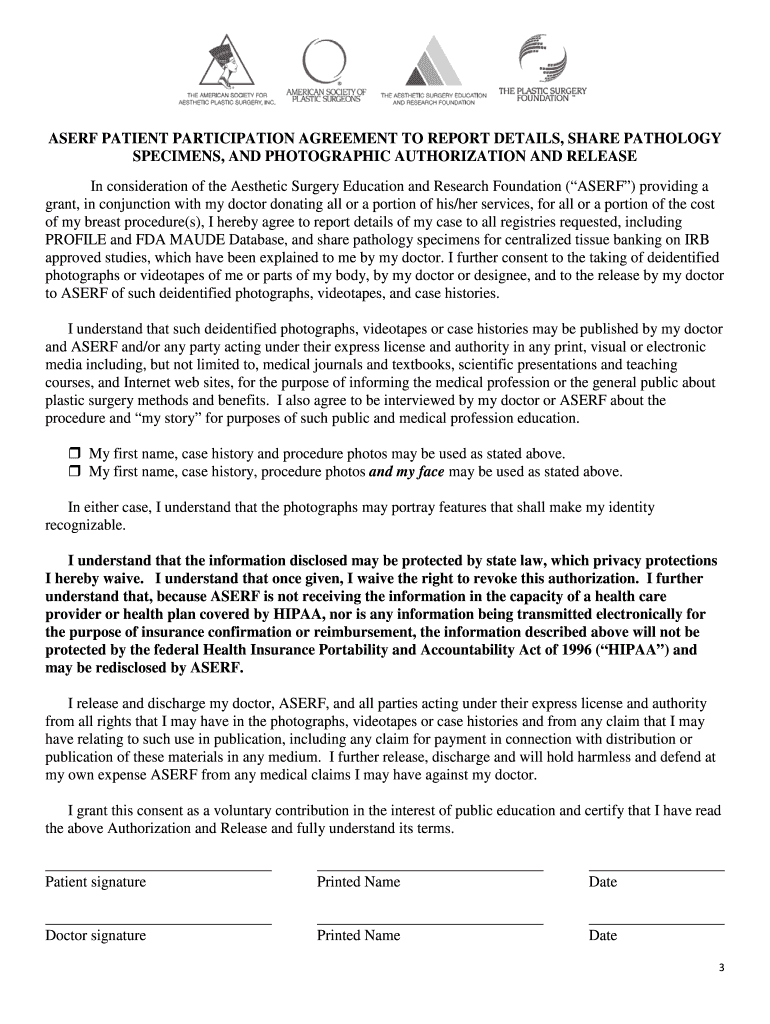
- Attaching signed agreements from both the patient and surgeon, confirming consent to share medical information. Once submitted, applications undergo a review process; the time to approval can vary, but clear and complete submissions generally expedite evaluation.
Required Documents for Application
The application to the BIA-ALCL Patient Assistance Fund necessitates several key documents:
- Proof of the applicant's diagnosis of BIA-ALCL from a qualified medical professional.
- Documentation attesting to the individual's current insurance status, highlighting why they are underinsured or uninsured for the specific treatment.
- Signed agreements from the patient and their surgeon concerning the sharing of medical treatment information. These documents ensure that the fund is directed towards those genuinely in need and meet all predefined criteria.
Steps to Complete the Application
Completing the application involves several critical steps:
- Download or request the application form from the Aesthetic Society or associated organizations.
- Fill out all personal and medical information accurately, ensuring all details align with accompanying documents.
- Secure all necessary signatures and patient consents, ensuring clear alignment with privacy and data sharing guidelines.
- Compile and attach all supporting documents.
- Submit the complete application following the guidelines, through the preferred method outlined by the offering society.
Key Elements of the Fund
The BIA-ALCL Patient Assistance Fund is structured around key elements, including financial support for uninsured treatments, comprehensive patient and surgeon involvement, and eligibility based on confirmed medical diagnosis and financial need. It requires participation from both patient and medical professionals and necessitates a formal application process to access the fund’s benefits.
Examples of Using the Fund
Patients across the United States diagnosed with ALCL have successfully utilized the fund to cover surgical expenses that are not covered by their insurance plans. An example includes patients receiving reconstructive surgery where the insurance policy provides limited support. This fund has facilitated access to complete treatment options, removing financial barriers and enabling timely medical interventions for those in need.
Legal and Ethical Use Guidelines
The ethical use of the BIA-ALCL Patient Assistance Fund involves strict adherence to legal guidelines around data privacy and patient consent. Applications must include signed agreements for medical information sharing, ensuring compliance with privacy regulations. Misuse of funds or provision of inaccurate information can result in penalties, highlighting the importance of transparency and honesty in applications.
Form Submission Methods
Applicants can submit their completed forms via multiple channels, depending on the instructions provided by the overseeing society. Options often include online submissions, mailing physical documents, or in-person submissions where applicable. The choice of method should align with applicant convenience and specific submission protocols outlined by the organization managing the fund.




