




01. Edit your form online
Type text, add images, blackout confidential details, add comments, highlights and more.

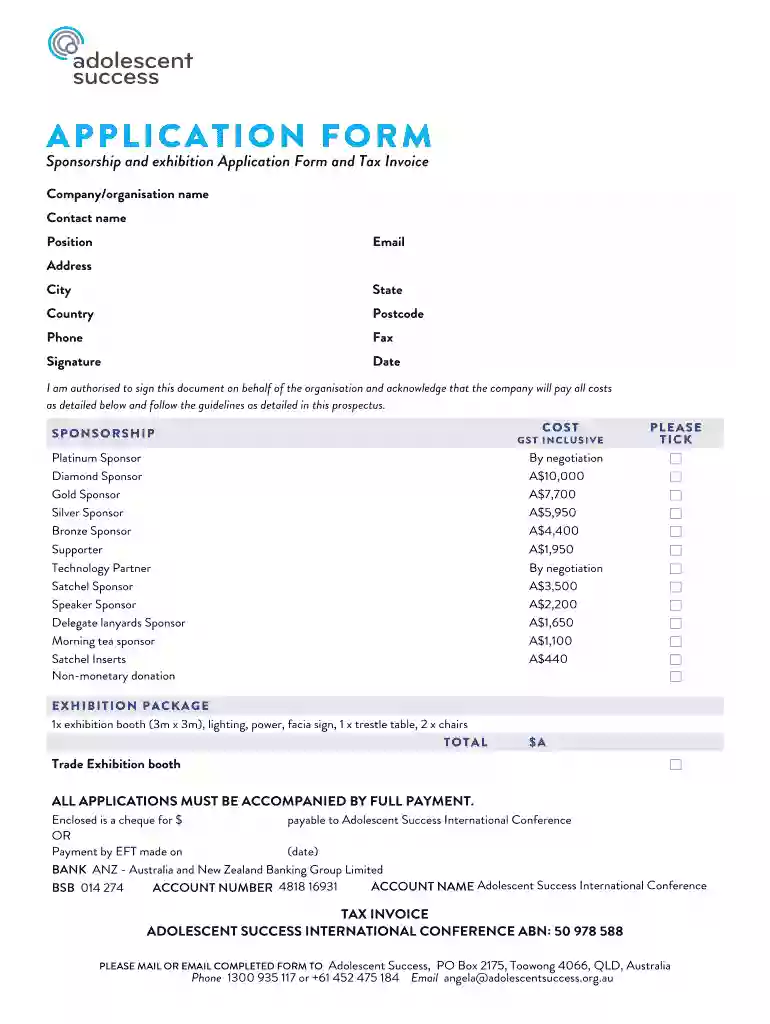
Type text, add images, blackout confidential details, add comments, highlights and more.

Draw your signature, type it, upload its image, or use your mobile device as a signature pad.

Send it via email, link, or fax. You can also download it, export it or print it out.
The "prospectus - Adolescent Success" is a detailed document aimed at outlining the sponsorship opportunities available for the 10th International Conference for Adolescent Success. This event, focused on engaging young adolescents through inquiry learning and STEAM education, offers various levels of sponsorship - Platinum, Diamond, Gold, Silver, and Bronze - each providing different benefits such as advertising, exhibition space, and access to delegates. The prospectus serves as a guide for organizations to understand their potential involvement and the benefits they can gain from participating in the conference.
To effectively use the prospectus, organizations should:
Completing the prospectus involves several key steps:
The prospectus is structured around several core components:
Organizations that have utilized the prospectus to sponsor the conference include educational institutions, technology companies focusing on educational tools, and non-profits dedicated to adolescent development. Each has leveraged their sponsorship to enhance brand visibility, align with strategic educational initiatives, and connect with key stakeholders in the field of adolescent education.
Sponsoring the Adolescent Success conference through the prospectus offers several advantages:
Understanding the terminology used within the prospectus is crucial:
Legal considerations include:
Prospective sponsors can submit their completed prospectus through:
This prospectus is primarily utilized by:


When completing the prospectus, organizations must disclose:
While largely applicable across the United States, certain state-specific rules may apply regarding advertising regulations, sponsorship agreements, and tax implications based on the location of the sponsoring entity or the event itself. It's important to review local regulations to ensure full compliance.
To complete your sponsorship using the prospectus, you may need to prepare and submit several documents, including:
We've got more versions of the prospectus - Adolescent Success form. Select the right prospectus - Adolescent Success version from the list and start editing it straight away!
At DocHub, your data security is our priority. We follow HIPAA, SOC2, GDPR, and other standards, so you can work on your documents with confidence.
We conducted popular science education both on and off campus, with content for all levels of knowledge in biology.
Mar 5, 2013 ✪ Hold your child to high, but realistic, standards;. ✪ Show that you value education;. ✪ Provide opportunities for your teenager to succeed;.


