



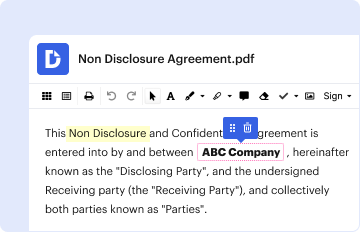
01. Edit your form online
Type text, add images, blackout confidential details, add comments, highlights and more.

Type text, add images, blackout confidential details, add comments, highlights and more.
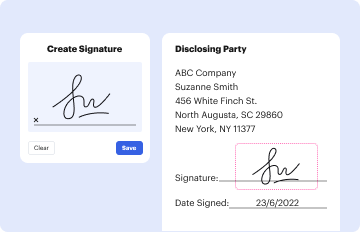
Draw your signature, type it, upload its image, or use your mobile device as a signature pad.

Send it via email, link, or fax. You can also download it, export it or print it out.
The term "and tangible interest" encompasses significant importance within various legal and financial documents. It refers to a legitimate and substantial claim, right, or stake that an individual or entity possesses in relation to a specific asset or property. This interest often manifests in the form of ownership, rights to benefits, or responsibilities tied to a property's use or maintenance. For instance, a tangible interest in real estate might involve a body having grounds to profit from or make decisions concerning the property.
Understanding the concept of "and tangible interest" involves recognizing its relevance in legal documents, especially those involving ownership, financial rights, and property usage.
A tangible interest element typically intertwines ownership, control, financial benefits, and associated responsibilities.
By understanding these elements, individuals can accurately interpret their actual interest level, enabling them to make informed decisions regarding asset management or disposition.
In the legal domain, possessing or asserting a tangible interest holds substantial sway in property law and business operations.
Tangible interest claims often undergo scrutiny in courts when disputes arise, underscoring the necessity for clearly articulated rights within legal documentation.
Understanding how tangible interest functions within practical scenarios aids in appreciating its role across various sectors.
These examples demonstrate how tangible interest can influence financial outcomes and necessitate due diligence.
A comprehensive grasp of related terms enhances understanding of tangible interest within its applicable contexts.
Familiarity with these terms empowers individuals to better articulate and defend their tangible interests.
Different jurisdictions may impose unique regulations or interpretations concerning tangible interest, impacting legal outcomes.
Researching state-specific statutes is crucial for anyone claiming tangible interest, ensuring adherence to local legal standards.
To substantiate a claim of tangible interest, individuals and organizations must present specific documentation.
Possessing these documents is critical in asserting rights, resolving disputes, or transferring interest to new parties.
We've got more versions of the and tangible interest form. Select the right and tangible interest version from the list and start editing it straight away!
At DocHub, your data security is our priority. We follow HIPAA, SOC2, GDPR, and other standards, so you can work on your documents with confidence.
Minnesotas Authorized Requester Law, formally know as Tangible. Interest Law, refers to the legitimate reason for which people may request a certified birth
A contribution consisting of a transfer of a future interest in tangible personal property shall be treated as made only when all intervening interests in, and


