




01. Edit your form online
Type text, add images, blackout confidential details, add comments, highlights and more.

Type text, add images, blackout confidential details, add comments, highlights and more.

Draw your signature, type it, upload its image, or use your mobile device as a signature pad.

Send it via email, link, or fax. You can also download it, export it or print it out.
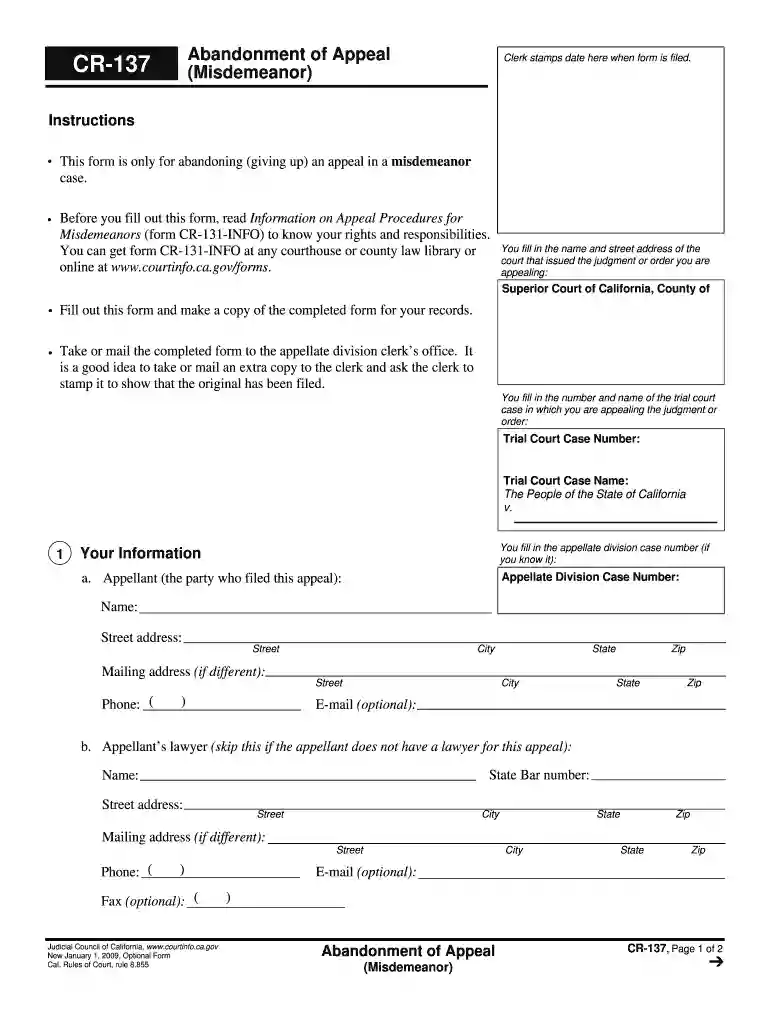
The Abandonment of Appeal (Misdemeanor) CR-137 form is specifically designed for individuals who wish to voluntarily abandon their appeal in a misdemeanor case. This legal document signifies the appellant's decision to discontinue pursuing the appeal process within the California court system. It is crucial for individuals to clearly understand the implications of abandoning an appeal, as it can impact the outcome of the case and any potential penalties or consequences associated with the original misdemeanor conviction. Detailed comprehension of this form helps ensure the appellant’s rights are respected and that they fully acknowledge the legal repercussions of their decision.
Download and Print the Form: Obtain the CR-137 form from a reliable source, such as a local courthouse or the official court website. Ensure you have a printed copy for manual completion.
Fill Out Appellant Information: Provide detailed personal information, including your name, address, and contact details. This section helps identify the appellant in the court records.
Include Case Information: Detail the court case number, the court location, and relevant dates concerning your misdemeanor appeal. This ensures proper filing and tracking within the judicial system.
State Reasons for Abandonment: Although optional, including a reason for abandoning the appeal can offer clarity and context for the decision. This sub-section provides an opportunity to explain any extenuating circumstances.
Signature and Date: The form requires your signature and the date of completion. This confirms your decision and finalizes the abandonment process.
Submit to the Appellate Division Clerk's Office: File the completed form at the appropriate appellate division clerk's office. Confirm with the clerk that all necessary components are accurately filled out.
Abandoning an appeal using the CR-137 form is a legally-binding decision. It is essential for appellants to acknowledge that once the form is filed, the decision is typically irreversible, and the appellant relinquishes any opportunity to challenge the original misdemeanor conviction through that appeal pathway. Legal counsel can provide guidance and ensure that the decision aligns with the appellant's broader legal strategy. Consulting with an attorney before proceeding can also clarify any legal questions and provide peace of mind.
The primary users of the CR-137 form are appellants in misdemeanor cases within the California court system who have decided to discontinue their appeals. This decision might be taken due to various reasons, such as reaching an agreement with the prosecution, deciding to accept the original judgment, or due to changes in personal circumstances that make pursuing the appeal impractical. Legal representatives and advisers may assist appellants in completing and filing the form, ensuring it adheres to court expectations and requirements.


The successful completion and submission of this form depend on accuracy and timely filing, emphasizing the importance of thorough attention to detail during the process.
Appellants may choose to file the CR-137 form for several reasons. Some may find that the resources required to continue an appeal outweigh the perceived benefits, particularly if the likelihood of a favorable judgement on appeal is deemed low. Others may have reached a satisfactory resolution through negotiation or independent settlement outside the formal appeal process. Additionally, changes in life circumstances or new evidence could prompt appellants to reconsider their initial decision to appeal, leading them to finalize their case sooner by filing the CR-137 form.
In California, the CR-137 form must be filed in compliance with the state's judicial procedures. The form is specific to the California legal system and reflects the unique rules of the appellate process within the state. Appellants must adhere to these procedures to ensure their abandonment of appeal is recognized by the court, formally ending the appeal process. Understanding state-specific guidelines is crucial for proper filing and to avoid any administrative errors that might result in delays or complications in the case resolution.
These examples demonstrate practical scenarios illustrating why individuals might choose to abandon their appeal and use the CR-137 form successfully.
We've got more versions of the Abandonment of Appeal (Misdemeanor) CR-137 Clerk stamps date here when form is filed - courts ca form. Select the right Abandonment of Appeal (Misdemeanor) CR-137 Clerk stamps date here when form is filed - courts ca version from the list and start editing it straight away!
At DocHub, your data security is our priority. We follow HIPAA, SOC2, GDPR, and other standards, so you can work on your documents with confidence.
You fill in the appellate division case number (if you know it):. Clerk stamps date here when form is filed. Your Information. 1 a. Appellants lawyer (skip
Jan 1, 2016 original and two copies of the form must be filed with the appeals clerk in the criminal division of the Hall of Justice, within the time


