




01. Edit your establishment board of online
Type text, add images, blackout confidential details, add comments, highlights and more.

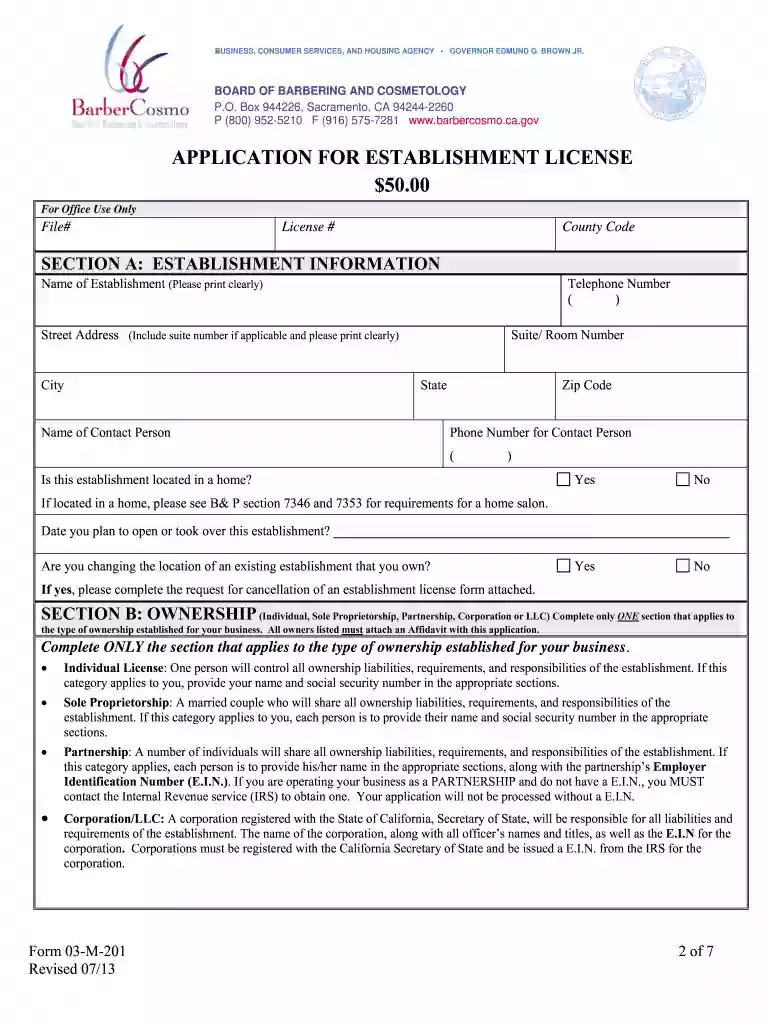
Type text, add images, blackout confidential details, add comments, highlights and more.

Draw your signature, type it, upload its image, or use your mobile device as a signature pad.

Send it via email, link, or fax. You can also download it, export it or print it out.
The "establishment board of" typically refers to a governing body responsible for overseeing specific industries or professions, ensuring compliance with state laws and regulations. In many contexts, this term is associated with the regulatory authority that issues licenses and monitors activities within industries like cosmetology, construction, or health care. Understanding the role and responsibilities of such a board is crucial, as it directly impacts how businesses operate within their respective fields.
The purpose of an establishment board is multifaceted. Primarily, it serves to protect public welfare by setting standards of practice, ensuring professionals meet these standards, and taking disciplinary actions when necessary. For businesses, this means adhering to ethical practices and maintaining quality in service delivery.
Some boards may focus on education and training, setting benchmarks for required skills, and updating these as industry standards evolve. By doing so, they ensure professionals remain informed about new advancements or regulatory changes. Therefore, having a clear understanding of what the establishment board oversees can greatly aid businesses and professionals in maintaining compliance and improving service quality.
Obtaining necessary permits or licenses from an establishment board requires submitting specific documentation. These documents typically serve to establish the credibility and eligibility of the applicant to receive the license or permit. Commonly required documents might include:
Applicants should ensure all submitted documents are current, valid, and match the requirements specified by their particular establishment board. It's vital to review the board's guidelines or speak with representatives to confirm what's needed for a successful application.
Completing an application for an establishment board license or permit involves several critical steps that must be carefully followed. Here is a generic process that may vary slightly depending on the specific board:
Gather Information: Collect all necessary information and documents required for the application. This includes personal details, business information, and professional credentials.
Complete the Application: Fill out the application form with accurate and updated information. Ensure all sections are complete to avoid delays.
Submit the Application: Depending on the board, applications can be submitted online, via mail, or in person. Check the preferred or required method by the board.
Pay Necessary Fees: Application submission often requires payment of processing or licensing fees. These fees can vary based on the type of license or permit.
Await Review and Approval: Once submitted, the application will undergo a review process. This may include an inspection or interview.
Respond to Additional Requests: The board may request additional information or documents. Respond promptly to such requests to avoid delays.
Once a license or permit is obtained from an establishment board, it is crucial to understand its proper use and the associated responsibilities. Utilizing such documents appropriately is vital for maintaining compliance and operational legality.
Display the License Prominently: Many boards require the license to be displayed at the place of business. This practice not only complies with regulations but also instills customer confidence.
Renewal and Maintenance: Understand the renewal process, including deadlines and required continuing education or training. Keep aware of when your license expires and initiate the renewal process well before deadlines.
Regular Updates: Stay informed about changes in laws that may affect your licensure. Boards often update requirements or enact new regulations.
A license is more than just a piece of paper—it validates your authority to operate within the industry's regulatory framework, contributing to the establishment's credibility.
Failing to comply with the standards set by the establishment board can result in severe penalties. Understanding these can prevent costly legal repercussions and help maintain a business’s reputation.
Fines and Fees: Monetary penalties are among the most common consequences. These can vary in amount based on the severity of the non-compliance.
License Revocation or Suspension: Persistent failure to comply can lead to temporary suspension or permanent revocation of licensure, halting operations legally.
Disciplinary Actions: Boards may impose disciplinary actions, which could include additional training requirements, public notification of infractions, or other corrective measures.
Knowledge of these penalties underscores the importance of maintaining compliance and meeting all regulatory requirements set forth by the board. Regular audits and internal reviews can help businesses stay within these guidelines.
Rules and regulations related to establishment boards can vary from state to state. Professionals and businesses must be aware of these differences to ensure compliance across different jurisdictions.
Licensing Requirements: States may have differing requirements for obtaining a license, including varying educational or professional experience prerequisites.
Inspections: The frequency and nature of inspections conducted by the board can differ. Some states might have more stringent inspection protocols or additional requirements.
Regulatory Updates: States update their regulatory frameworks based on legislative changes or industry demands. Staying informed about these changes is crucial for continued compliance.
Understanding state-specific rules helps businesses operate smoothly across state lines and aids in planning for expansion or relocation of operations.
The process of applying for and obtaining an establishment board license is time-bound and varies across different boards and states. Knowing what to expect can streamline the planning and preparation stages.
Application Submission: Be clear on whether the application can be submitted electronically, via mail, or in person, as timing can depend on the method.
Processing Time: Approval time can range from weeks to months. Having all documents in order can expedite this process.
Inspection and Interview Requirements: Some boards require an inspection or interview as part of the process. Scheduling these promptly can speed up approval.
Understanding the full cycle from application submission to approval helps in adequately planning business operations and timelines, avoiding unnecessary delays.
The licenses or permits issued by establishment boards are used across various industry categories. Knowing who typically requires these can help identify relevance and applicability to your context.
Beauty and Cosmetology Services: Salons, spas, and cosmetology professionals need licenses issued by relevant establishment boards to operate legally.
Construction and Architecture: Contractors and firms often need permits and licenses to undertake projects, bearing responsibility for compliance.
Health Care Facilities: Clinics, nursing homes, and hospitals obtain licenses to meet health and safety standards mandated by health establishment boards.
These licenses ensure that these operations maintain professional standards, abide by safety regulations, and provide services legally to customers.


Using an establishment board license comes with legal responsibilities that ensure industry standards and public safety. Understanding the rights and restrictions associated with these licenses is essential.
Adhering to Standards: Comply with all operational standards and guidelines specific to the industry, such as hygiene protocols in cosmetology.
Reporting Obligations: Many licenses require regular reports or updates to the board, ensuring ongoing compliance and operational transparency.
Legal Protection: Having a valid license often provides a layer of legal protection, showcasing intent to adhere to applicable laws and standards.
This understanding ensures that businesses and professionals operate within the legal scope, contributing to industry integrity and public confidence in services provided.
We've got more versions of the establishment board of form. Select the right establishment board of version from the list and start editing it straight away!
At DocHub, your data security is our priority. We follow HIPAA, SOC2, GDPR, and other standards, so you can work on your documents with confidence.
All establishments where cosmetology is practiced must be licensed as a cosmetology establishment. Establishments must also obtain a license before opening a
The board will advise and support Toolworks to ensure that policies and practices are aligned with and adhere to the Agencys overall mission, values, and
The Board shall consist of 5 members, to be appointed by the President, by and with the advice and consent of the Senate.


