Definition & Meaning
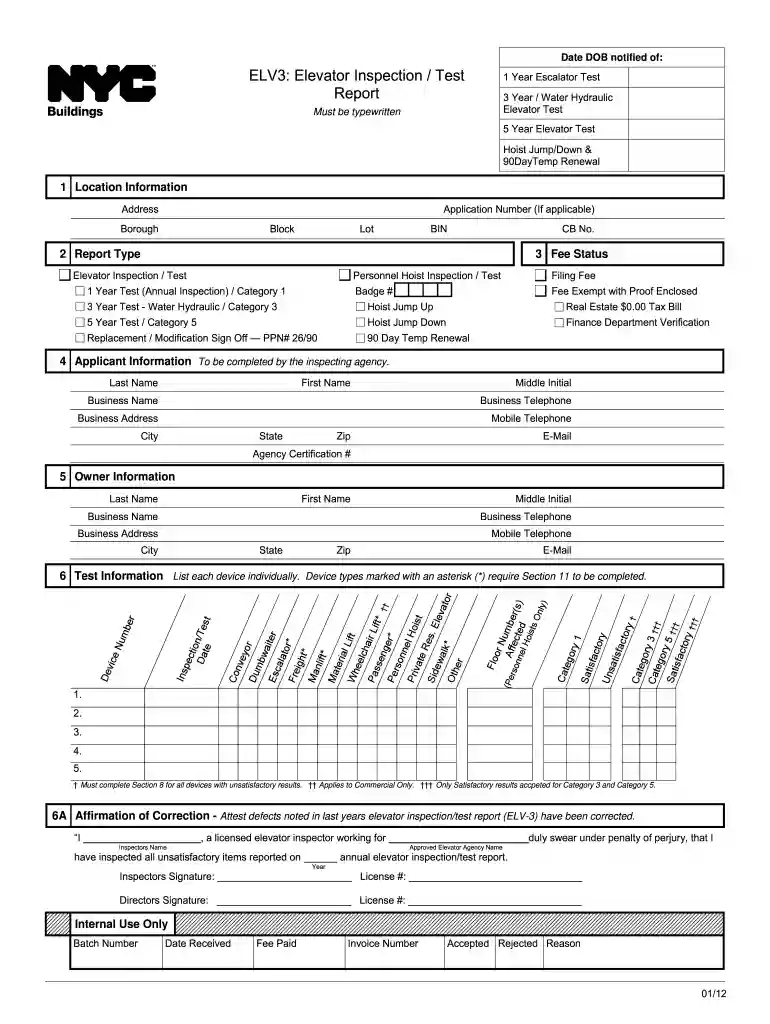
The "cat 1 elevator test procedures" refer to a set of guidelines and steps specified for conducting Category 1 elevator safety tests. These procedures ensure that elevators are functioning correctly and safely according to regulatory standards. The Category 1 test typically covers annual safety inspections that include checks on elevator components such as brakes, suspension ropes, doors, and emergency systems. Regular testing is crucial to maintain operational safety and compliance with local regulations.
Key Elements of the Cat 1 Elevator Test Procedures
- Inspection Items: Tests focus on essential elevator elements including the brake system, electrical components, and emergency lights.
- Safety Tests: Procedures include safety device functionality checks to ensure that all protective systems are operational.
- Documentation: Accurate recording of test results is required, detailing each inspected item and any anomalies found.
- Compliance Standards: The procedures align with state or federal standards to ensure full regulatory compliance.
How to Use the Cat 1 Elevator Test Procedures
To properly execute cat 1 elevator test procedures, you must follow the prescribed sequence of steps, ensuring that each component is thoroughly inspected and documented.
- Preparation: Gather all necessary tools and safety equipment.
- Initial Inspection: Conduct visual checks for obvious defects or wear.
- Functional Testing: Operate the elevator to test lift function, including emergency stops.
- Component Checks: Focus on critical parts like suspension ropes and brakes.
- Recording Results: Document findings on testing forms for future reference.
Practical Scenarios
- Commercial Buildings: Ensure tenant safety and regulatory compliance by scheduling regular tests.
- Residential Complexes: Maintain the functionality of shared elevators for residents' convenience and safety.
Steps to Complete the Cat 1 Elevator Test Procedures
Completing the cat 1 elevator test procedures involves a detailed step-by-step checklist to ensure nothing is overlooked during the process.
- Pre-Test Setup: Verify all testing tools are available and in working condition.
- Safety Measures: Implement necessary precautions to ensure safety of personnel and equipment.
- Execution of Tests: Carry out each testing protocol as per the guidelines.
- Post-Test Review: Analyze results and make necessary entries in the inspection report.
- Corrections and Maintenance: Address any defects found during the test and document corrective actions.
Examples of Using the Cat 1 Elevator Test Procedures
- Office Towers: Regular monthly and annual checks to minimize disruptions.
- Shopping Malls: Consistent safety tests to handle high foot traffic conditions.
How to Obtain the Cat 1 Elevator Test Procedures
Accessing the cat 1 elevator test procedures typically involves reaching out to regulatory bodies or professional organizations that oversee elevator safety.
Sources for Obtaining Procedures
- Regulatory Authorities: State or city departments responsible for building safety.
- Professional Associations: Groups such as the Elevator Industry Association may provide detailed guidelines.
- Consultation with Experts: Engaging qualified elevator inspectors or consultants.
Application Process & Approval Time
Depending on jurisdiction, predictable timelines and documentation requirements exist for applying for relevant approvals and certifications post-tests.
Legal Use of the Cat 1 Elevator Test Procedures
The cat 1 elevator test procedures are legally recognized and must be adhered to ensure compliance. Failing to conduct these tests can result in penalties, legal liabilities, or operational stoppages.
- Regulatory Adherence: Must follow the specific standards set by building and safety codes.
- Insurance Requirements: May impact insurance coverage and liabilities.
- Legal Implications: Accurate records are essential for legal compliance and accountability.
Penalties for Non-Compliance
Failure to comply with these procedures can lead to serious repercussions, including:
- Fines and Penalties: Financial impacts due to neglect or improper practice.
- Legal Liabilities: Operational halts or damages if an incident occurs due to non-compliance.
- Closure Orders: Official mandates to cease operations until compliance is ensured.
State-Specific Rules for the Cat 1 Elevator Test Procedures
Cat 1 elevator test procedures can vary significantly depending on state regulations, reflecting local standards and safety concerns.
- New York: In-depth procedures with stringent documentation requirements.
- California: Emphasis on seismic safety standards due to geographical considerations.
- Texas: Focus on high-temperature operation tests for components and safety systems.
Important Terms Related to Cat 1 Elevator Test Procedures
Understanding key terminology is crucial for effectively following test procedures:
- Load Test: Evaluation of elevator's capacity to handle maximum rated weight safely.
- Buffer Test: Examines the ability of terminal stopping devices to prevent over-travel.
- Rope Inspection: Assessment of suspension cables for wear or damage.
Important Dates & Filing Deadlines
Conducting these tests on schedule is crucial for maintaining elevator safety and compliance.
- Annually or Biannually: Depending on regulations, test frequency may vary.
- Renewal Deadlines: Keep track of certification and permit renewal dates to avoid penalties.
- Routine Checks: Implement monthly or quarterly checks for visual and minor component inspections.
Submission Methods (Online, Mail, In-Person)
Reports of these tests might need to be submitted to local authorities using various methods:
- Online Submission: Many jurisdictions support electronic submissions for quicker processing.
- Mail: Physical copies can be mailed to designated regulatory offices.
- In-Person: Submission in person may be required, particularly for large-scale testing reports.
In summary, understanding and properly conducting the cat 1 elevator test procedures is vital for ensuring the safety, functionality, and regulatory compliance of elevators across various settings.