




01. Edit your form online
Type text, add images, blackout confidential details, add comments, highlights and more.

Type text, add images, blackout confidential details, add comments, highlights and more.

Draw your signature, type it, upload its image, or use your mobile device as a signature pad.

Send it via email, link, or fax. You can also download it, export it or print it out.
The "guardians of the property training - Maryland Courts" refers to a specialized educational program mandated by the Maryland legal system for individuals appointed as guardians of the property. This training provides essential knowledge and skills to effectively manage the fiduciary responsibilities associated with safeguarding a minor's or disabled person's estate. The program ensures that guardians understand their legal obligations, financial management duties, and reporting requirements.
Guardianship involves managing various forms of property, including real estate, securities, and personal assets. The training emphasizes the importance of accurately valuing and reporting these assets, ensuring that the guardian acts in the best interests of the ward. Participants learn about the legal framework that governs these duties and the significance of maintaining transparency and accountability in all their actions.
Registration: Individuals appointed as guardians must first register for the training through the Maryland Courts' official website or designated portals.
Module Completion: The training is divided into several modules covering different aspects of property management, legal responsibilities, and fiduciary duties. Participants must complete each module, which includes videos, readings, and quizzes.
Assessment: Upon completion of the training modules, participants are required to pass an assessment to demonstrate their understanding of the material. This may be a combination of multiple-choice questions and case studies.
Certification: Successful completion of the assessment results in certification, which is necessary to fulfill the court’s requirement and officially assume guardianship duties.
Ongoing Compliance: Guardians should remain informed about any changes in laws or regulations affecting their responsibilities. Periodic refresher courses may be available to ensure continued compliance.
Fiduciary Duty: The legal obligation of guardians to act in the best interest of their ward, managing their assets with care and diligence.
Orphans' Court: A specialized court in Maryland responsible for handling guardianship cases among other probate matters.
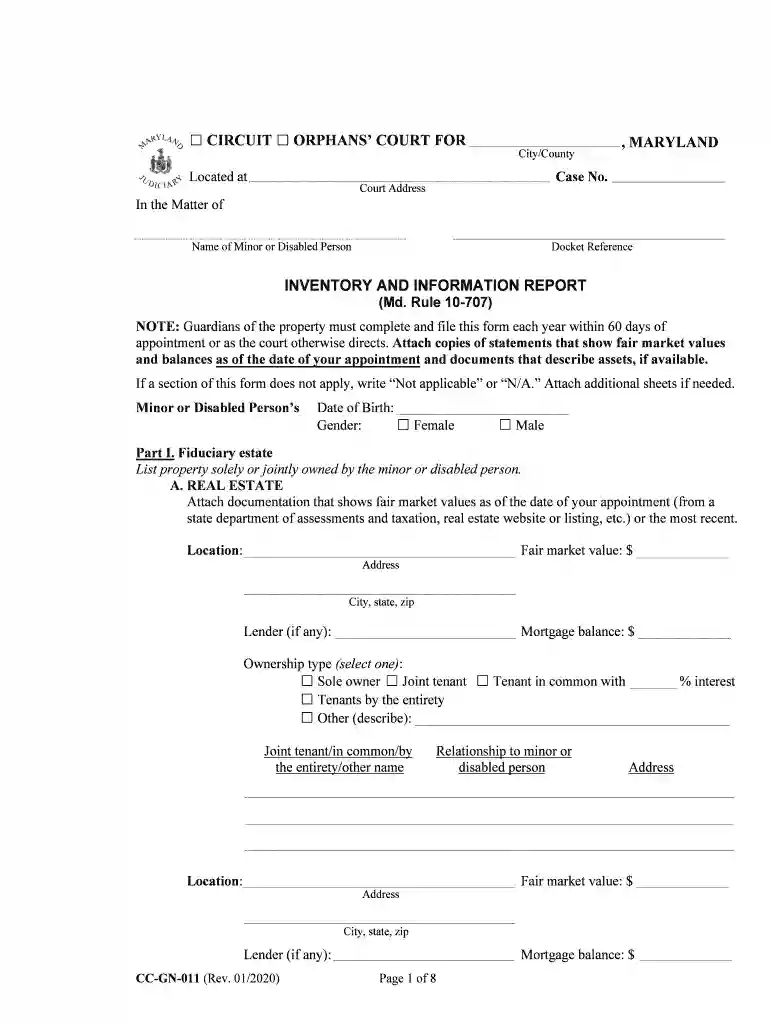
Inventory and Information Report: A mandatory document for guardians, outlining all assets and liabilities belonging to the ward.
Fair Market Value: The estimated value of an asset, reflecting the price it would fetch in an open competitive market.
These terms are essential for understanding the legal and financial context in which guardians operate, helping them to effectively fulfill their roles.
The primary users of the "guardians of the property training - Maryland Courts" are individuals appointed by the Orphans' Court to manage the estates of minors or disabled individuals. These appointed guardians can be family members, close friends, or professional fiduciaries.
The training is also relevant to attorneys and legal professionals who may be involved in advising or representing guardians in court. Understanding the curriculum helps them provide better guidance and ensure that their clients meet all legal obligations.
Organizations offering fiduciary services might use this training as part of their staff development, ensuring that employees understand Maryland's specific requirements for guardianship.


The legal framework surrounding the "guardians of the property training - Maryland Courts" is designed to ensure that guardians are well-equipped to manage their wards' estates, minimizing risks of mismanagement. Completing the training is a legal requirement, emphasizing its importance in protecting the interests of minors and disabled individuals.
Maryland law stipulates that guardians must submit regular reports to the court, documenting the financial status and changes in the estate under their management. This is crucial for maintaining oversight and ensuring guardians uphold their fiduciary responsibilities.
Failure to complete the required training may lead to removal as a guardian, as it signifies non-compliance with the safeguards put in place by the Maryland Courts to protect vulnerable individuals’ estates.
Maryland has unique regulations concerning guardianship that differ from other states, emphasizing comprehensive training for guardians. One key distinction is the state's use of the Orphans' Court, a judicial body with specific jurisdiction over guardianship cases.
Maryland requires annual reports from guardians which must include detailed inventories of assets and liabilities, presented with fair market values and supported by documentation. The state's training program is designed to equip guardians with the ability to accurately compile and submit these reports.
This focus on documentation and reporting is more stringent compared to some other states, where guardianship rules may vary in complexity and enforcement.
Guardians are required to submit several important documents as part of their appointment and ongoing duties. These include:
Initial Petition for Guardianship: Filed to request legal appointment as a guardian.
Inventory and Information Report: Documenting all assets and liabilities within sixty days of appointment.
Annual Fiduciary Report: Submitted every year, detailing the financial activity in the estate.
Each document must be filled out accurately and submitted within specified deadlines, demonstrating the guardian's adherence to court expectations and legal standards.
Consider a family member appointed as a guardian for a minor inheritance following a parent's death. This guardian must complete the training to understand how to manage financial assets sustainably, ensuring that the minor’s future needs are met and preserved until adulthood.
In a different scenario, a professional fiduciary appointed to manage the assets of a disabled adult uses the training to navigate complex financial and legal landscapes, applying skills to safeguard the ward's long-term welfare.
These real-world scenarios underscore the essential role the training plays in preparing guardians for the diverse challenges they might face.
Failure to complete the "guardians of the property training - Maryland Courts" and adhere to its guidelines can result in significant legal consequences. These may include the revocation of guardianship responsibilities and potential legal action for mismanagement or neglect of duty. Repercussions may extend to financial penalties, especially if the guardian’s actions have resulted in loss to the ward’s estate.
Maryland courts take non-compliance seriously, reflecting the critical role that well-informed guardians play in protecting and managing the assets of those who cannot do so themselves.
We've got more versions of the guardians of the property training - Maryland Courts form. Select the right guardians of the property training - Maryland Courts version from the list and start editing it straight away!
At DocHub, your data security is our priority. We follow HIPAA, SOC2, GDPR, and other standards, so you can work on your documents with confidence.
Guardians of the person and property must complete a training program. The training covers a guardians specific responsibilities and provides helpful
Jun 9, 2025 Comprehensive technology risk and cybersecurity training programs should be developed for the Board, ensuring they are regularly apprised of
This is a review of the guardianship statutes for all 50 states and the District of Columbia. Note that changes to the legislation may have occurred since the


