






Definition & Meaning
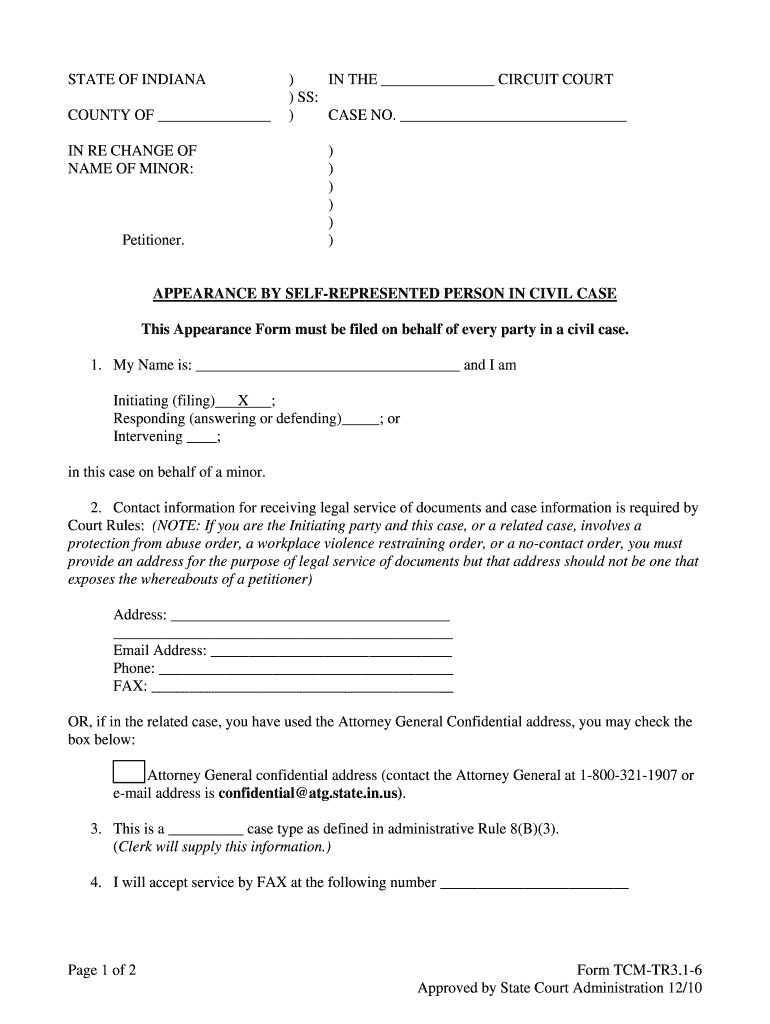
The "Indiana - Appearance by Self-Represented Person in Civil Case (Minor)" is a legal document used within the State of Indiana, permitting individuals to represent themselves in a civil case concerning the change of a minor's name. This form is part of a broader category of legal documents aimed at facilitating the process for individuals without formal legal representation. Essentially, it serves as an official acknowledgment of one's participation in a case, laying out personal details and ensuring compliance with Indiana's local court procedures.
How to Use the Indiana - Appearance by Self-Represented Person in Civil Case (Minor)
Using this form involves several clear steps aimed at ensuring it is completed properly:
- Obtain the Form: Download the document from an official source, such as the Indiana court website or a trusted document management platform like DocHub.
- Complete Personal Information: Fill in sections regarding your name, address, and contact details.
- Detail Case Information: Include specific information about the minor’s civil case, ensuring accuracy to avoid discrepancies.
- Acceptance of Service: Decide whether you wish to accept service via fax, and mark the appropriate field.
- Submission: Submit the completed form to the relevant Indiana court. Online platforms or physical mail are common submission methods.
Steps to Complete the Indiana - Appearance by Self-Represented Person in Civil Case (Minor)
Completing this form can be broken down into a series of methodical steps:
- Download the Form: Ensure you have the latest version from an official source.
- Provide Personal Details: Enter your full name and contact information, ensuring all information is current and accurate.
- Identify the Case: Clearly state the type and details of the civil case, particularly noting the aspect related to the minor.
- Answer Additional Questions: Respond to queries about related cases or local rule requirements to ensure completeness.
- Select Service Preference: Make a decision regarding acceptance of legal service via fax and indicate your preference.
- Check Completion: Review the form for errors or omissions before submission.
- File the Form with the Court: Submit electronically if possible, or mail a printed version to the appropriate court.
Key Elements of the Indiana - Appearance by Self-Represented Person in Civil Case (Minor)
The key elements of this form include:
- Personal Information: Details such as your name, address, and contact information.
- Legal Service Contact Details: Information related to how you prefer to receive legal documents.
- Case Identification: Identifiers for the specific civil case involving the minor.
- Service Acceptance Options: Fields for electing to receive services via fax.
- Queries on Related Cases: Sections for indicating if there are additional related legal matters or information required by local rules.
Important Terms Related to Indiana - Appearance by Self-Represented Person in Civil Case (Minor)
Understanding specific terms within this context is crucial:
- Self-Represented: Refers to an individual who chooses to represent themselves in legal matters without the aid of an attorney.
- Civil Case: A non-criminal legal dispute, in this instance, concerning a change of a minor’s name.
- Appearance: A formal documentation of one's involvement and role in a legal case.
Legal Use of the Indiana - Appearance by Self-Represented Person in Civil Case (Minor)
This form is legally significant in several ways:
- Establishes Jurisdiction: Confirms your participation in the case and subjects you to Indiana's legal proceedings.
- Facilitates Communication: Streamlines how the court and other legal parties interact with you, particularly regarding the delivery of legal notices.
- Ensures Compliance: By filing this document, individuals affirm their willingness to abide by procedural rules and timelines specific to Indiana.
State-Specific Rules for the Indiana - Appearance by Self-Represented Person in Civil Case (Minor)
Indiana has several specific rules governing use of this form:
- Local Rules Compliance: The form must be aligned with local court rules which may vary from one Indiana county to another.
- Submission Methods: Indiana courts may have specific preferences for submission, including electronic filing systems to optimize processing efficiency.
- Response Requirements: The form often includes deadlines and conditions under which additional responses or actions must be undertaken.
Who Typically Uses the Indiana - Appearance by Self-Represented Person in Civil Case (Minor)
This form is primarily utilized by:
- Parents or Guardians: Those taking legal steps to change a minor’s name within Indiana.
- Self-Represented Individuals: Persons opting not to hire an attorney for case representation.
- Legal Guardians: Individuals recognized by the court as legally responsible for the minor involved in the case.
By understanding and succeeding in completing this form, self-represented parties can effectively engage with Indiana's legal system regarding civil cases involving minors.