







Definition & Meaning
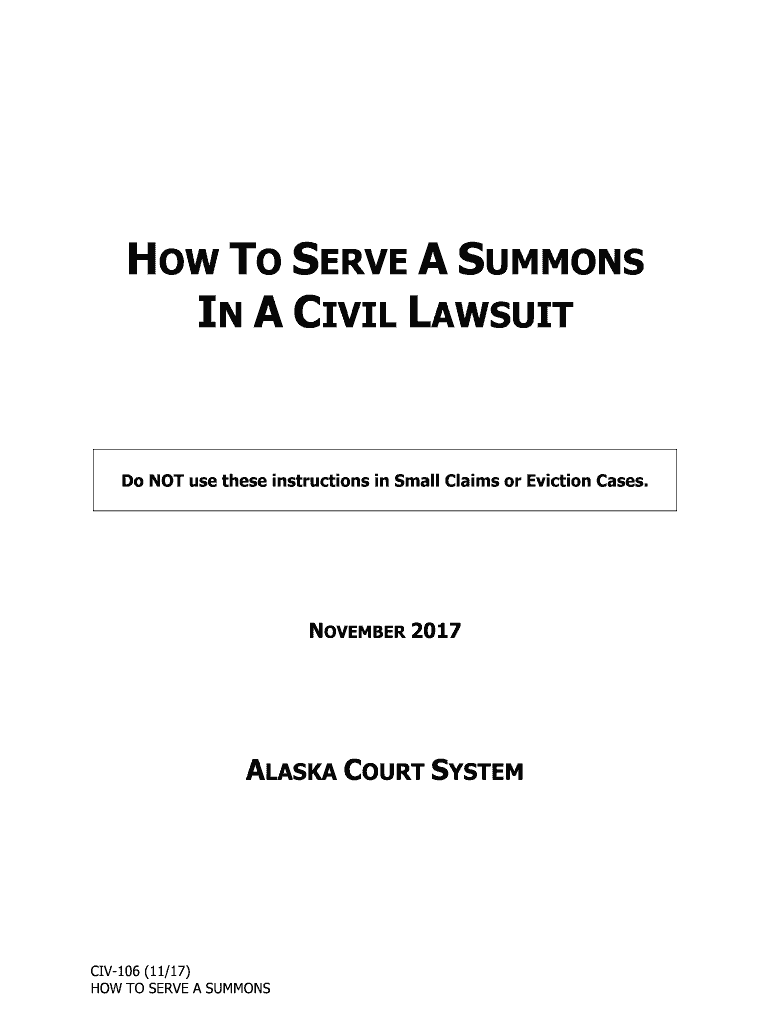
Serving a summons in a civil lawsuit is an essential part of initiating legal proceedings in Alaska. This process involves notifying a defendant that they are being sued and providing details about the lawsuit. The summons details the plaintiff's claims and informs the defendant of the steps they need to take to respond. The "Alaska How to Serve a Summons in a Civil Lawsuit Civil Forms" is a critical tool used in this legal process.
How to Use the Alaska How to Serve a Summons in a Civil Lawsuit Civil Forms
To effectively use the forms, it is important to understand the specific information they require. These forms guide plaintiffs through the necessary steps to legally notify defendants of a lawsuit. The forms include sections for personal information, details of the lawsuit, and methods of service. Users should carefully follow all instructions to ensure compliance with legal requirements.
Steps to Complete the Forms
Completing the forms requires attention to detail. Here’s a step-by-step guide:
- Fill in Plaintiff and Defendant Information: Start by providing the full legal names and contact information for both the plaintiff and the defendant.
- Describe the Nature of the Lawsuit: Clearly outline the reason for the lawsuit and any related claims or legal grounds.
- Select a Method of Service: Choose from personal service, certified mail, or alternative service methods, depending on availability and legal appropriateness.
- Complete the Required Sections: Ensure all sections are filled accurately, including affidavits when necessary.
- Review for Accuracy: Double-check all information for compliance and correctness before filing.
Legal Use of the Alaska How to Serve a Summons in a Civil Lawsuit Civil Forms
The forms must adhere to Alaska’s legal standards to be valid. They are designed for use by individuals or entities initiating a civil lawsuit in the state. Proper use of these forms ensures legal compliance and avoids potential dismissal of the case. It's crucial to follow state-specific rules regarding timelines, service methods, and documentation.
Important Terms Related to the Forms
- Summons: A legal document issued by a court or a governmental agency for various purposes, namely to inform a person of a lawsuit against them.
- Plaintiff: The person or entity who initiates the lawsuit.
- Defendant: The person or entity being sued.
- Process Server: A professional authorized to deliver legal documents.
State-Specific Rules
Alaska has specific rules and procedures for serving a summons, which can differ from those in other states. The forms must be used in accordance with Alaska civil procedure laws, which dictate permissible service methods and timelines. It's important to familiarize yourself with these rules or consult a legal professional to ensure compliance.
Examples of Using the Forms
In practice, using these forms can vary depending on the case type:
- For Individuals: John, an Alaska resident, uses the summons forms to notify a local business of a lawsuit regarding breach of contract.
- For Businesses: A corporation serving a summons to a competing business for unfair competition.
- Alternative Service Methods: When the defendant cannot be located, such as serving notice via publication in a local newspaper.
Form Submission Methods
There are several options for submitting completed forms:
- Online: Filing through Alaska's court electronic filing system.
- Mail: Sending forms via certified mail to the appropriate court.
- In-Person: Direct submission at a courthouse.
Each method has its own procedures and potential costs, so choose based on convenience and necessity.
Penalties for Non-Compliance
Failure to serve a summons properly can result in significant consequences, including the dismissal of the case or delayed legal proceedings. The court may require the plaintiff to restart the process, potentially incurring additional time and expense. Compliance with service rules is crucial to prevent such outcomes.
In summary, the "Alaska How to Serve a Summons in a Civil Lawsuit Civil Forms" are indispensable for initiating a lawsuit in Alaska. By understanding how to complete and use these forms within legal parameters, plaintiffs can ensure their case progresses smoothly through the judicial system.




