




01. Edit your form online
Type text, add images, blackout confidential details, add comments, highlights and more.

Type text, add images, blackout confidential details, add comments, highlights and more.

Draw your signature, type it, upload its image, or use your mobile device as a signature pad.

Send it via email, link, or fax. You can also download it, export it or print it out.
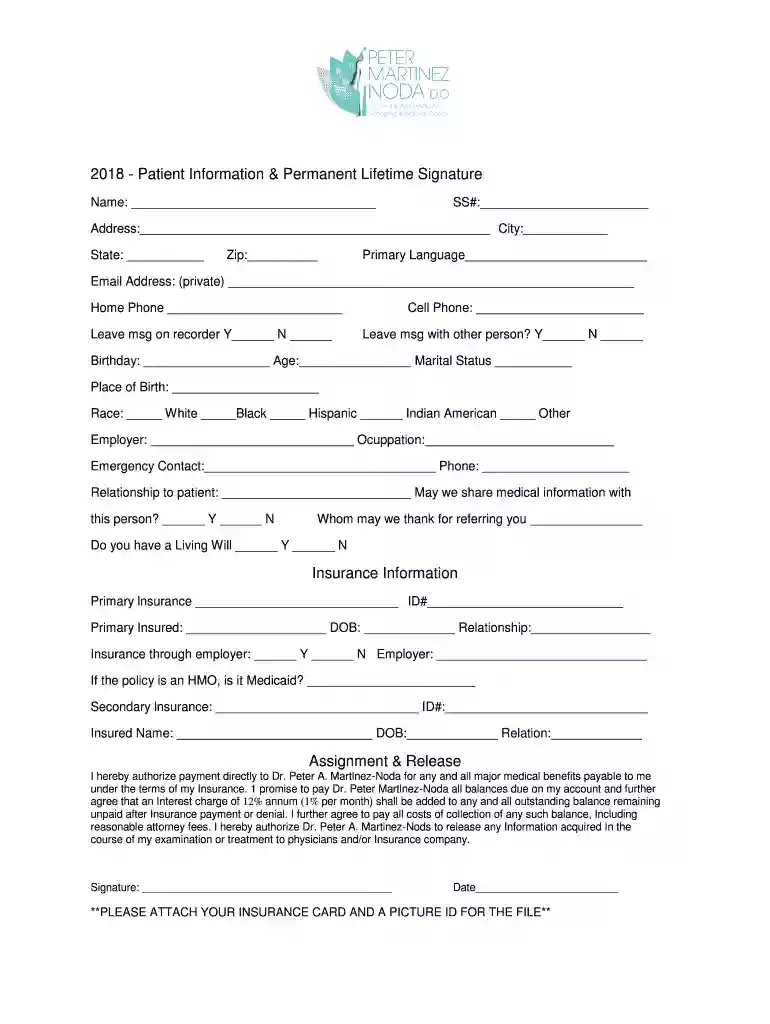
The "2018 - Patient Information and Permanent Lifetime Signature" form is a comprehensive document used primarily in medical practices to collect and maintain essential patient data. It serves as a permanent record that combines patient information with a lifetime consent signature, authorizing the healthcare provider to manage and use the patient's information according to set policies. This form typically includes personal details, medical history, insurance information, and consent to comply with privacy practices like HIPAA.
Using the form effectively involves multiple steps for both the medical practice and the patient. Healthcare providers should ensure the form is fully completed and updated as necessary to keep patient data current. Patients must carefully fill out each section, ensuring accuracy to prevent administrative issues. Once filled, the form should be securely stored in the patient's file, either digitally or in paper format, ensuring compliance with security protocols and regulations.
Personal Information: Patients should provide their full name, date of birth, address, and contact information.
Insurance Details: Input insurance provider, policy number, and any additional coverage information.
Medical History: Detail past medical conditions, current medications, and any allergies.
HIPAA Compliance: Acknowledge and consent to the healthcare provider’s use of personal information as per HIPAA guidelines.
Financial Responsibilities: Read and agree to the financial policies concerning payment obligations and missed appointments.
Signature: Provide a signature granting lifelong consent for document usage as outlined in the form's provisions.
The legal validity of this form is underscored by compliance with the ESIGN Act, ensuring that digital signatures are recognized and enforceable. The form’s comprehensive coverage of patient consent for data usage and policy agreement helps prevent potential legal disputes, encouraging transparency and trust between the healthcare provider and patients. It is crucial for the form to be regularly reviewed and updated to reflect any changes in legal requirements or institutional policies.
This form is predominantly utilized by medical practices, including individual practitioners, clinics, and hospitals. It is essential for new patient intake, ensuring that medical teams have access to vital information. Insurance companies may also rely on the data provided in the form when assessing claims. Patients, especially those with ongoing medical needs, benefit from having a single document that consolidates important information.


Patients may need to provide additional documentation to complement the form, such as:
Failure to complete or update the form can result in administrative delays or denial of services. For healthcare providers, neglecting to maintain or secure these forms can lead to breaches of patient confidentiality, potentially resulting in legal penalties or fines under HIPAA regulations. It is imperative that all parties involved understand the importance of accurate, timely completion and secure handling of the form.
We've got more versions of the 2018 - Patient Information and Permanent Lifetime Signature form. Select the right 2018 - Patient Information and Permanent Lifetime Signature version from the list and start editing it straight away!
At DocHub, your data security is our priority. We follow HIPAA, SOC2, GDPR, and other standards, so you can work on your documents with confidence.
Aug 23, 2015 The patients family members responded to questions about how frequently patients had signed durable power of attorney documents or living wills
Important factors must be assessed when considering early detection of prostate cancer, including patient age, life expectancy, family history, race, presence


