







Definition & Meaning
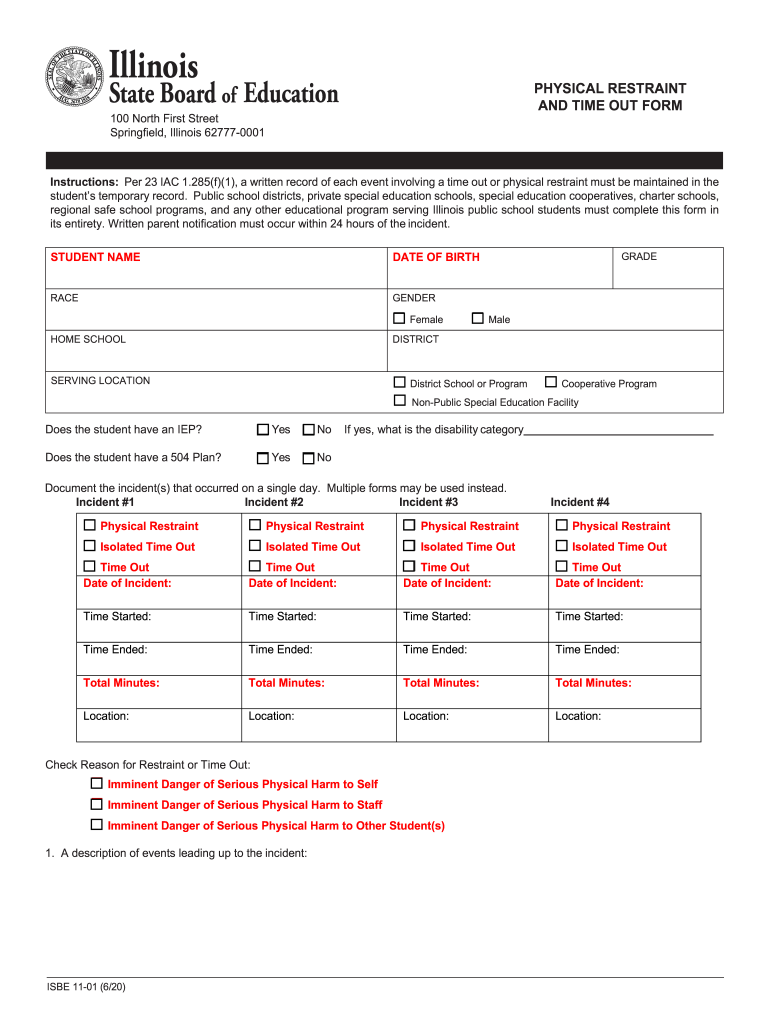
The "Physical Restraint and Time Out Form - Illinois State Board of" is a critical document used within educational settings in Illinois to accurately record incidents involving physical restraint or time-out interventions for students. The form ensures compliance with state regulations by capturing detailed information about such incidents. This documentation is vital for maintaining transparency, safety, and accountability within schools. It not only guides educators and staff in proper reporting practices but also protects the rights and well-being of students.
How to Use the Physical Restraint and Time Out Form
To effectively use the form, education staff must complete several key sections with precision. First, staff must document the specifics of the intervention, including the time, location, and duration. Details about the student involved, including any known behavioral patterns or triggers, must also be recorded. The form requires a description of the interventions used and an evaluation by trained staff. Furthermore, it is essential to follow guidelines on how to notify the student’s parents or guardians promptly.
- Incident Details: Record the exact time, location, and circumstances leading to the incident.
- Intervention Description: Provide a clear account of the type and duration of physical restraint or time-out used.
- Staff Evaluation: Include assessments and observations from staff involved in the incident.
Steps to Complete the Physical Restraint and Time Out Form
Completing the form requires careful attention to detail and adherence to a series of steps:
- Gather Relevant Information: Collect all necessary details about the incident, including student information and context.
- Fill in Incident Details: Document the specific circumstances, time, and location during which the incident occurred.
- Describe Interventions: Clearly outline the type and duration of restraint or time-out applied.
- Staff Evaluation: Input observations and evaluations made by trained staff present during the incident.
- Notify Parents or Guardians: Ensure parents or guardians are informed about the incident as soon as possible.
Key Elements of the Physical Restraint and Time Out Form
The form comprises several critical elements to ensure comprehensive documentation:
- Student Information: Includes personal details and any relevant behavioral insights.
- Incident Summary: Captures an overview of what transpired, including time/date and context.
- Interventions Used: Detailed description of methods applied during the incident.
- Staff Evaluations: Insights and observations from involved personnel.
Legal Use of the Physical Restraint and Time Out Form
The use of this form is governed by state regulations to ensure it serves its intended legal purpose. It is crucial for schools to adhere to these guidelines to avoid legal ramifications. The form ensures that all incidents are recorded in compliance with Illinois state laws, safeguarding both the educational institution and the student involved.
- Compliance: Ensures alignment with Illinois regulations regarding physical intervention in schools.
- Protection: Provides a documented safeguard for both students’ rights and institutional accountability.
Who Typically Uses the Physical Restraint and Time Out Form
The form is primarily used by educational professionals, including teachers, school administrators, and special education staff. These individuals are responsible for managing and reporting incidents of physical restraint or time-out, ensuring that they are conducted and recorded in a compliant and ethical manner.
- Teachers and Aides: Document interaction and restraint during regular school hours.
- Administrators: Review forms for compliance and follow up with necessary actions.
- Special Education Staff: Pay particular attention to students with known behavioral challenges.


State-Specific Rules for the Physical Restraint and Time Out Form
Illinois has specific regulations that dictate the use of physical restraint and time-outs, and this form plays a vital role in adhering to these. Schools must ensure that all staff are trained in the guidelines and use the form to document and review each incident:
- Regulatory Compliance: Staff must be knowledgeable about state protocols.
- Training: Schools are responsible for ensuring that staff receive proper training regarding form completion and incident management.
Penalties for Non-Compliance
Failure to properly complete and submit the form can result in significant penalties for educational institutions. This includes potential legal action, financial penalties, or loss of state funding. It is crucial for schools to establish rigorous internal protocols to ensure complete compliance:
- Legal Consequences: Non-compliance can lead to legal issues or investigations.
- Financial Repercussions: Risk of fines or reimbursement requirements from the state.
Required Documents
Alongside the Physical Restraint and Time Out Form, certain accompanying documents may be needed to provide a fuller context or compliance:
- Incident Reports: Detailed accounts from witnesses or involved staff.
- Behavioral Assessments: Evaluations that provide insights into the student’s needs and interventions used.
- Parental Communication Logs: Records of all notifications sent to parents or guardians regarding the incident.
By following these comprehensive guidelines and leveraging the form effectively, educational staff within Illinois can ensure compliance, transparency, and safeguarding of student welfare in all incidents of physical restraint or time-out.




