




01. Edit your form online
Type text, add images, blackout confidential details, add comments, highlights and more.

Type text, add images, blackout confidential details, add comments, highlights and more.

Draw your signature, type it, upload its image, or use your mobile device as a signature pad.

Send it via email, link, or fax. You can also download it, export it or print it out.
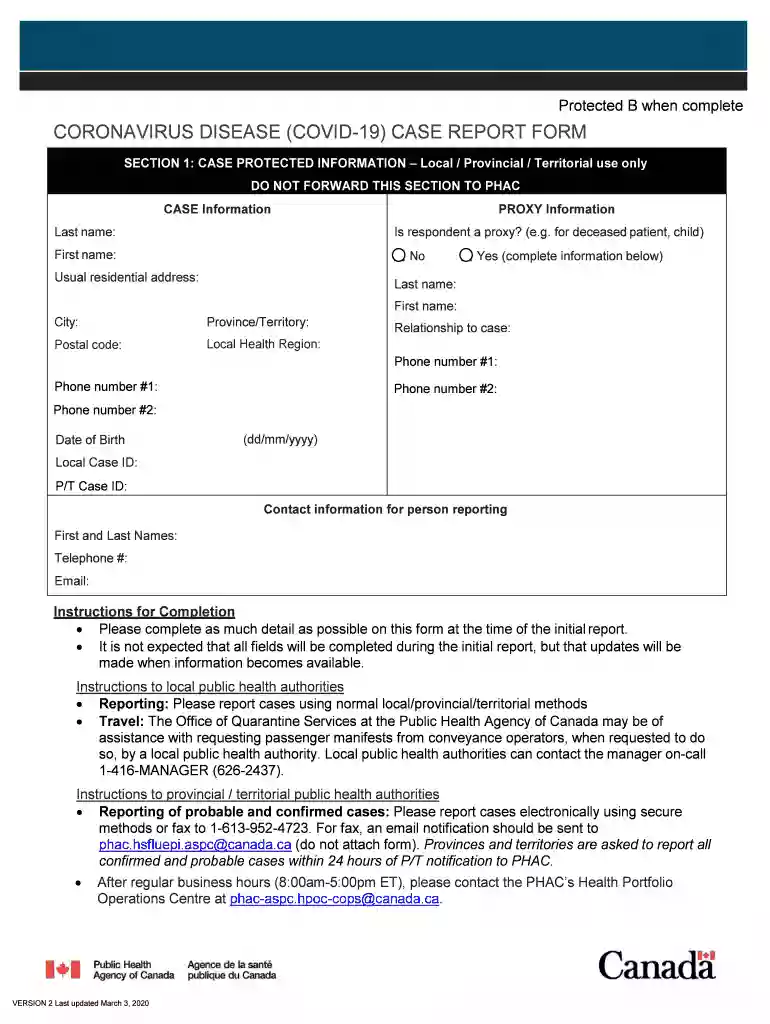
The "Interim guidance: Public health management of cases and" serves as a structured framework intended for use by public health authorities in managing and reporting cases of communicable diseases, primarily COVID-19. Its core purpose is to guide health officials in collecting, recording, and disseminating data on reported cases to ensure a comprehensive public health response. Each section of the guidance is specifically designed to capture essential details about individual cases, such as personal information, exposure history, and clinical evaluations. By centralizing this information, public authorities can better track disease spread, allocate resources effectively, and ultimately mitigate public health risks.
Collect Case Information: Start by recording the demographic details of the individual, including name, age, sex, and residence. Always ensure accuracy, as this data is crucial for case tracking.
Document Symptoms and Pre-Existing Conditions: Note any symptoms presented by the individual, correlating them with common signs of the disease in question. Previous medical conditions should be mentioned to understand vulnerability and potential complications.
Record Exposure Details: Detail any known contacts with infected individuals or visits to hotspots. This information helps trace the source and curb further spread through contact tracing efforts.
Clinical Evaluation: Include results of any diagnostic tests conducted, alongside medical assessments done by health professionals. This provides a snapshot of the current health status and necessary interventions.
Submit to Authorities: Ensure all sections are completed before submitting to the relevant health department. Timely submission facilitates rapid response and data aggregation at the state or national level.
The primary users of the "Interim guidance: Public health management of cases and" are public health officials and professionals tasked with disease surveillance and management. These include epidemiologists, healthcare workers, and government health departments. By systematically capturing case data, these users can enhance public health strategies, inform policy decisions, and ensure quick communication with affected individuals or communities. In addition, researchers and data analysts may use condensed data derived from the guidance to study disease patterns and predict future outbreaks.


Legal compliance is paramount when utilizing the "Interim guidance: Public health management of cases and." Data privacy laws, such as the Health Insurance Portability and Accountability Act (HIPAA) in the United States, mandate strict controls over personal health information. Users must ensure that all shared data is anonymized where necessary and that informed consent is obtained from individuals where applicable. Violations can result in significant penalties and undermine public trust in health initiatives. Legal frameworks also dictate the retention and destruction policies for collected data, ensuring it is used solely for public health purposes.
While the interim guidance is intended as a universal template, states may have specific rules that modify its application. Differences could include additional data collection requirements, varying definitions of symptoms or exposure, and distinct reporting timelines. Health professionals should consult state-specific public health directives to ensure full compliance. This customization allows states to address unique epidemiological challenges and leverage state-specific resources effectively, ensuring a tailored response to public health management.
A Local Health Department: During a localized outbreak, the department utilizes the form to collect data from all reported cases, quickly establishing patterns of transmission and high-risk areas.
Hospital Case Studies: Healthcare facilities use forms to monitor admitted patients, ensuring data aligns with external reporting requirements and internal care standards.
Research Initiatives: Public health researchers use aggregated data derived from the interim guidance to analyze the effectiveness of intervention strategies, guiding future policy-making.
Submission methods for the form can vary, offering flexibility to accommodate different technological capabilities and resources.
Online: Allows for fast, paperless submissions and real-time data updates. This method can integrate with existing health data systems, ensuring seamless data flow.
Mail: Although slower, mailing is a viable option where digital infrastructure is lacking or in communities with limited internet access.
In-Person: Useful in circumstances requiring immediate data collection and feedback, such as at health clinics or pop-up testing sites.
Each method has scenarios where it is most applicable, and health authorities should establish clear protocols to maximize the efficiency of each available submission method.
We've got more versions of the Interim guidance: Public health management of cases and form. Select the right Interim guidance: Public health management of cases and version from the list and start editing it straight away!
At DocHub, your data security is our priority. We follow HIPAA, SOC2, GDPR, and other standards, so you can work on your documents with confidence.
This document provides interim guidance to reduce the risk of introducing and transmitting COVID-19 in general population disaster shelters before, during, or
Mar 18, 2024 Find CDCs guidance on assessing, monitoring, and restricting risk for those who work in healthcare.
For additional information, refer to CDC Interim Guidelines for Collecting, Handling, and Testing Clinical Specimens from Persons Under Investigation (PUIs)


