
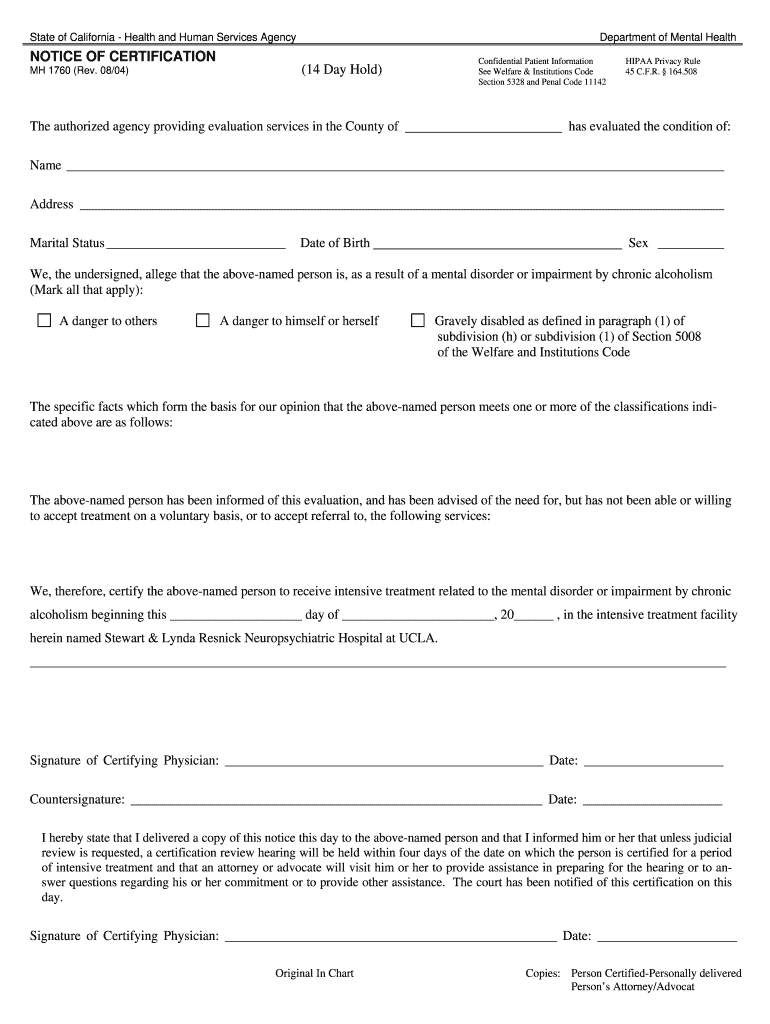







Definition and Meaning of the 5250 Form
The 5250 form is issued by the California Department of Mental Health and serves as a certification that an individual has been evaluated and determined to pose a danger to themselves or others due to a mental disorder or chronic alcoholism. The form is integral to initiating involuntary confinement for psychiatric evaluation and treatment, signifying that the individual requires intensive medical care. Understanding the context and purpose of the 5250 form is crucial for professionals in mental health and legal fields.
How to Use the 5250 Form
Utilizing the 5250 form involves evaluating an individual through an established process where mental health professionals determine the necessity for extended involuntary treatment beyond the initial 72-hour hold known as a 5150. Once the assessment is completed, and the 5250 form is issued, it authorizes an additional 14-day hold for treatment. This process includes informing the individual of their rights under the form, including the right to a judicial review to contest the decision.
Steps to Complete the 5250 Form
Completing the 5250 form requires a detailed evaluation that includes:
- Conducting a thorough psychiatric assessment of the individual.
- Documenting the specific behaviors or statements made by the individual that indicate they are a danger to themselves or others.
- Ensuring that all sections of the form are accurately filled out, including personal information and the evaluator’s credentials.
- Providing a detailed rationale for why extended care is necessary.
- Informing the individual and the authorized family member or representative about the form's purpose and the individual’s rights.
Multiple evaluations may be necessary to confirm the findings are consistent across different settings and times, ensuring accurate judgments.
Who Typically Uses the 5250 Form
The 5250 form is predominantly used by licensed mental health professionals, including psychiatrists and psychologists, working in hospitals or mental health facilities. Legal aid professionals may also engage with the process to ensure compliance with state laws protecting patients’ rights. Families and social workers are also involved in representing the interests of the affected individuals, ensuring transparent, ethical practices during the 14-day certification.


Legal Use of the 5250 Form
The legal foundation of the 5250 form is rooted in California law, specifically the Lanterman-Petris-Short (LPS) Act, which governs the involuntary civil commitment of individuals with mental health issues. The form is legally binding once issued, providing a framework for both healthcare and legal professionals to balance an individual's rights with public safety concerns. The use of the form must always align with state-specific legal standards and ethical guidelines, ensuring it is applied only in scenarios where it is genuinely warranted.
Key Elements of the 5250 Form
Significant components of the 5250 form include:
- Assessment Details: Clear documentation of the behavior and mental state leading to the certification.
- Patient Information: Complete personal details of the affected individual.
- Certifier Information: Credentials and signature of the evaluating mental health professional.
- Notification of Rights: Information about the individual’s rights, including the option for a habeas corpus hearing.
- Justification for Detention: Narrative documentation providing context and reasons for the 14-day hold.
These elements work collectively to ensure transparency and accountability throughout the process.
State-Specific Rules for the 5250 Form
While originating from California, understanding variations in state-specific applications of similar forms is crucial for professionals who handle involuntary treatment policies across different jurisdictions. Some states may have different forms or regulations but use similar criteria for evaluations. It’s important to consult with local mental health authorities or legal experts to navigate any differences effectively and ensure that practices comply with applicable state laws and policies.
Examples of Using the 5250 Form
In practical scenarios, the 5250 form is employed when an individual presents in a hospital’s emergency psychiatric unit showing signs of severe mental distress or active suicidal thoughts. A psychiatrist might then assess the person over the initial 72-hour period. If the individual's condition does not improve or poses ongoing risks, the psychiatrist would fill out the 5250 form, initiating further involvement from health workers, family members, and legal representatives to secure the needed care. This example illustrates the form’s role within a broader mental health crisis intervention framework.
Penalties for Non-Compliance
Failure to adhere to the legal constraints surrounding the 5250 form can result in serious ethical and legal consequences for practitioners and facilities. Misuse could lead to lawsuits or sanctions from professional boards if rights are violated or procedures not properly followed. Ensuring adherence to all protocols and documenting every decision are critical measures in defending against potential penalties.




