Aoc 830 instructions 2026

Get Form
aoc 830 form Preview on Page 1

Here's how it works

01. Edit your aoc 830 form online
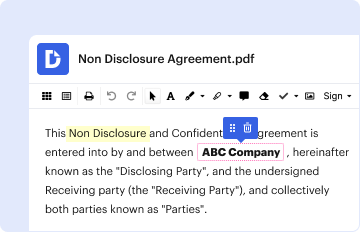
Type text, add images, blackout confidential details, add comments, highlights and more.

02. Sign it in a few clicks
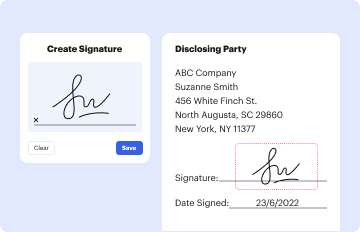
Draw your signature, type it, upload its image, or use your mobile device as a signature pad.

03. Share your form with others
Send aoc 830 via email, link, or fax. You can also download it, export it or print it out.

Definition & Meaning

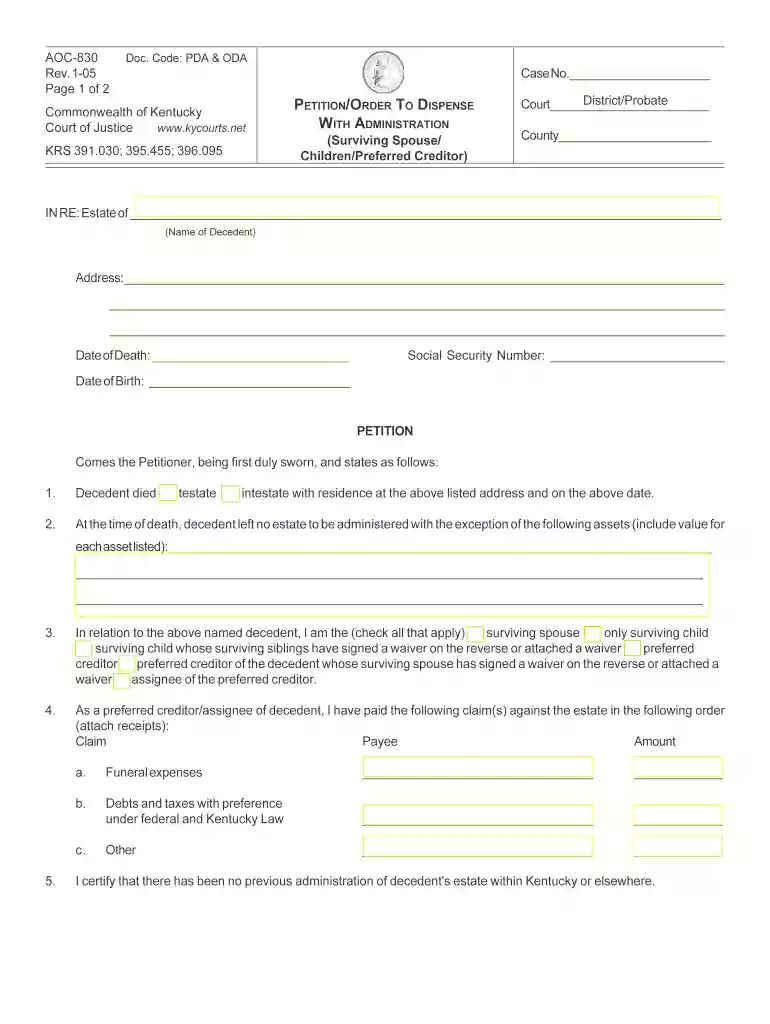
The AOC 830 Instructions are specific guidelines provided for completing the AOC 830 form, a legal document used within Kentucky. This form serves as a petition and order for dispensing with the administration of an estate when the estate's assets do not exceed the statutory exemptions, allowing for a simplified probate process. The instructions facilitate understanding of how to correctly fill out the form, ensuring compliance with Kentucky probate laws.

How to Use the AOC 830 Instructions

To effectively use the AOC 830 instructions, individuals should start by thoroughly reviewing the document to familiarize themselves with the requirements and terminology. The instructions outline step-by-step guidance on filling out each section of the form, highlighting crucial details like providing the decedent's information, listing assets, and specifying claims against the estate. It's important to follow these instructions closely to avoid errors that could delay the probate process.

How to Obtain the AOC 830 Instructions

The AOC 830 instructions can be obtained from the Kentucky Court of Justice website. Alternatively, physical copies may be available at local county courts. Those requiring assistance can contact court staff for guidance on accessing the instructions, ensuring they have the most current version available to comply with legal standards.

Steps to Complete the AOC 830 Form

  1. Gather Necessary Information: Before beginning, compile all relevant information regarding the decedent, including their date of death, detailed list of assets, and any existing claims against the estate.
  2. Decedent’s Information: Enter the full legal name, date of death, and address of the deceased individual.
  3. Asset Listing: Provide a comprehensive list of the estate's assets, ensuring values match official records such as bank statements or property appraisals.
  4. Claims Against the Estate: Document any debts or claims creditors may have against the estate.
  5. Signature and Notarization: Ensure the form is signed by the petitioner and notarized if required, validating the authenticity of the information provided.
  6. Submit the Completed Form: Deliver the completed form to the appropriate probate court in the county where the decedent resided.

Why Use the AOC 830 Instructions

The AOC 830 instructions offer clarity and prevent errors in the completion of the associated form. By using these instructions, petitioners can effectively expedite the legal process, ensuring that estates are distributed accordingly without unnecessary legal complications. Accurate completion is essential to uphold the legitimacy of the probate process and facilitate a straightforward transition of assets to designated individuals.

Who Typically Uses the AOC 830 Instructions

The primary users of the AOC 830 instructions include surviving spouses, children, or preferred creditors of a decedent. Legal representatives and probate attorneys frequently rely on these instructions to navigate the probate system in Kentucky efficiently. The instructions are integral for ensuring that the parties involved meet all legal criteria for estate administration.


decoration image ratings of Dochub

Key Elements of the AOC 830 Instructions

  • Purpose: Designed to guide petitioners through the submission process for a simplified estate administration.
  • Eligibility: Defines scenarios where the estate's value qualifies for exemption from formal administration.
  • Detailed Sections: Includes precise requirements for decedent information, asset listing, and claims documentation.
  • Legal References: Provides context on Kentucky’s statutory probate regulations and exemption thresholds.

Legal Use of the AOC 830 Instructions

The instructions are legal tools designed to uphold compliance with Kentucky probate law, ensuring all participants adhere to required protocols. These guidelines clarify the sequence of actions necessary when one petitions the court for streamlined estate management, offering legal protection against potential disputes amongst heirs or creditors. Proper use of the AOC 830 instructions is essential for maintaining transparency and fairness during asset distribution.

Important Terms Related to AOC 830 Instructions

  • Decedent: The person who has passed away whose estate is being managed.
  • Petitioner: The individual or party requesting the court to approve the transfer of estate assets without formal administration.
  • Claims: Debts or obligations owed by the estate to creditors.
  • Exemptions: Statutorily defined limits that determine eligibility for simplified probate processes.

See more aoc 830 instructions versions

We've got more versions of the aoc 830 instructions form. Select the right aoc 830 instructions version from the list and start editing it straight away!
Versions Form popularity Fillable & printable
2016 4.8 Satisfied (173 Votes)
2015 4.1 Satisfied (66 Votes)
2005 4 Satisfied (37 Votes)
be ready to get more

Complete this form in 5 minutes or less

Get form

Got questions?

We have answers to the most popular questions from our customers. If you can't find an answer to your question, please contact us.
Contact us
There is no set minimum legal threshold for estates to avoid probate. Each bank or institution sets its own limit. This dictates whether family and loved ones of the deceased will require a Grant of Probate to access the funds held in the particular institution.
Bank accounts, life insurance policies, investment accounts, retirement accounts, and other assets with designated beneficiaries arent included in Kentucky probate.
Kentucky probate law allows some probate estates valued at no more than $30,000 (and sometimes a little more depending on the facts) and having no real estate to be administered through a simplified process called Dispense with Administration.
In Kentucky, an estate must have a gross value of at least $30,000 before it is subject to probate.
Most Estates Must Go Through Probate If the person passes without a will, the property is distributed in ance with Kentucky statutes that control who inherits the decedents estate. Most Kentucky estates must go through the probate court.

Security and compliance

At DocHub, your data security is our priority. We follow HIPAA, SOC2, GDPR, and other standards, so you can work on your documents with confidence.

Learn more
ccpa2
pci-dss
gdpr-compliance
hipaa
soc-compliance
be ready to get more

Complete this form in 5 minutes or less

Get form

People also ask

In Kentucky, estates with a value exceeding $30,000 in probate assets are generally subject to the probate process and must be administered through the probate courts.
In Kentucky, creditors generally have eight months from the date of the decedents death or six months from the date of the executors appointment to submit claims to the estate (whichever happens earlier).
A: The minimum value of an estate for probate will vary by state. However, in California, estates valued at more than $166,250 must enter into the probate process.

aoc form 830