




01. Edit your publication 5417 online
Type text, add images, blackout confidential details, add comments, highlights and more.

Type text, add images, blackout confidential details, add comments, highlights and more.

Draw your signature, type it, upload its image, or use your mobile device as a signature pad.

Send it via email, link, or fax. You can also download it, export it or print it out.
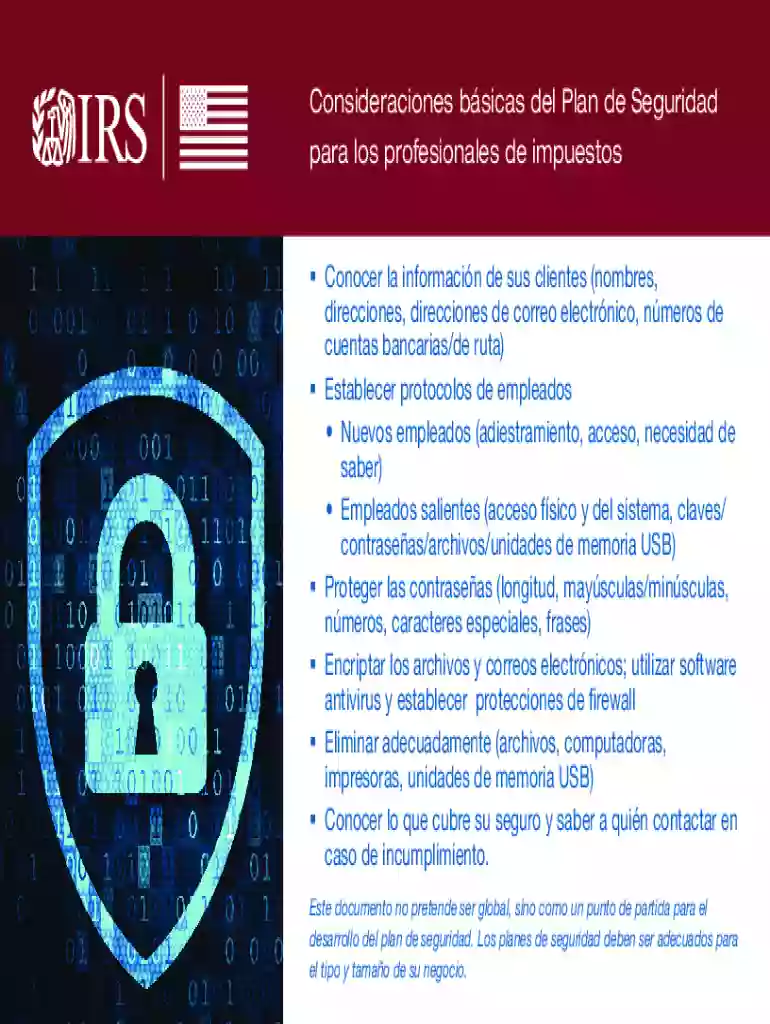
Publication 5417 (SP) (Rev 4-2023) Basic Security Plan Considerations for Tax Professionals (Spanish) serves as a comprehensive guide designed specifically for tax professionals to establish and maintain robust security measures for handling sensitive client information. It emphasizes several key security practices that are critical in the tax field, such as safeguarding client data, implementing secure access protocols, and employing encryption methods. The purpose of this publication is to ensure that tax professionals have a foundational understanding of security requirements and practices that protect client information from unauthorized access and data breaches.
Client Information Protection: Ensures that tax professionals are well-versed in how to keep sensitive client information confidential. This involves guidelines on secure data storage, restricted access control, and using encryption for data in transit and at rest.
Employee Protocols: Outlines best practices for establishing employee guidelines that prevent unauthorized data access. This includes training employees on security protocols and implementing strict access controls based on employee roles.
Password and Access Management: Highlights the importance of secure password practices and access management to prevent unauthorized data breaches.
Encryption Practices: Advises on the implementation of encryption for both files and emails, offering an added layer of security in data exchanges.
Data Disposal Methods: Recommends appropriate techniques for the disposal of old data and documents to prevent data theft or recovery by improper entities.
To effectively use this guide, tax professionals should begin with an assessment of their current security measures. This involves:
Identifying Gaps in Current Practices: Compare your existing security protocols against the recommendations in the publication to identify areas for improvement.
Incorporating Recommended Practices: Implement the specific practices outlined, such as secure password policies and employee training programs on data security.
Regular Reviews and Updates: Periodically review and update security measures to align with the latest standards and recommendations provided in the publication.
The primary users of Publication 5417 (SP) are tax professionals, including:
Independent Tax Preparers: Individuals who manage client data and need to enforce stringent security measures.
Tax Consulting Firms: Organizations that handle a large volume of sensitive information and must maintain compliance with security standards.
Corporate Tax Departments: Teams within larger corporations responsible for managing company tax returns and ensuring data security.


Review the Guide Thoroughly: Begin by conducting a complete read-through of the entire publication to understand its full scope and requirements.
Conduct a Security Audit: Evaluate current security measures to ascertain their effectiveness against the recommendations given.
Implement Best Practices: Develop an action plan to adapt and implement the best practices and strategies advised in the guide.
Monitor and Adjust: Continuously monitor the effectiveness of these security measures and make regular adjustments as necessary to maintain high standards.
Encryption: The process of converting information or data into a code, especially to prevent unauthorized access.
Authentication Protocols: Security measures used to verify the identity of individuals accessing sensitive information or systems.
Data Breach: An incident in which information is accessed without authorization, typically resulting in sensitive data being exposed.
Tax professionals are encouraged to use this publication to align with regulations and compliance requirements stipulated by authorities such as the IRS and NIST. This guide supports the development of legal and compliant security frameworks for the handling of client tax information.
The IRS provides overarching guidelines that align with those found in this publication, focusing on the protection of taxpayer information. Tax professionals are responsible for ensuring compliance with IRS directives to prevent any breaches of personal and client confidentiality obligations.
We've got more versions of the publication 5417 form. Select the right publication 5417 version from the list and start editing it straight away!
At DocHub, your data security is our priority. We follow HIPAA, SOC2, GDPR, and other standards, so you can work on your documents with confidence.


