




01. Edit your medical necessity form online
Type text, add images, blackout confidential details, add comments, highlights and more.

Type text, add images, blackout confidential details, add comments, highlights and more.

Draw your signature, type it, upload its image, or use your mobile device as a signature pad.

Send medical necessity form template via email, link, or fax. You can also download it, export it or print it out.
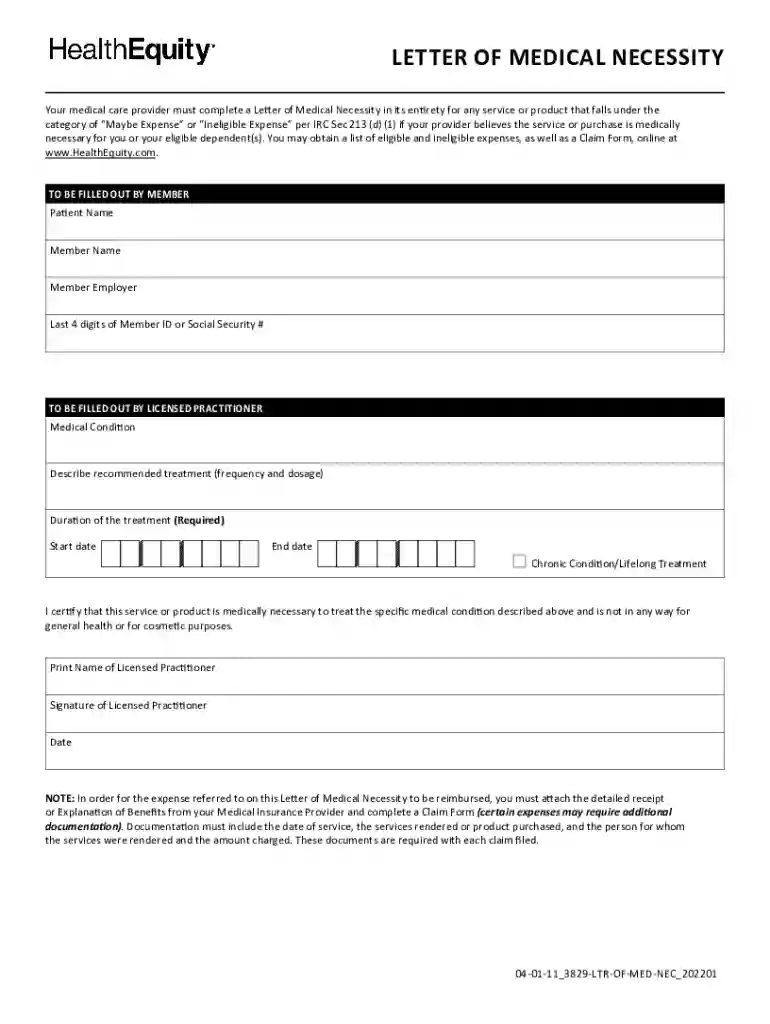
A letter of medical necessity is a formal document authored by a healthcare professional to substantiate the need for specific medical treatments, devices, or services for a patient. This document is crucial for insurance purposes, as it justifies claims for medical services under IRC Sec 213(d)(1). The letter typically includes detailed patient information, diagnosis, recommended treatments, and a statement on the medical necessity of the prescribed intervention. It serves as documentation to convince insurers of the need for coverage for particular healthcare services or products.
The process of completing the letter involves several structured steps:
Patient Information: Begin by filling in the patient's details, such as full name, date of birth, patient identification number, and contact information, ensuring accuracy to avoid processing delays.
Medical Provider Details: Include the healthcare provider’s name, practice details, contact information, and medical license number. This establishes credibility and allows for easy verification by insurance entities.
Diagnosis Details: Provide a comprehensive description of the patient's medical condition, including diagnostic codes (ICD-10) and any relevant history that may impact the treatment plan.
Treatment Recommendations: Elaborate on the specific treatments, medications, or devices being recommended, supported by clinical guidelines or research showcasing their efficacy for the diagnosed condition.
Medical Necessity Justification: Offer a detailed explanation justifying the necessity of the recommended interventions, tying the treatment directly to the patient's diagnosis and health outcomes.
Certification by Provider: The healthcare provider must certify the document’s contents, usually with a signature and date, to confirm that the information provided is accurate and necessary.
Once completed, the letter serves multiple purposes:
Insurance Claims: Use the letter as supportive documentation when submitting claims for insurance reimbursement or approval for specific medical treatments or services.
Pre-Authorization: Present the letter to insurance companies during the pre-authorization stage to expedite approval processes for proposed treatments or devices.
Appeals Process: When initial claims are denied, the letter can be strategically used in the appeals process to argue for the reconsideration of coverage by providing deeper insights into the patient’s needs and the treatment's benefits.
The effectiveness of a letter of medical necessity hinges on several key elements:
Several stakeholders benefit from or utilize this letter:


The letter of medical necessity carries significant legal weight:
Across different states in the US, variations may exist in requirements:
Both digital and paper formats have their place:
Understanding essential terms related to this letter aids in its effective use:
Each of these aspects contributes significantly to understanding, implementing, and leveraging a letter of medical necessity within the U.S. healthcare and insurance systems.
We've got more versions of the medical necessity form form. Select the right medical necessity form version from the list and start editing it straight away!
At DocHub, your data security is our priority. We follow HIPAA, SOC2, GDPR, and other standards, so you can work on your documents with confidence.
letter of medical necessity. The letter of medical necessity should be written by a medical professional familiar with the requesting partys medical condition.
HealthEquity has developed this letter to assist you and your health care provider in providing the information needed in order to process your claim. Your
A Letter of Medical Necessity (LMN) is the written explanation from the treating physician describing the medical need for services, equipment, or supplies to


