




01. Edit your form online
Type text, add images, blackout confidential details, add comments, highlights and more.

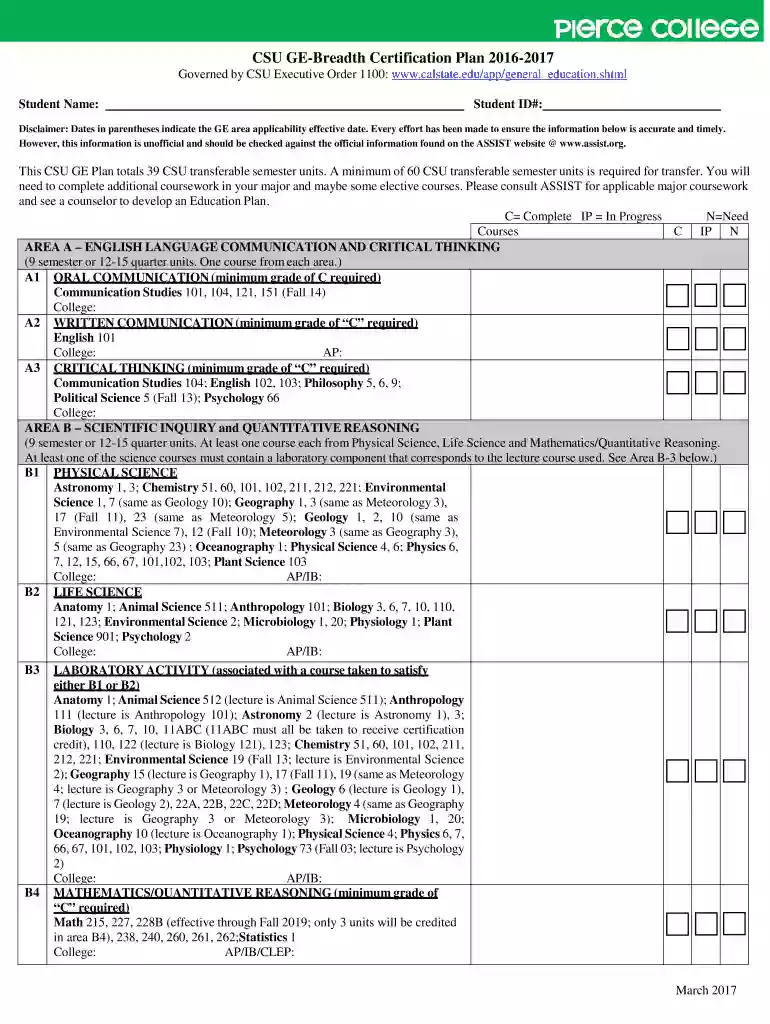
Type text, add images, blackout confidential details, add comments, highlights and more.

Draw your signature, type it, upload its image, or use your mobile device as a signature pad.

Send it via email, link, or fax. You can also download it, export it or print it out.
The "Guiding Notes for General Education Course Reviewers" serve as a comprehensive framework that reviewers use to assess general education courses. These notes guide reviewers in evaluating whether a course meets the standards and requirements necessary for inclusion in a general education curriculum. They are instrumental in ensuring that courses facilitate comprehensive learning across various subject areas, such as English, science, arts, humanities, social sciences, and lifelong learning. Through these guiding notes, institutions maintain academic rigor and alignment with educational objectives.
Reviewers use the guiding notes by following a structured approach to evaluate each course component. This involves examining course syllabi, objectives, teaching methodologies, and assessment strategies to ensure they align with established educational standards. The notes provide criteria against which courses are judged, including the integration of critical thinking, effective communication, and diverse perspectives. Reviewers typically engage in thorough discussions, utilizing these notes to ensure consistency and fairness in their evaluations.
Initial Review:
In-depth Analysis:
Feedback and Recommendations:
To obtain the guiding notes, reviewers typically access them through institutional resources. Many academic institutions provide these notes digitally through their websites or internal portals. Additionally, educational bodies might avail them upon request to authorized personnel involved in the course review process. These notes are crucial resources for ensuring reviewers have the latest guidelines and criteria at their disposal.
The guiding notes are crucial for maintaining educational quality and integrity within general education programs. By standardizing the review process, they help ensure that all courses fulfill their intended educational purposes. These notes support transparency and consistency in decision-making, which is essential for accreditation and accountability. They also facilitate continuous improvement in course offerings, adapting to evolving educational trends and needs.
Typically, the primary users of these guiding notes are academic personnel involved in curriculum development and assessment, including course reviewers, faculty members, and academic administrators. They rely on these notes to ensure courses meet institutional and educational standards for general education. These users apply the notes not only for new courses but also for regular reviews of existing courses to maintain their relevance and efficacy.
The guiding notes encompass several key elements essential for comprehensive course evaluations:
The guiding notes are applied across different contexts and scenarios within educational institutions. Examples include:
The guiding notes are available both in digital formats and as print documents. The digital version allows for easy access and distribution through institutional websites, making them accessible to dispersed teams. Meanwhile, paper versions may still be used during in-person review meetings, facilitating discussions and annotations. Institutions often choose a format based on convenience and accessibility preferences of their reviewers.
While the core purpose of the guiding notes remains constant, specific criteria and processes may vary across states and institutions. Variations often stem from differing state educational standards and institutional objectives. Some states might have stricter requirements for certain subject areas, reflecting local educational priorities or workforce demands. Reviewers need to be aware of these differences and apply the guiding notes accordingly to maintain compliance with state-specific regulations.
Many institutions leverage document management platforms like DocHub for handling and sharing guiding notes and related documents. Such platforms offer seamless integration with existing software ecosystems like Google Workspace, enabling efficient collaboration among reviewers. These tools facilitate easy access, annotation, and sharing of documents, streamlining the review process while ensuring secure handling of educational materials.
We've got more versions of the Guiding Notes for General Education Course Reviewers form. Select the right Guiding Notes for General Education Course Reviewers version from the list and start editing it straight away!
At DocHub, your data security is our priority. We follow HIPAA, SOC2, GDPR, and other standards, so you can work on your documents with confidence.
These Guiding Notes have been developed based on recommendations from the faculty and staff who review California community college ( CCC ) course outlines.
These Guiding Notes are available on-line, are widely read by community college faculty and staff in their proposals for courses that would be acceptable for
Welcome to Computer Science Fundamentals, the Code.org curriculum designed for students in grades K-5! This guide has been created to help you navigate the


