



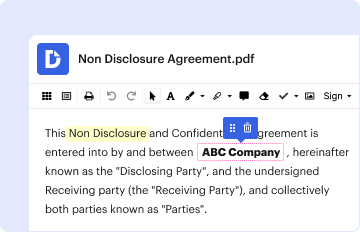
01. Edit your form online
Type text, add images, blackout confidential details, add comments, highlights and more.

Type text, add images, blackout confidential details, add comments, highlights and more.
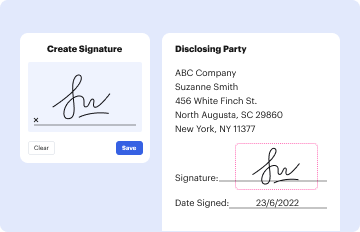
Draw your signature, type it, upload its image, or use your mobile device as a signature pad.

Send it via email, link, or fax. You can also download it, export it or print it out.
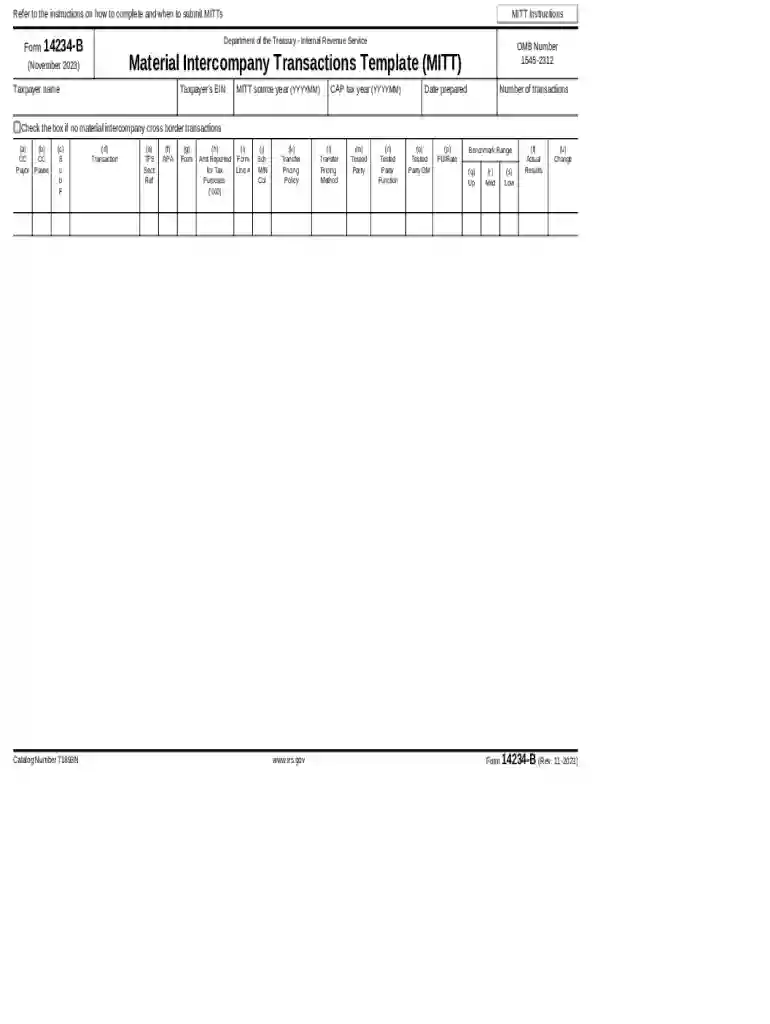
The Form 14234-B (Rev 11-2023), known as the Material Intercompany Transactions Template (MITT), serves as a structured document for reporting material intercompany transactions within a corporate group. Issued by the Department of the Treasury - Internal Revenue Service, this template is critical for ensuring compliance with tax regulations concerning intercompany transactions, promoting transparency and accuracy in financial reporting. The MITT specifies requirements for documenting transfer pricing policies and assists in maintaining proper records for audit purposes.
The Form 14234-B (Rev 11-2023) can be accessed through the official IRS website. It is available for download in PDF format, ensuring universal accessibility and ease of sharing among various departments within a corporate structure. Companies can also request the form through their tax advisors or legal representatives if they encounter difficulties accessing it directly online. This approach facilitates proper compliance and guarantees that all reporting entities are using the most up-to-date version of the form for their transactions.
This form entails several essential components that need careful completion:
Each field within the MITT must be filled out accurately to avoid discrepancies and ensure compliance with IRS guidelines.
Completing Form 14234-B involves several critical steps:
Proper guidance from tax professionals is recommended to avoid errors that could lead to penalties.
Consider a statutory reporting requirement where a parent company in the United States sells goods to its subsidiary in another country at a defined transfer price. The Form 14234-B would document the particulars of this transaction, detailing the agreed pricing policy and referencing organizational policies that justify the transaction terms. In another scenario, a service agreement between two sister companies would require entry into the MITT, complete with transfer pricing and relevant documentation.
The IRS provides explicit guidelines on the usage of Form 14234-B. These directives emphasize the importance of maintaining transparent records to substantiate intercompany pricing arrangements. Adhering to these instructions is essential to minimize the risk of penalties arising from transfer pricing audits or misreporting. The IRS mandates that businesses furnish adequate documentation and disclose all material transactions as stipulated, ensuring an auditable trail exists for each reported entry.
Businesses must be cognizant of the filing deadlines associated with the Form 14234-B. Typically, this coincides with the corporate tax return submission dates. Missing these deadlines can result in significant penalties or interest charges. To adhere to these timelines, many businesses integrate submission schedules into their tax compliance calendars, proactively preparing and verifying documentation in advance.
Failure to comply with the requirements of Form 14234-B can lead to severe penalties. The IRS may impose fines for incomplete submissions, inaccurate documentation, or deliberate misreporting. The repercussions not only include financial penalties but also increased scrutiny from tax authorities, which could result in audits or more stringent examination of the corporation’s financial practices.
Form 14234-B can be submitted either digitally or in a paper format, depending on corporate preference and IRS stipulations. The digital submission offers benefits such as streamlined processing, reduced physical storage needs, and quicker acknowledgment from the IRS. On the other hand, paper submissions may be preferred by organizations with traditional compliance processes where digital transformation is gradually being adopted. Each methodology maintains compliance, provided the guidelines and timing requirements set forth by the IRS are respected.
We've got more versions of the Form 14234-B (Rev 11-2023) Material Intercompany Transactions Template (MITT) form. Select the right Form 14234-B (Rev 11-2023) Material Intercompany Transactions Template (MITT) version from the list and start editing it straight away!
At DocHub, your data security is our priority. We follow HIPAA, SOC2, GDPR, and other standards, so you can work on your documents with confidence.


