
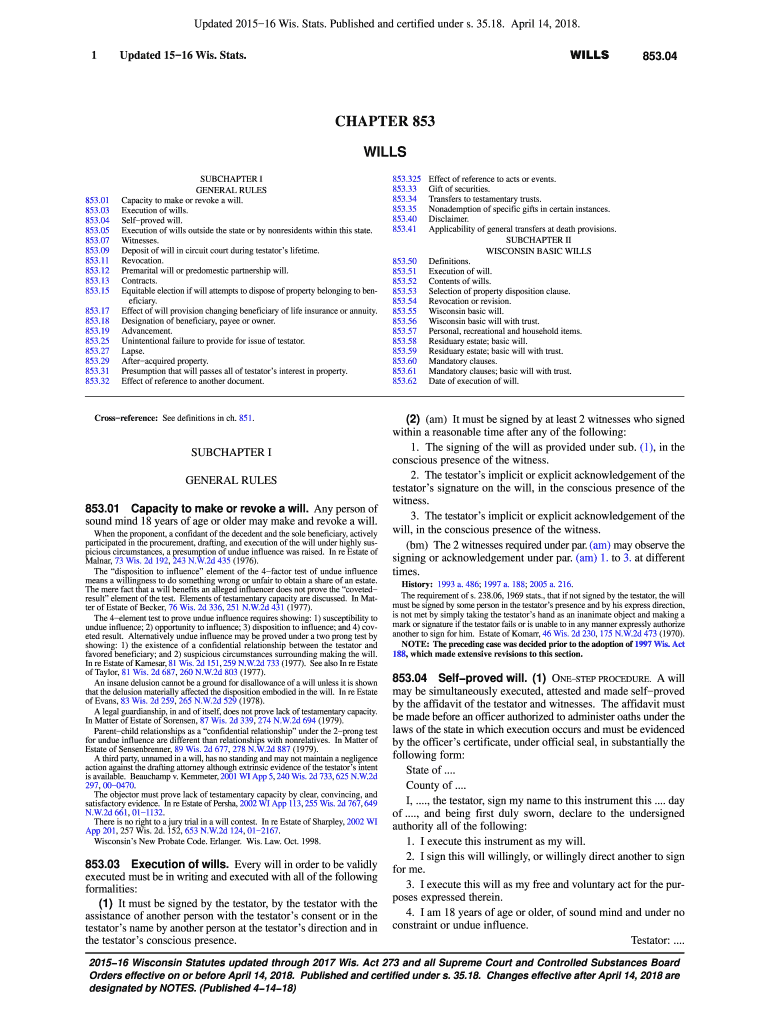







Definition and Meaning of "- docs legis wisconsin"
The term "- docs legis wisconsin" refers to the Wisconsin Statutes concerning wills, a legal framework that outlines the procedures and requirements for creating, executing, and revoking wills in the state of Wisconsin. These statutes serve as guidelines for individuals involved in estate planning, ensuring that wills meet legal standards and that the testator's intentions are honored upon their passing. The statutes cover various elements such as testamentary capacity, execution formalities, witness requirements, and provisions related to beneficiaries and property distribution.
Key Elements of the Wisconsin Wills Statutes
The Wisconsin wills statutes consist of several critical components that define the legal requirements for a valid will. Key elements include:
- Testamentary Capacity: The testator must be of sound mind and at least 18 years old.
- Formal Execution: Wills must be in writing, signed by the testator, and witnessed by at least two competent individuals.
- Self-Proving Wills: Allows for a simplified probate process with an affidavit from witnesses affirming the will's validity.
- Undue Influence: Safeguards against coercion or manipulation affecting the testator’s decisions.
- Omitted Children: Addresses scenarios where a child is unintentionally omitted from a will.
Steps to Complete a Wisconsin Will
To complete a valid Wisconsin will, individuals should follow these steps:
- Determine Eligibility: Verify that the testator meets age and mental capacity requirements.
- Draft the Will: Clearly articulate the distribution of assets, appoint an executor, and designate beneficiaries.
- Choose Witnesses: Select at least two competent adult witnesses to observe the signing of the will.
- Execute the Will: The testator should sign the will in the presence of witnesses who will also sign.
- Consider a Self-Proving Affidavit: To streamline probate, complete an affidavit with witness signatures.
- Store the Will Safely: Keep the original will in a secure location accessible to the executor.
State-Specific Rules for Wisconsin Wills
Wisconsin’s legal framework for wills includes several state-specific rules:
- Holographic Wills: Wisconsin does not recognize holographic wills, which are handwritten and unwitnessed.
- Revocation: A will can be revoked through a subsequent will or physical destruction with the intent to revoke.
- Spousal Elective Share: Surviving spouses may claim a portion of the estate regardless of the will’s terms.
Legal Use of the Wisconsin Wills Statutes
The statutes provide a legal reference for drafting wills that comply with state laws. They are used by:
- Attorneys who assist clients in estate planning.
- Individuals preparing their own wills through personal research.
- Probate Courts overseeing the administration and validation of wills.
Software Compatibility for Preparing Wills
While drafting a will, consider compatibility with legal software:
- TurboTax and QuickBooks: Typically more focused on tax returns and accounting but sometimes offer basic estate planning tools.
- Specialized Estate Planning Software: There are dedicated programs for legal professionals to draft comprehensive wills and manage document workflows.
- Cloud Services: DocHub offers tools for editing and signing legal documents, aiding in creating self-proving affidavits.
Examples of Using the Wisconsin Wills Statutes
Consider the following scenarios applying the Wisconsin wills statutes:
- Scenario 1: An aging parent wishes to evenly distribute assets among children. Clear directives in the will prevent disputes.
- Scenario 2: A child is born after the initial will. The statutes guide updates to ensure the child’s inclusion.
- Scenario 3: A testator is coerced by a relative. The statutes help invalidate the influenced will, protecting the testator’s true desires.
Who Typically Uses the Wisconsin Wills Statutes
The statutes are primarily utilized by:
- Estate Planning Attorneys: Professionals who draft, review, and execute wills.
- Individuals with Estates: Persons crafting their own wills or updating existing ones.
- Probate Judges: Officials responsible for validating wills and overseeing estate administration.


Penalties for Non-Compliance with the Wisconsin Wills Statutes
Failing to adhere to the statutory requirements can lead to:
- Invalidation of the Will: A non-compliant will may be rendered void, causing estate distribution to follow intestacy laws.
- Legal Disputes: Heirs or interested parties might challenge the will, leading to costly litigation.
- Delayed Probate Process: Non-compliance could result in prolonged probate proceedings, delaying asset distribution.


