




01. Edit your form online
Type text, add images, blackout confidential details, add comments, highlights and more.

Type text, add images, blackout confidential details, add comments, highlights and more.

Draw your signature, type it, upload its image, or use your mobile device as a signature pad.

Send it via email, link, or fax. You can also download it, export it or print it out.
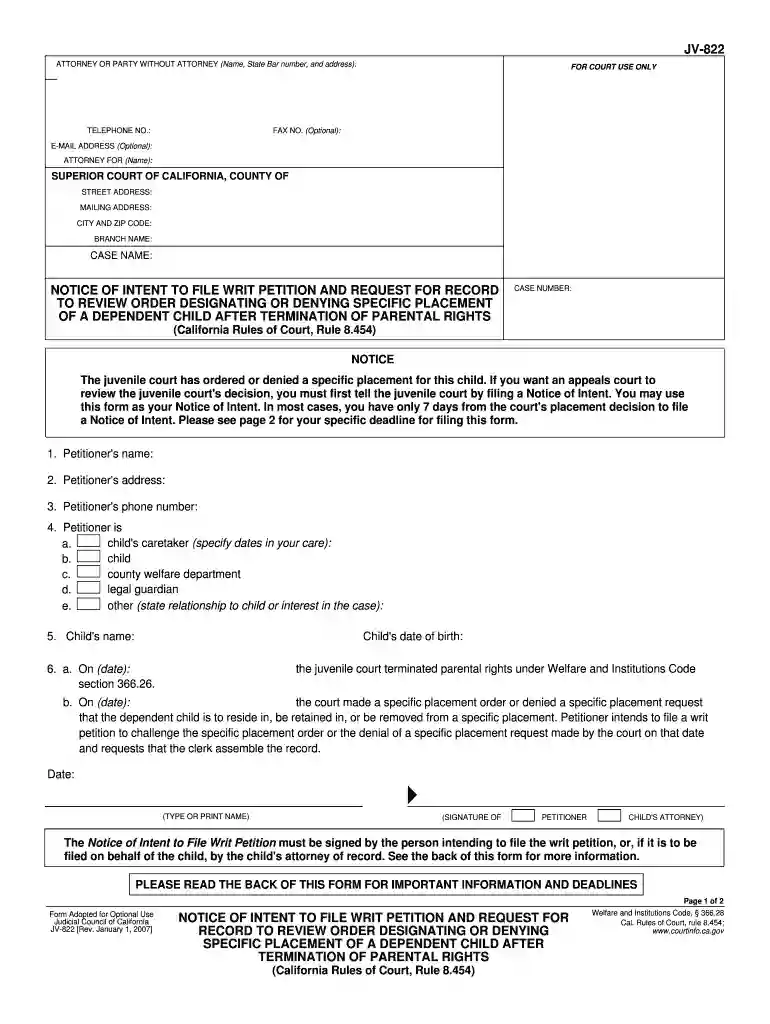
The "TO REVIEW ORDER DESIGNATING OR DENYING SPECIFIC PLACEMENT - courts ca" form is a legal document used within the California court system. This form facilitates the review of court orders related to the placement of individuals, particularly in juvenile dependency cases. It serves as a formal request to reassess a court decision regarding the placement designation for minors or dependents after a court order has been issued.
To use this form effectively, parties involved must be aware of its specific purpose and process guidelines. The form is typically utilized by lawyers, legal guardians, or individuals representing minors who seek to challenge or re-evaluate a court's decision on placement. The process involves completing the form accurately and submitting it to the relevant court office. Clear instructions and guidelines are generally provided with the form, ensuring that each section is filled out correctly.
Individuals can obtain this form from several sources. The primary method is through the official website of the California courts, where the form can be downloaded and printed. Alternatively, the form can be acquired from the clerk’s office at the local courthouse. Some legal websites and firms may also offer downloadable versions of the form to assist those who require it.
The form contains several crucial elements that must be completed accurately. These include an identification of the court order to be reviewed, a comprehensive statement of reasons for the review request, and any supporting documents or evidence that could influence the court’s decision. Particular attention should be paid to deadlines and filing procedures to avoid any complications in the review process.
California law governs the use of this form, including specific deadlines and procedural requirements for filing. It is essential for users to familiarize themselves with these rules to ensure compliance. The form must be submitted within a designated timeframe following the original order, and failure to adhere to this can result in a denial of the request for review.
This form is primarily used by attorneys, guardians, or family members representing minors in juvenile dependency cases. Individuals who believe that a placement decision is not in the best interest of the child or dependent may utilize this form to initiate a review process. Legal professionals often assist with the preparation and submission of the form to ensure all legal standards are met.


The legal use of this form is strictly defined by California statutes. It is intended for parties who seek a reconsideration of a juvenile placement order based on specific legal grounds. The form is used to initiate a formal request within the judicial system, adhering to court protocols designed to protect the rights of the minors involved.
The submission of the form can be carried out online, via mail, or in person, depending on the resources available at the local court. Many courts offer electronic filing systems to facilitate the submission process and improve accessibility. Ensuring that the form is sent through the correct channel is vital for the acceptance and timely processing of the review request.
We've got more versions of the TO REVIEW ORDER DESIGNATING OR DENYING SPECIFIC PLACEMENT - courts ca form. Select the right TO REVIEW ORDER DESIGNATING OR DENYING SPECIFIC PLACEMENT - courts ca version from the list and start editing it straight away!
At DocHub, your data security is our priority. We follow HIPAA, SOC2, GDPR, and other standards, so you can work on your documents with confidence.
Jun 27, 2012 The bill would provide that the adoption procedures currently governing the State Department of Social Services and licensed adoption agencies.
Notice of Intent to File Writ Petition and Request for Record to Review Order Designating or Denying Specific Placement of a Dependent Child After Termination
Apr 25, 2022 In re CHRISTOPHER L. S265910 Opinion of the Court by Liu, J. California law requires the appointment of counsel for parents whose children are


