





Definition and Meaning
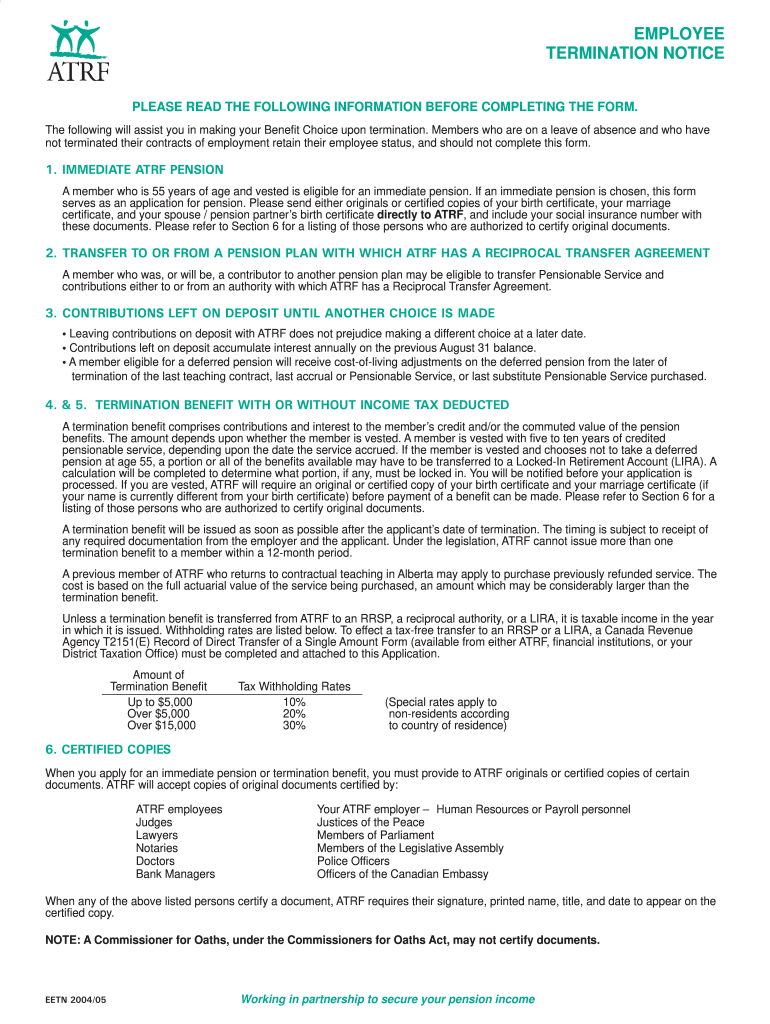
The "Employee Termination Notice" is a formal document used to notify an employee about the termination of their employment. This notice is an essential part of the termination process, providing clear communication about reasons for termination, benefits, and any obligations remaining for the employee. Typically, such notices ensure transparency and compliance with employment laws, making the transition smoother for both parties involved. In the context of the Alberta Teachers' Retirement Fund (ATRF), the notice outlines procedures and options available to members upon termination, detailing eligibility for immediate pensions, transfer options, and other critical post-employment considerations.
How to Use the Employee Termination Notice
To effectively use this notice, employers must provide detailed information in each section, adhering to organizational policies and legal requirements. Start by specifying the employee's name, the termination date, and the rationale for the decision. Include sections on remaining benefits, such as pension options if applicable, and any final pay details. It's crucial to clarify any next steps the employee should take, such as returning company property. Employers should ensure that the notice is delivered in a professional manner, ideally in a meeting where the employee can ask questions and receive guidance.
Steps to Complete the Employee Termination Notice
-
Gather Required Information: Before filling out the form, collect all necessary details, including the employee's personal and employment information, reason for termination, and effective date.
-
Document the Reasons: Clearly state the reasons for termination, whether due to performance issues, organizational changes, or misconduct. This is crucial for both legal compliance and providing clarity to the employee.
-
Outline Final Compensation: Detail any final payments, including salary, unused vacation time, and other compensations. Ensure calculations comply with state and federal laws.
-
Explain Benefits and Options: For members of the ATRF, explain available options regarding pension plans, contributions left on deposit, and potential transfer options to other plans.
-
Detail Next Steps: Provide instructions on any steps the employee needs to take, such as returning company equipment and fulfilling any transitional duties.
-
Seek Legal Review: Before finalizing the notice, have it reviewed by legal counsel to ensure compliance with applicable laws and regulations.
Important Terms Related to Employee Termination Notice
-
Immediate Pension: A pension that begins immediately upon termination, available to eligible members as specified in the ATRF guidelines.
-
Termination Benefits: Financial or other benefits provided to employees upon termination, which may include severance pay, continued health insurance, and assistance with job placement.
-
Required Documentation: Documents that must be submitted with the termination notice, often including identification, employment records, and any relevant contractual agreements.
Legal Use of the Employee Termination Notice
Employers must ensure that the Employee Termination Notice complies with federal and state laws. This includes adhering to anti-discrimination laws, providing notice within required time frames, and ensuring all employee rights are respected. In the U.S., the notice must meet the standards outlined in the Employee Retirement Income Security Act (ERISA), especially when dealing with pension and retirement benefits through entities like the ATRF. Legal compliance helps prevent potential lawsuits and promotes fair treatment of the employee during the termination process.
Key Elements of the Employee Termination Notice
-
Employer and Employee Information: Names, addresses, job titles, and other identifiers for both parties involved.
-
Termination Date: The date when the termination becomes effective.
-
Reason for Termination: A detailed explanation of why the termination is occurring.
-
Final Compensation and Benefits: A summary of the final paycheck, any accrued benefits, and future pension options.
-
Signatures: Both employer and employee should sign the document to acknowledge understanding and receipt. A section for a witness or HR representative may also be included.
State-Specific Rules for the Employee Termination Notice
While the core purpose of the notice is consistent, states may have specific rules regarding notice periods, information that must be provided, and how final compensation should be handled. In states like California, additional requirements exist for the timing of the final paycheck and specific notices about unemployment benefits. It is important for employers to consult state-specific guidelines to ensure full compliance.
Who Typically Uses the Employee Termination Notice
This document is primarily used by human resource departments and employers when formalizing the end of an employment relationship. It is also referenced by employees to understand their rights and responsibilities upon leaving a company. For organizations dealing with the ATRF, this notice serves as a crucial tool in communicating how retirement funds and benefits will be managed post-employment.


Required Documents
To process the Employee Termination Notice, several key documents are often required. Employers should provide forms such as the employee’s performance evaluations, disciplinary records, and any agreements made at the time of hiring, like non-compete clauses or confidentiality agreements. Additionally, for ATRF members, details about pension contributions and options should be included. Ensuring all necessary documentation is attached to the notice prevents delays and misunderstandings during the termination process.