







Definition & Meaning
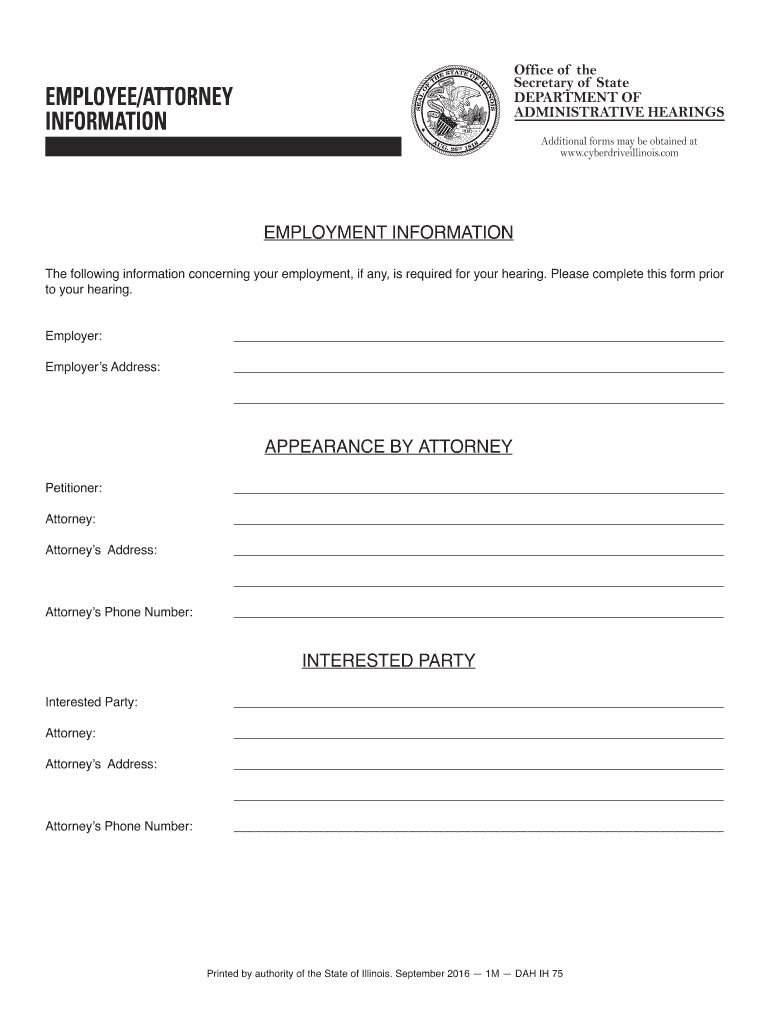
The "EMPLOYEE ATTORNEY" form is an essential legal document used to capture critical employment and legal representative information within a formal administrative hearing context. This form plays a pivotal role in documenting the names, addresses, and contact details of the employee and their attorney, ensuring that the appropriate parties are notified and represented efficiently in legal proceedings. Accurate completion of this form fosters transparent communication and legal compliance by providing necessary details to the Department of Administrative Hearings.
How to Use the EMPLOYEE ATTORNEY
To properly utilize the EMPLOYEE ATTORNEY form, individuals must follow a set of precise steps to ensure the form is both complete and accurate. The primary objective is to gather all pertinent information from both the employee and the attorney representing them.
-
Gather Necessary Information: Obtain detailed contact information, including full names, addresses, phone numbers, and email addresses for both the employee and attorney.
-
Complete Relevant Sections: Fill out the designated sections for employer information and attorney contact details, ensuring there are no omissions.
-
Review for Accuracy: Double-check all entered information for accuracy to prevent any delays or issues in future proceedings.
-
Submit as Required: Depending on the requirements outlined by the Office of the Secretary of State, submission methods may vary. Ensure that you follow the stipulated submission protocols, whether online, via mail, or in person.
Steps to Complete the EMPLOYEE ATTORNEY
Completing the EMPLOYEE ATTORNEY form involves several steps:
-
Read Instructions Thoroughly: Begin by reading the form-specific instructions to understand each section's requirements.
-
Enter Employee Information: This includes the employee's full legal name, current employer, job title, and contact details.
-
Provide Attorney Details: Enter the attorney's full name, law firm (if applicable), address, and other relevant contact information.
-
Include Additional Parties: If the hearing involves other interested parties, list their details in the allocated space.
-
Review and Finalize: Carefully review the form for any mistakes or incomplete fields before finalizing the submission.
Why Should You Use the EMPLOYEE ATTORNEY Form
The EMPLOYEE ATTORNEY form offers numerous benefits, primarily ensuring that all parties involved in a legal administrative hearing are informed and represented. Its usage is crucial for several reasons:
-
Legal Compliance: Ensures adherence to procedural regulations required in the administrative legal process.
-
Clarity in Representation: Clearly designates the attorney responsible for representing the employee, facilitating streamlined communication.
-
Formal Record: Serves as an official document for establishing and maintaining clear records for legal proceedings.
Important Terms Related to EMPLOYEE ATTORNEY
Understanding key terms associated with the EMPLOYEE ATTORNEY form is critical:
-
Administrative Hearing: A legal proceeding where an administrative body resolves disputes involving its regulations.
-
Attorney of Record: The lawyer officially recognized as representing a party in a lawsuit.
-
Interested Parties: Any individuals or entities that have an interest or stake in the proceedings.
-
Complainant: The person who brings a complaint or initiates a lawsuit in a legal proceeding.
Key Elements of the EMPLOYEE ATTORNEY Form
The EMPLOYEE ATTORNEY form includes several essential elements to ensure comprehensive data collection:
-
Employee Information Section: Captures details specific to the employee involved in the hearing.
-
Attorney Information Section: Includes fields for input about the attorney representing the employee.
-
Employer Details: Documents the employer's information for contextual purposes.
-
Legal References: Any prior legal documents or case IDs relevant to the current hearing must be filed along with the form.
State-Specific Rules for the EMPLOYEE ATTORNEY
While the form is generally consistent across the United States, some state-specific nuances need to be acknowledged:
-
Variation in Required Fields: Some states might necessitate additional information or documentation alongside the form.
-
Submission Protocols: The required submission method could vary by state, playing a fundamental role in ensuring compliant user practices.
Understanding these variations enhances compliance and reduces the likelihood of documentation errors.
Filing Deadlines / Important Dates
Meeting filing deadlines for the EMPLOYEE ATTORNEY form is vital to ensure seamless processing:
-
Review Timelines: Familiarize yourself with the specific filing deadlines, which may vary by case or jurisdiction.
-
Avoid Penalties: Submissions must be made on time to avoid associated penalties or adjournments in hearing schedules.
-
Regular Updates: Stay informed of any updates in filing schedules, especially when legislative or procedural changes occur.
Required Documents
In addition to filling out the EMPLOYEE ATTORNEY form, certain additional documents may be required:
-
Proof of Employment: A recent pay stub or employment verification letter could be necessary.
-
Legal Documentation: Any previous correspondence, complaints, or legal rulings related to the case should be included.
-
Identification Documents: Copies of official identification might be requested to verify identities.
Ensuring the preparation of these documents ahead of time can facilitate a smooth submission process.




