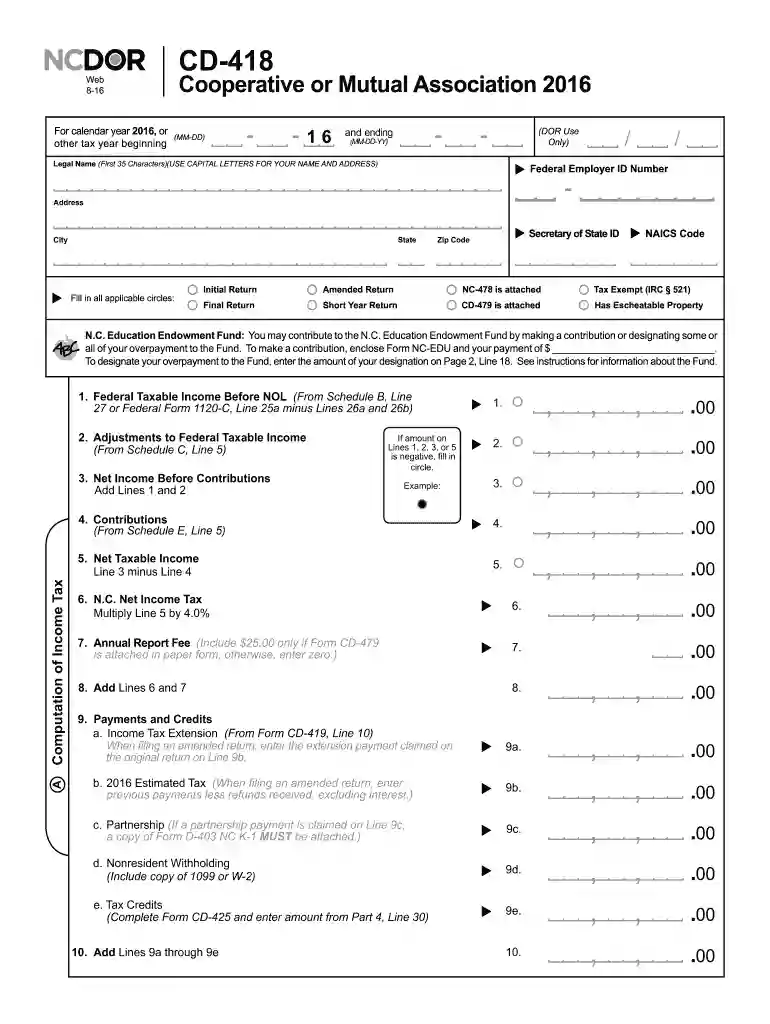
(MM-DD) 2026

Get Form
(MM-DD) Preview on Page 1

Here's how it works

01. Edit your form online
Type text, add images, blackout confidential details, add comments, highlights and more.

02. Sign it in a few clicks
Draw your signature, type it, upload its image, or use your mobile device as a signature pad.

03. Share your form with others
Send it via email, link, or fax. You can also download it, export it or print it out.

Definition and Meaning of (MM-DD)

The form (MM-DD) is a specific document utilized within certain contexts, such as tax, legal, or administrative processes. It serves a designated purpose that aligns with the needs and requirements of its related field. Its designation, "(MM-DD)", indicates a particular function or requirement needed to fulfill a compliant or operational mandate. Understanding this form begins with recognizing its definition and contextual application, which dictates its utility and the manner in which it must be completed.

Purpose and Context

  • Taxation: Often used for specific tax purposes, involving reporting income, deductions, or other financial details to the IRS or state taxation authorities.
  • Legal Documentation: May be required for legal processes such as business registrations, partnerships, or estate settlements.
  • Operational Compliance: Utilized for demonstrating compliance with regulatory standards in various industries or organizational functions.

By grasping the purpose and context, users can properly approach the form, ensuring it aligns with their specific needs and legal obligations.

How to Use the (MM-DD)

To effectively use the form (MM-DD), it is essential to first comprehend its structure and the information it requires. Users must follow specific guidelines to complete the form accurately, ensuring compliance and avoiding potential penalties.

Step-by-Step Guide

  1. Understand the Requirements: Review the form to determine the required information and documentation needed for completion.
  2. Gather Necessary Documents: Collect all pertinent documents or data before beginning the form.
  3. Complete Each Section: Fill in each part of the form with accurate and comprehensive information.
  4. Review for Accuracy: Double-check the completed form for inaccuracies or missing information to avoid issues.
  5. Submit as Directed: Follow submission guidelines, whether the form is to be mailed, filed online, or submitted in person.

By adhering to these steps, users can ensure the form (MM-DD) is completed accurately and efficiently.

Steps to Complete the (MM-DD)

Completing the form (MM-DD) involves following a systematic process to ensure all sections are filled correctly. This process requires attention to detail and precision to avoid errors that could lead to delays or rejections.

Detailed Breakdown

  • Start with Personal Information: Begin with personal or organizational details, ensuring names, addresses, and identification numbers are correct.
  • Enter Financial Information: If applicable, input financial data, including income, expenses, and tax-related figures.
  • Include Attachments: Provide any supplemental documentation or attachments that are mandated or could support the information provided.
  • Sign and Date: Ensure the form is signed and dated to validate the submission legally.

These detailed steps help guide users through the completion process with clarity and precision.

Important Terms Related to (MM-DD)

Understanding key terms associated with the (MM-DD) form is crucial for accurate completion and comprehension. These terms often define the parameters and the information required within the document.

Glossary of Terms

  • Filer: The individual or entity completing and submitting the form.
  • Attachments: Additional documents or forms required to supplement the main form.
  • Compliance: The act of adhering to the rules and regulations associated with the form.
  • Submission Deadline: The date by which the form must be submitted to avoid penalties.

Familiarity with these terms enhances the user's ability to complete the form accurately.

Legal Use of the (MM-DD)

The form (MM-DD) serves a legal purpose, ensuring compliance with either federal, state, or industry-specific regulations. Its use is governed by various legal stipulations that dictate how and when it should be filed.

Legal Considerations

  • Regulatory Adherence: Ensures that users are following laws pertinent to the form's purpose.
  • Penalties for Non-Compliance: Users may face legal actions or fines for inaccurate or late submissions.
  • Confidentiality Requirements: Certain information provided in the form may be protected under privacy laws, dictating how it can be shared or used.

Understanding these legal considerations is critical for lawful and effective use of the form (MM-DD).

Examples of Using the (MM-DD)

Practical examples demonstrate how the form (MM-DD) is used in real-world scenarios, illustrating its application across different contexts.

Practical Scenarios

  1. Business Tax Filing: A corporation uses the form to report annual financial activity to state tax authorities.
  2. Legal Compliance in Real Estate: A property management company submits the form as part of compliance with local housing regulations.
  3. Individual Tax Preparations: An individual completes the form to declare freelance income for federal tax reporting.

These examples provide insights into the diverse applications of the form (MM-DD).

State-Specific Rules for the (MM-DD)

While the general framework of the (MM-DD) form might be consistent, specific rules and requirements can vary by state. These variations are crucial for residents and businesses operating in different geographical areas.

Understanding State Variations

  • Filing Requirements: Some states may require additional documentation or information.
  • Submission Deadlines: Deadlines may differ by state, affecting the scheduling of submission.
  • State Tax Codes: Variations in local tax laws can impact the way forms are filled out and submitted.

Being aware of state-specific rules aids in accurate and compliant use of the form (MM-DD), ensuring no critical requirements are overlooked.

Required Documents for the (MM-DD)

To complete the form (MM-DD), certain documents may be required to validate the information provided and ensure compliance.

Supporting Documentation

  • Proof of Identity: Documents that verify the identity of the filer or organization.
  • Financial Records: Income statements, tax returns, or financial statements relevant to the form's purpose.
  • Legal Documents: Contracts, leases, or other legal papers that may be pertinent.

These required documents facilitate accurate data reporting and ensure the form meets all regulatory standards necessary for acceptance.

See more (MM-DD) versions

We've got more versions of the (MM-DD) form. Select the right (MM-DD) version from the list and start editing it straight away!
Versions Form popularity Fillable & printable
2023 4.9 Satisfied (52 Votes)
2022 4.5 Satisfied (49 Votes)
2021 4.8 Satisfied (49 Votes)
2020 4.8 Satisfied (82 Votes)
2019 4.4 Satisfied (213 Votes)
2018 4.2 Satisfied (91 Votes)
2017 4.3 Satisfied (144 Votes)
2016 4.4 Satisfied (70 Votes)
be ready to get more

Complete this form in 5 minutes or less

Get form

Got questions?

We have answers to the most popular questions from our customers. If you can't find an answer to your question, please contact us.
Contact us
The short answer The best theory is that Americans generally gravitate towards speaking and writing out dates with the month first. As a result, it makes sense to replicate that in the numbered American date format of MM/DD/YY, where the month comes before the day and year.
The format MM/DD/YY (month/day/year) is unique to the United States but is sometimes used in Canada Most of Europe uses DD/MM/YY (day/ month/year). Japan uses YY/MM/DD (year /month/day). ISO 8601 specifies a format of YYYY-MM-DD (2003-04-02 is clearer than 03/04/02).
MMDDYY. Month-Day-Year with no separators (02172009) C. DDMMYY. Day-Month-Year with no separators (17022009)
The day is written first and the year last in most countries (dd-mm-yyyy) and some nations, such as Iran, Korea, and China, write the year first and the day last (yyyy-mm-dd).
The United States is one of the few countries that use mm-dd-yyyy as their date formatwhich is very very unique! The day is written first and the year last in most countries (dd-mm-yyyy) and some nations, such as Iran, Korea, and China, write the year first and the day last (yyyy-mm-dd).

Security and compliance

At DocHub, your data security is our priority. We follow HIPAA, SOC2, GDPR, and other standards, so you can work on your documents with confidence.

Learn more
ccpa2
pci-dss
gdpr-compliance
hipaa
soc-compliance

People also ask

Date Format Types FormatDate orderDescription 1 MM/DD/YY Month-Day-Year with leading zeros (02/17/2009) 2 DD/MM/YY Day-Month-Year with leading zeros (17/02/2009) 3 YY/MM/DD Year-Month-Day with leading zeros (2009/02/17) 4 Month D, Yr Month name-Day-Year with no leading zeros (February 17, 2009)24 more rows
[MM] indicates a two-digit month of the year, 01 through 12. [DD] indicates a two-digit day of that month, 01 through 31. For example, 5 April 1981 may be represented as either 1981-04-05 in the extended/complete format or 19810405 in the basic format.
mm two-digit month, e.g. 03. mmm three-letter abbreviation for month, e.g. Mar. mmmm month spelled out in full, e.g. March. d one-digit day of the month for days below 10, e.g. 2. dd two-digit day of the month, e.g. 02.

Related links