
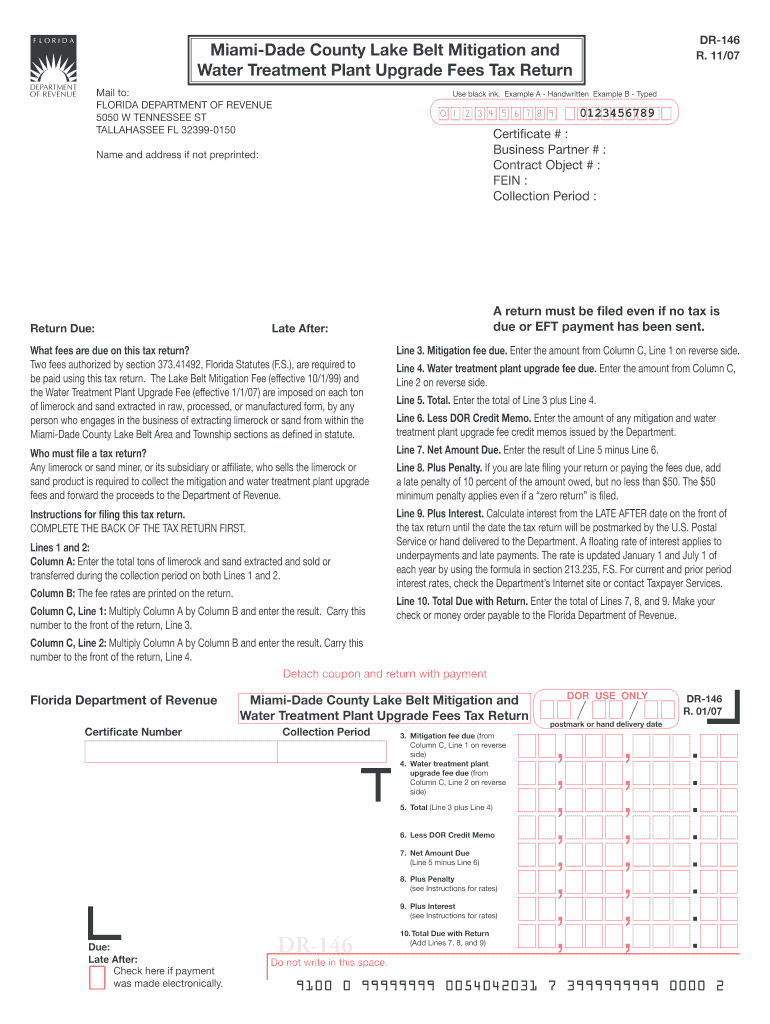







Definition & Purpose of the DR-146 Miami-Dade County Lake Belt Mitigation Fee Tax Return
The DR-146 Miami-Dade County Lake Belt Mitigation Fee Tax Return is a specialized tax document used within Miami-Dade County. Its primary function is to facilitate the reporting and payment of mitigation fees by limerock and sand miners operating within the Lake Belt area. These fees contribute to environmental conservation efforts, including the Miami-Dade County Lake Belt Mitigation Plan, by addressing the ecological impact of mining activities.
Key Elements of the Form
- Mitigation Fee: Calculated based on the amount of limerock and sand extracted during the collection period, these fees support environmental restoration.
- Water Treatment Upgrade Fee: A separate fee portion that funds improvements in local water treatment infrastructure, ensuring sustainable environmental practices.
- Administrative Information: Includes the business name, address, taxpayer identification number (TIN), and contact information of the entity filing the return.
Steps to Complete the DR-146 Miami-Dade County Lake Belt Mitigation Fee Tax Return
Filing the DR-146 requires precision to ensure compliance with Miami-Dade County regulations. Below are the steps to accurately complete the form:
- Gather Required Documentation: This includes extraction records, previous tax returns, and any relevant permits.
- Calculate Extraction Volumes: Determine the total volume of limerock and sand extracted during the specified period. Ensure these calculations are accurate to avoid penalties.
- Determine Fee Amount: Use the prescribed rates to calculate the mitigation and water treatment upgrade fees based on extraction volumes.
- Complete Form Sections: Fill in required fields including business information, fee calculations, total amount due, and any applicable exemptions.
- Review and Sign: Carefully review completed sections for accuracy. If applicable, a designated officer or authorized agent must sign the form.
- File the Form: Submit via the appropriate channel—electronically or by mail—to the relevant authorities by the due date.
How to Obtain the DR-146 Miami-Dade County Lake Belt Mitigation Fee Tax Return
Acquiring this form is essential for compliance. Here's how you can obtain it:
- County Government Website: Visit the official Miami-Dade County government portal to download the form.
- Local Tax Office: Physical copies may be available at local tax offices for those who prefer paper submissions.
- Third-Party Services: Platforms like DocHub provide downloadable and fillable versions, allowing for both ease of access and submission.
Who Typically Uses the DR-146 Form
The DR-146 form is predominantly used by entities involved in limerock and sand mining operations in Miami-Dade County. Key users include:
- Mining Companies: Businesses extracting materials in the designated Lake Belt area.
- Environmental Consultants: Professionals assisting companies in calculating and reporting fees accurately.
- Legal and Tax Advisors: Experts providing guidance on compliance with local tax and environmental laws.


Penalties for Non-Compliance
Failure to comply with filing requirements can result in significant penalties:
- Late Filing Penalties: Additional charges apply for submissions post-deadline, stressing the importance of timely compliance.
- Underreporting: Misreporting extraction volumes or fees can lead to financial penalties and potential legal action.
- Non-Payment: Unpaid fees accrue interest over time, increasing financial liabilities.
Important Terms Related to the DR-146 Form
Understanding specific terminology is vital for accurately completing the DR-146:
- Mitigation Plan: Environmental programs aimed at restoring ecosystems affected by mining activities.
- Collection Period: The timeframe in which extraction activities are recorded and reported.
- Exemptions: Conditions under which certain fees may be waived or reduced.
Filing Deadlines for the DR-146 Form
Adhering to deadlines is critical to avoid penalties:
- Routine Due Date: The 20th day of the month following the end of the collection period.
- Final Submission: Ensure all documents and payments are submitted by this date, even if no fees are owed.
Digital vs. Paper Filing
Both methods are available, with specifics as follows:
- Digital Filing: Offers convenience and efficiency, utilizing platforms like DocHub for seamless submission.
- Paper Filing: Traditional method for those preferring a more manual process, though potentially slower due to processing times.
Software Compatibility
Several software options can aid in the preparation and submission of the DR-146:
- DocHub: Facilitates document editing and electronic signing.
- QuickBooks: Useful for financial documentation and record-keeping.
- TurboTax: Provides tax calculation tools but may require additional review due to the specialized nature of the DR-146.
These comprehensive insights and guidelines ensure your use of the DR-146 form is both legally compliant and effective, safeguarding against financial penalties while supporting environmental initiatives in Miami-Dade County.


