Definition & Meaning
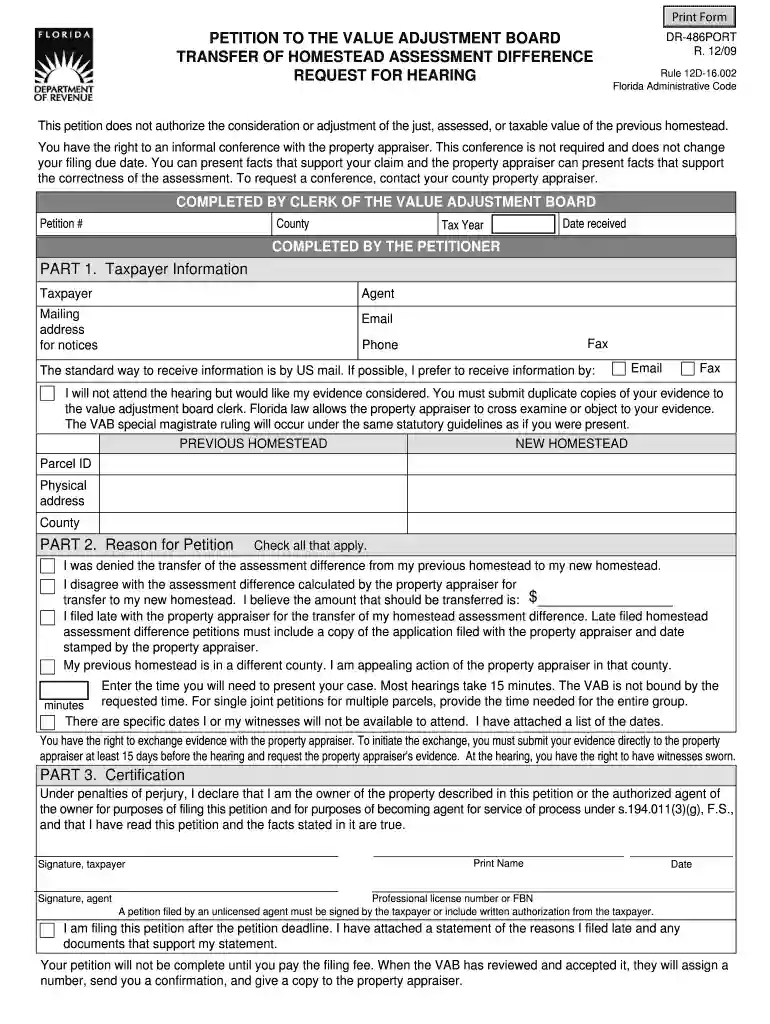
The uniform policies and procedures manual for value adjustment boards provides a standardized framework to guide the operation of value adjustment boards. These boards review petitions made by property owners disputing tax assessments. The manual outlines the legal and procedural standards governing board operations, ensuring consistency and fairness in hearings. This ensures that both taxpayers and board members understand their rights and responsibilities, maintaining transparency and accountability throughout the assessment appeal process.
Importance of Consistency
- Ensures Equitable Treatment: By providing uniform guidelines, the manual helps ensure that decisions are consistent and equitable, reducing the likelihood of discrepancies.
- Streamlines Processes: Standard procedures help streamline hearings, making them more efficient and effective.
- Promotes Trust: Uniformity enhances public confidence in the board’s ability to conduct fair and impartial reviews.
Key Stakeholders
- Property Owners: Benefit from clear guidelines on how to appeal assessments.
- Board Members: Use the manual as a reference to make informed and consistent decisions.
How to Use the Uniform Policies and Procedures Manual for Value Adjustment Boards
To effectively use this manual, board members and property owners should familiarize themselves with its contents to understand the procedures for filing and reviewing appeals.
Step-by-Step Guide
- Review the Manual’s Structure: Familiarize yourself with the layout and sections of the manual to locate relevant information easily.
- Understand Relevant Procedures: Focus on sections related to filing petitions and conducting hearings.
- Apply Procedures in Practice: During hearings, ensure adherence to the guidelines to promote fairness and consistency.
Practical Application
- For Board Members: Use the manual as a checklist to ensure all steps are followed during hearings.
- For Property Owners: Gain insight into what to expect during the appeals process and how to prepare submissions effectively.
Steps to Complete the Uniform Policies and Procedures Manual for Value Adjustment Boards
Completing tasks outlined in the manual requires adherence to specific procedures laid out in the document. This ensures transparent and orderly processing of appeals.
Detailed Procedures
- Prepare Documentation:
- Collect necessary evidence and documentation to support your position.
- Ensure all forms are complete and accurate.
- Submit Petition:
- Follow the guidelines for submission, whether online, by mail, or in-person, as specified by the board.
- Attend Hearing:
- Be present at the set date and time.
- Present your case clearly and concisely, supporting your arguments with evidence as outlined in the manual.
Considerations
- Adhering to Deadlines: Ensures your petition is considered without delay.
- Quality of Evidence: Strong, well-organized evidence improves the chances of a favorable outcome.
Key Elements of the Uniform Policies and Procedures Manual for Value Adjustment Boards
The manual contains several critical components essential for the effective operation of value adjustment boards.
Essential Sections
- Petition Procedures: Detailed instructions on how to file appeals and what documents are required.
- Hearing Procedures: Guidelines on how hearings are to be conducted, including the roles and responsibilities of board members and petitioners.
- Decision-Making Framework: Criteria used by boards to evaluate appeals and make decisions.
Utility and Relevance
- Guidance for Preparation: Detailed instructions help property owners prepare for hearings effectively.
- Standardized Processes: Ensures that every case is handled in a consistent manner, reducing bias and increasing reliability.
Legal Use of the Uniform Policies and Procedures Manual for Value Adjustment Boards
This manual is a legally binding document, governing the procedural aspects of how value adjustment boards operate.
Compliance and Enforcement
- Adherence to Laws: Ensures that all actions take place within the legal frameworks established by state laws.
- Appeal Process Clarity: Provides clear guidance on legal rights and obligations during the appeal process.
Importance of Legal Consistency
- Protecting Rights: Legal guidelines safeguard the rights of taxpayers during the appeals process.
- Preventing Disputes: A uniform legal approach reduces misunderstandings and potential disputes, leading to smoother proceedings.
State-specific Rules for the Uniform Policies and Procedures Manual for Value Adjustment Boards
While the manual provides a uniform framework, state-specific regulations may affect its implementation.
Variations Across States
- Local Legislation: Each state may have unique laws and regulations impacting the application of the manual.
- Board-Specific Protocols: Differences in how local boards implement these guidelines can vary based on state regulations.
Implications
- Regional Adaptations: Property owners and board members need to be aware of state-specific rules that may impact procedures.
- Tailored Guidance: Incorporating local regulations ensures the manual’s relevance across different jurisdictions.
Examples of Using the Uniform Policies and Procedures Manual for Value Adjustment Boards
Real-world scenarios illustrate the practical application of the manual within value adjustment boards.
Case Studies
- Property Assessment Disputes: Examples of successful appeals where the manual provided guidance on evidence presentation.
- Streamlined Hearings: Instances where board efficiency improved through strict adherence to procedural guidelines.
Real-World Applications
- Filing Appeals: Property owners have leveraged the manual to accurately complete and submit petitions.
- Conducting Hearings: Boards have efficiently managed hearings by following standardized procedures, reducing processing times.
Form Submission Methods (Online / Mail / In-Person)
Understanding the different methods for submitting petition forms is crucial for property owners.
Available Methods
- Online Submission:
- Fast and convenient
- Immediate confirmation of receipt
- Mail Submission:
- Suitable for those preferring physical documentation
- Requires tracking to confirm delivery
- In-Person Submission:
- Direct interaction with board staff
- Potential for immediate feedback or clarification
Choosing the Right Method
- Consider Accessibility: Choose the method that best suits your availability and access to technology.
- Acknowledge Timelines: Some methods may offer faster processing times; choose accordingly to meet deadlines effectively.