




01. Edit your form online
Type text, add images, blackout confidential details, add comments, highlights and more.

Type text, add images, blackout confidential details, add comments, highlights and more.

Draw your signature, type it, upload its image, or use your mobile device as a signature pad.

Send it via email, link, or fax. You can also download it, export it or print it out.
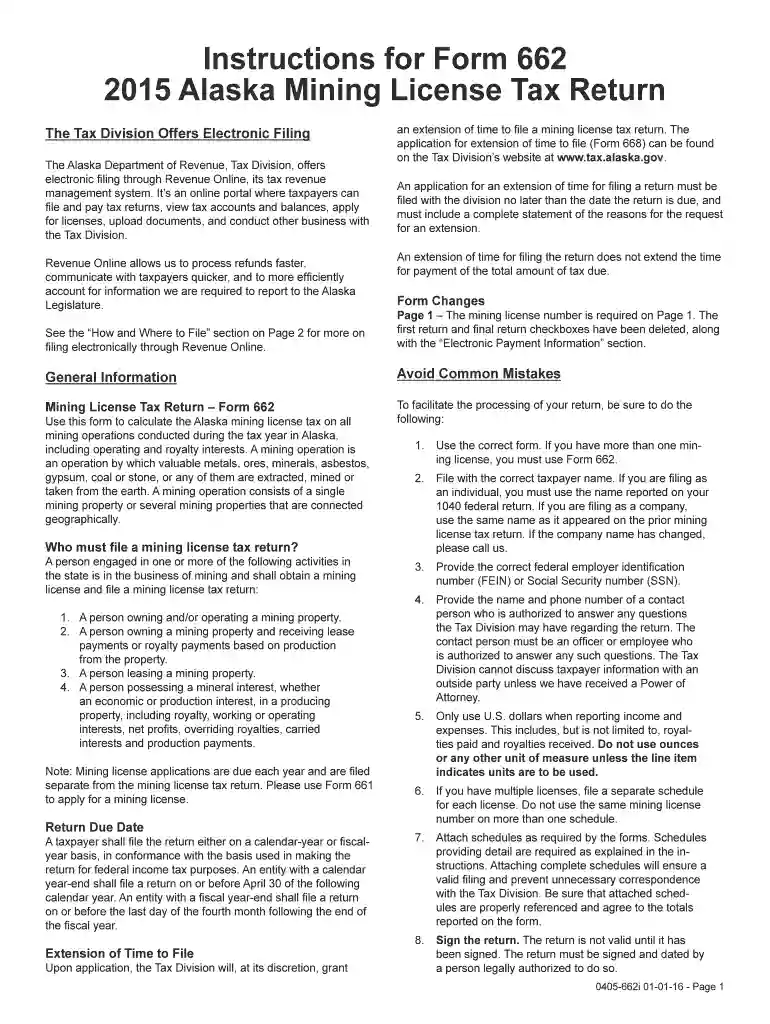
The Alaska Mining License Tax is designed to collect revenue from individuals and entities engaged in the mining business within the state. It aims to ensure that mining operations contribute to state infrastructure and services by taxing the income derived from mining activities. This tax is imposed on mining businesses generating more than $40,000 in net income. Understanding this tax's purpose helps taxpayers accurately comply with state requirements and contribute to its economy.
To acquire the Alaska Mining License Tax form, prospective filers can visit the official Revenue Online portal, which offers electronic access to all tax forms needed for compliance. Alternatively, forms can be requested by contacting the Alaska Department of Revenue directly. These options ensure that the necessary documents are readily accessible to all taxpayers wishing to stay compliant with state taxation laws.
Non-compliance with the Alaska Mining License Tax regulations can result in significant penalties. These may include fines for late filing or payment, interest on any unpaid tax amounts, and potential legal action for continued non-compliance. Accurate and prompt submission helps avoid these penalties.
Alaska imposes unique rules on mining operations due to its reliance on this sector. Any state-specific deductions, exemptions, or considerations should be evaluated to maximize compliance and efficiency. Understanding Alaska's specific requirements can furnish opportunities for lawful tax reduction and compliance assurance.
Consider a mining business operating within Alaska, earning $150,000 in net income. By referencing the rate structure in the license tax form, this business can calculate its tax due and prepare accordingly. Another example involves evaluating which deductible expenses — such as equipment costs or land use fees — directly impact taxable income, thus guiding efficient tax planning strategies.
We've got more versions of the - tax alaska form. Select the right - tax alaska version from the list and start editing it straight away!
At DocHub, your data security is our priority. We follow HIPAA, SOC2, GDPR, and other standards, so you can work on your documents with confidence.
No information is available for this page.
You must complete this form if youre a semiweekly schedule depositor or became one because your accumulated tax liability during any month was.
Taxes levied by a city within a borough must be collected by a borough and returned in full to the city levying the tax. This provision applies to home rule and


