







Definition & Meaning
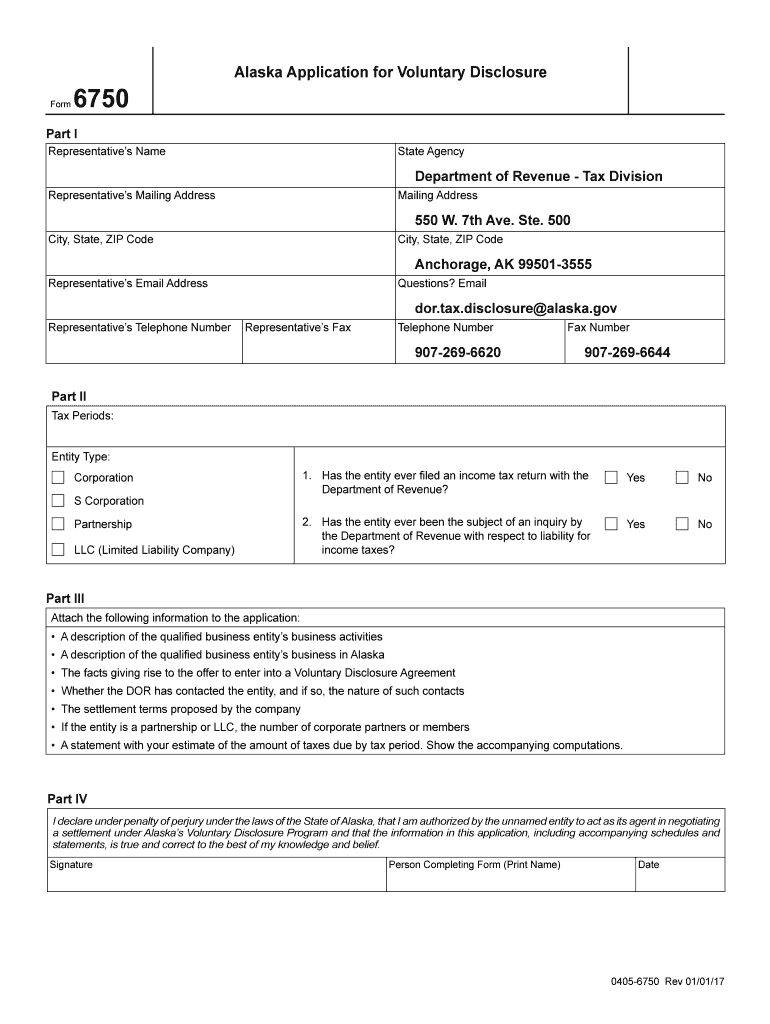
The Alaska Voluntary Disclosure Program is designed for entities that wish to disclose tax liabilities to the Alaska Department of Revenue. This program provides a mechanism for taxpayers to report previously unreported tax obligations voluntarily. By participating in this program, entities can potentially mitigate penalties and interest that may otherwise apply to undisclosed tax liabilities. This can include various tax obligations, such as corporate income tax, sales tax, or other applicable state taxes. The idea is to encourage compliance by offering a structured path to rectify past omissions.
How to Use the Alaska Voluntary Disclosure Program
Entities interested in using the Alaska Voluntary Disclosure Program should first review their financial records to identify any unreported tax liabilities. The next step is to complete the application form, which involves providing detailed information about the entity, including representative information, tax periods, and the nature of the business activities. It's crucial to ensure that all parts of the form are filled out accurately and truthfully, as information is submitted under penalty of perjury. Once completed, the form should be submitted to the Department of Revenue for review.
How to Obtain the Alaska Voluntary Disclosure Form
The Alaska Voluntary Disclosure form can typically be obtained directly from the Alaska Department of Revenue's official website or by contacting their office. Businesses may also be able to acquire the form from tax professionals who are familiar with Alaska's tax regulations. It's essential to use the most current version of the form to ensure compliance with any recent updates to the program or tax law.
Steps to Complete the Alaska Voluntary Disclosure Form
-
Gather Necessary Information: Collect all relevant financial data and documentation that are required to complete the disclosure, such as tax history, business operations, and financial statements.
-
Download the Form: Access the latest version of the form from the Department of Revenue's website.
-
Fill Out Entity Details: Provide information about the business, including name, address, and type of legal entity.
-
Detail Tax Periods and Obligations: Clearly state the tax periods in question and outline the specific tax obligations being disclosed.
-
Attach Required Documentation: Include any documents that support the disclosure, such as tax calculations or communications with tax advisors.
-
Sign and Submit: Ensure all declarations are signed by authorized representatives and submit the form according to the Department of Revenue's instructions.
Key Elements of the Alaska Voluntary Disclosure Form
The form is divided into several key sections that require detailed input:
-
Entity Information: Details about the business, including legal structure and contact information.
-
Representative Information: If applicable, details of the individual authorized to act on behalf of the business during the disclosure process.
-
Tax Periods: Specification of the time frames for which taxes are being disclosed.
-
Business Activities: A comprehensive description of the business operations, which is necessary to determine tax obligations.
-
Required Attachments: Any additional documents that provide further context or support claims made within the disclosure form.
Legal Use of the Alaska Voluntary Disclosure Form
Use of the Alaska Voluntary Disclosure form is strictly regulated to ensure compliance with state tax laws. The submission must be complete and truthful, adhering to declarations made under penalty of perjury. It is designed to protect both the state and the entity from potential disputes by providing a legally recognized framework for voluntary disclosure of tax liabilities.
Required Documents for Submission
When submitting the Alaska Voluntary Disclosure, certain documents are typically required to support the application:
-
Past Financial Statements: Demonstrate the financial operations and tax obligations of the business.
-
Tax Calculations: Detailed breakdowns of how the disclosed liabilities were determined.
-
Representative Authorization: Legal documents proving that the signatory has the authority to act on behalf of the entity.
-
Supporting Attachments: Any additional materials that provide clarity or evidence related to the disclosure.
Penalties for Non-Compliance
Failing to disclose tax liabilities without participating in the Alaska Voluntary Disclosure Program can result in significant penalties. These might include interest on unpaid taxes, fines, and potentially more severe legal consequences. The program aims to reduce or eliminate these penalties for entities that come forward voluntarily, fostering a culture of compliance and transparency with the Department of Revenue.
Business Entity Types Benefiting from the Alaska Voluntary Disclosure
Various business structures, including Limited Liability Companies (LLCs), Corporations, and Partnerships, can benefit from participating in the Alaska Voluntary Disclosure Program. Regardless of the size or nature of the business, any entity with unreported tax liabilities might find value in using this program to settle past obligations and move forward with a clean financial slate.
Application Process & Approval Time
The application process for the Alaska Voluntary Disclosure Program involves completing the relevant form and submitting it to the Department of Revenue along with all necessary documentation. Once submitted, the department reviews the disclosure and may contact the entity for additional information or clarification. The approval time can vary depending on the complexity of the disclosure and the workload of the department. Businesses should be prepared for a multi-step process, which may include negotiations or additional documentation requests from the department.




