







Definition and Purpose of the SV-130 Form
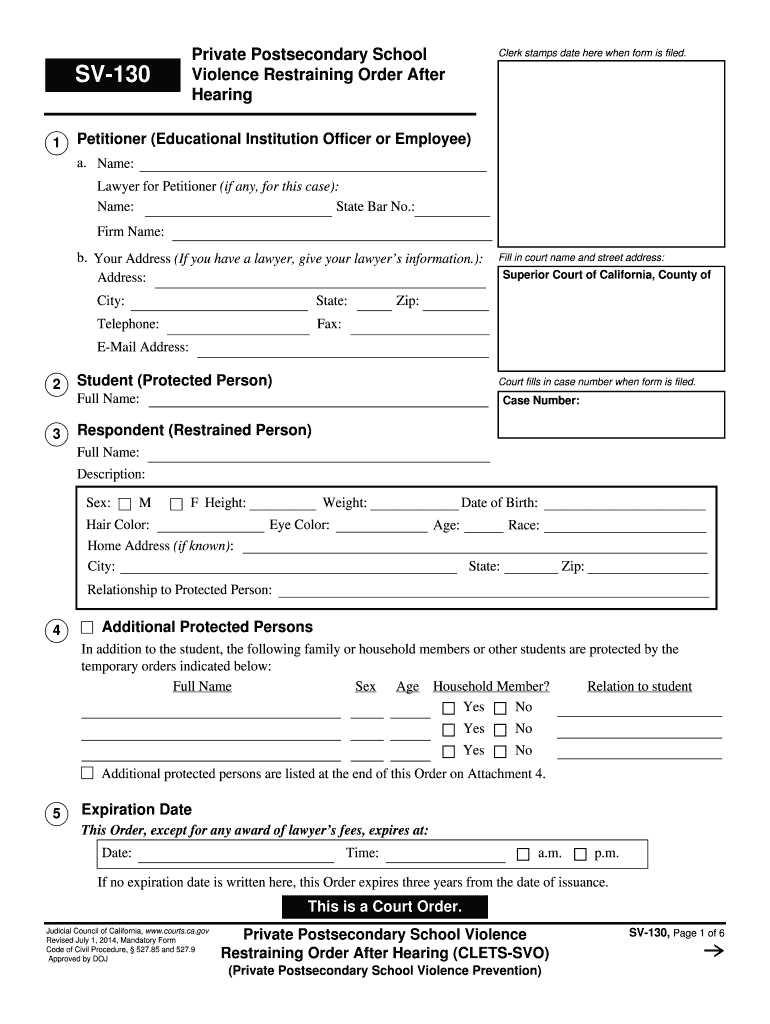
The SV-130 form, also known as the Private Postsecondary School Violence Restraining Order After Hearing, is used in the California Superior Court. It serves to protect students within private postsecondary education settings from violence or harassment. This legal document outlines the order given after a court hearing that involves a petitioner—typically an educational institution officer or employee—and a restrained person. Its primary aim is to safeguard the welfare of students, ensuring their learning environment is free from threats or acts of violence.
How to Use the SV-130 Form
To effectively utilize the SV-130 form, parties involved in a case should understand the steps to enforce the order. The form should be completed thoroughly with accurate information after a court has decided on the matter. Once completed, the document details the restrictions imposed on the restrained person, such as personal conduct limitations and stay-away provisions from the educational institution and its occupants.
Step-by-Step Instructions
-
Fill Out Personal Information: Include the names and details of the petitioner and the respondent. The petitioner is usually associated with the educational institution, while the respondent is the person required to follow the court-imposed restrictions.
-
Detail Protective Orders: Clearly specify the types of restrictions imposed on the restrained party. This may include no-contact orders, maintaining a certain distance from specific individuals or locations, and prohibiting certain behaviors.
-
Include Firearm Prohibitions: If applicable, outline any restrictions on firearm possession.
-
Summarize Court's Decision: Document the court’s ruling and the duration for which the restraining order is valid.
Obtaining the SV-130 Form
The SV-130 form can be acquired from the California Courts website or directly from a local courthouse. It is important to ensure that you are using the most recent version of the form to avoid processing delays. Legal representatives can also provide this form and offer guidance on filling it out correctly.
Key Elements of the SV-130 Form
The SV-130 form consists of several crucial components:
-
Petitioner Information: Details about the educational institution officer or employee filing for the restraining order.
-
Protected Person: Information about the student or students needing protection.
-
Restrained Person: Details of the individual subject to the court order.
-
Conduct Restrictions: Specific actions the restrained person is prohibited from engaging in.
-
Stay-Away Provisions: Requirements for the restrained person to maintain distance from particular locations or individuals.
Legal Use of the SV-130 Form
The SV-130 form is legally binding and enforceable through law enforcement in California. It compels the restrained party to adhere to the terms outlined, and violations can result in serious legal consequences. The form ensures that educational institutions have a reliable mechanism to protect their students from imminent harm.
Who Typically Uses the SV-130 Form
This form is primarily utilized by officers or employees within private postsecondary educational institutions who need legal intervention to protect students. It is also commonly used by students or their guardians seeking protection from potential threats.


Penalties for Non-Compliance with the SV-130
If the restrained person violates the terms of the SV-130 form, they may face legal penalties, including fines, arrest, and potential criminal charges. Compliance is strictly monitored to ensure the safety and well-being of the protected individuals.
Required Documents for Filing the SV-130 Form
When filing the SV-130 form, the petitioner must provide:
- Supporting Documentation: Any evidence of the respondent's threats or previous violent actions.
- Personal Identification: Proof of identity for both the petitioner and the respondent.
- Court Hearing Details: Information from the hearing where the order was granted.
Form Submission Methods
The SV-130 form can be filed online, via mail, or in-person at a courthouse. Online filing is often the most convenient, especially for those managing multiple documents through platforms like DocHub. Filing in person may offer immediate confirmation, while mail submissions typically require more time for processing.
By understanding the SV-130 form, its uses, and the implications of its enforcement, individuals and institutions can better protect themselves and their educational settings from potential threats.




