







Definition and Purpose of RT-89 Instructions
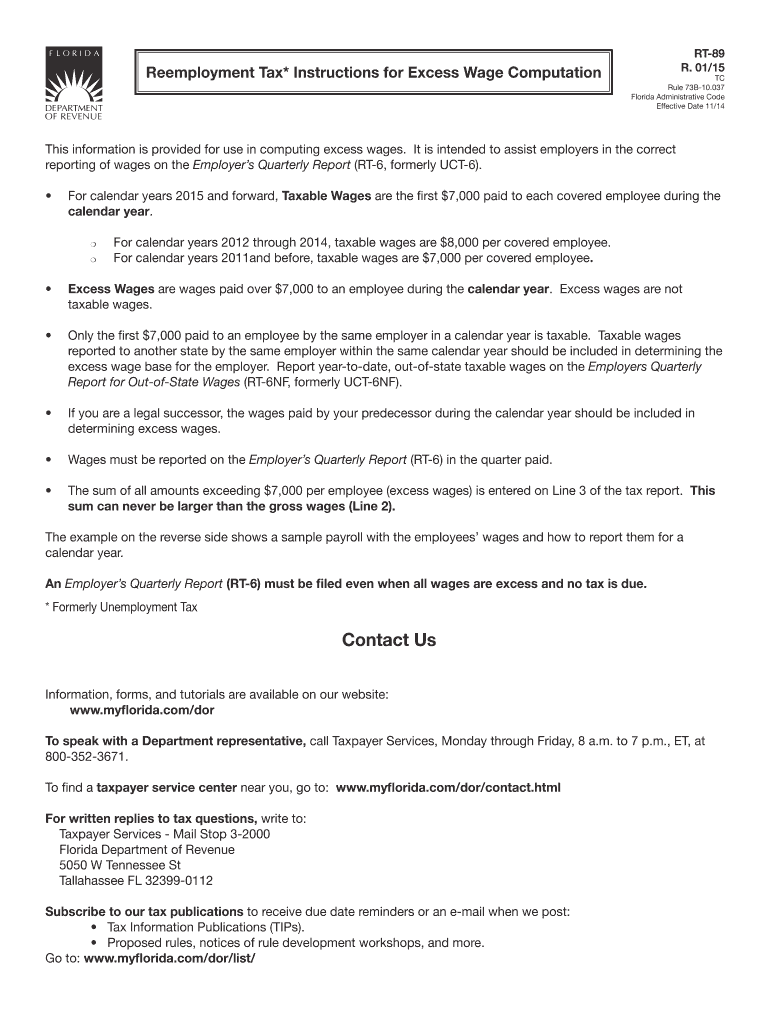
The RT-89 Reemployment Tax Instructions for Excess Wage Computation R 01 15 are primarily designed to guide employers in Florida through the process of calculating excess wages for the purpose of reemployment taxation. These instructions are critical in ensuring that employers correctly compute the part of wages paid to employees that exceed a specific threshold, which is non-taxable. By following the RT-89 instructions, employers can comply with state tax regulations, thereby avoiding potential errors in reporting and ensuring accurate tax contributions.
Understanding Excess Wages
What are Excess Wages?
Excess wages refer to the amount of an employee’s earnings that exceed the taxable wage base limit set by state laws for the purpose of reemployment taxes. In Florida, only the first $7,000 paid to an employee in a calendar year is subject to reemployment tax. Any wages beyond this threshold are considered excess and, therefore, are not taxable.
Importance of Accurate Computation
Accurately computing excess wages is crucial for compliance with state tax laws. Errors in calculation can lead to overpayment or underpayment of taxes, which can subsequently result in complications such as fines or penalties from the state tax authority.
Steps to Complete the RT-89 Instructions
-
Obtain the Taxable Wage Rate: Start by identifying the current taxable wage rate for the calendar year as specified by the Florida Department of Revenue.
-
Gather Employee Wage Data: Collect comprehensive wage data for each employee, including total wages paid throughout the year.
-
Calculate Excess Wages: Subtract the taxable wage base ($7,000) from total wages to determine excess wages.
-
Report Excess Wages on RT-6: Use the Employer’s Quarterly Report (RT-6) to accurately report excess wages, following the guidelines specified in the RT-89 instructions.
-
Review and Submit: Carefully review all calculations for errors before submission to ensure accuracy and compliance with tax laws.
Who Uses RT-89 Instructions?
Target Audience
The primary users of the RT-89 instructions are business owners and payroll professionals in Florida who are responsible for managing the payroll and tax reporting for employees. This may include small businesses, corporations, and non-profit organizations that are required to contribute to the state’s reemployment tax system.
Additional Users
Accountants and financial advisors may also use these instructions to assist their clients in optimizing payroll processes and ensuring compliance with Florida’s reemployment tax requirements.
Legal Compliance for Employers
Legal Obligations
Florida employers are legally obligated to follow the RT-89 instructions to correctly calculate and report excess wages as part of their reemployment tax submissions. Failure to do so can result in penalties, audits, and increased scrutiny from the Department of Revenue.
Penalties for Non-Compliance
Employers who fail to accurately compute and report excess wages may face financial penalties. These can include fines, interest on unpaid taxes, and potential legal action if misreporting is found to be intentional.
Required Documents for Submission
To accurately complete the RT-89 instructions and report to the state, employers need specific documentation:
- Employee payroll records showing detailed wage information.
- Previous RT-6 forms for reference, especially to verify correct cumulative wages paid.
- Any official correspondence from the Florida Department of Revenue regarding changes to tax rates or wage bases.
Important Dates and Filing Deadlines
Quarterly Reporting
Employers must ensure that their RT-6 forms, reflecting the computations outlined in the RT-89, are filed quarterly. The specific deadlines to anticipate are as follows:
- April 30 for the first quarter
- July 31 for the second quarter
- October 31 for the third quarter
- January 31 for the fourth quarter of the previous year
Timely Compliance
Adhering to these deadlines is essential for avoiding penalties. Late submissions may incur fines and additional interest on overdue taxes.
Taxpayer Scenarios and Examples

Scenario 1: Small Business with Seasonal Employees
A small retail business hires several seasonal workers during the holiday season. Comprehensively applying the RT-89 instructions ensures that the employer only pays taxes on the first $7,000 of each seasonal employee's wages, leading to precise tax filings.
Scenario 2: Corporation with High-Earning Executives
A corporation with high-earning executives uses RT-89 instructions to properly calculate excess wages for employees who easily surpass the taxable wage threshold, thereby optimizing their reported reemployment tax obligations.
State-Specific Guidance and Florida-Specific Rules
Florida Reemployment Tax Specifics
The state of Florida imposes specific rules for the reemployment tax, including the taxable wage base and the schedule for reporting. The RT-89 instructions are tailored to these unique requirements, affirming that employers meet the state’s exacting standards for tax computation.
Variations from Other States
While the RT-89 instructions are specific to Florida, employers operating in multiple states need to be aware of differences in wage base limits and tax rates, necessitating a tailored approach to each jurisdiction’s tax rules.




