
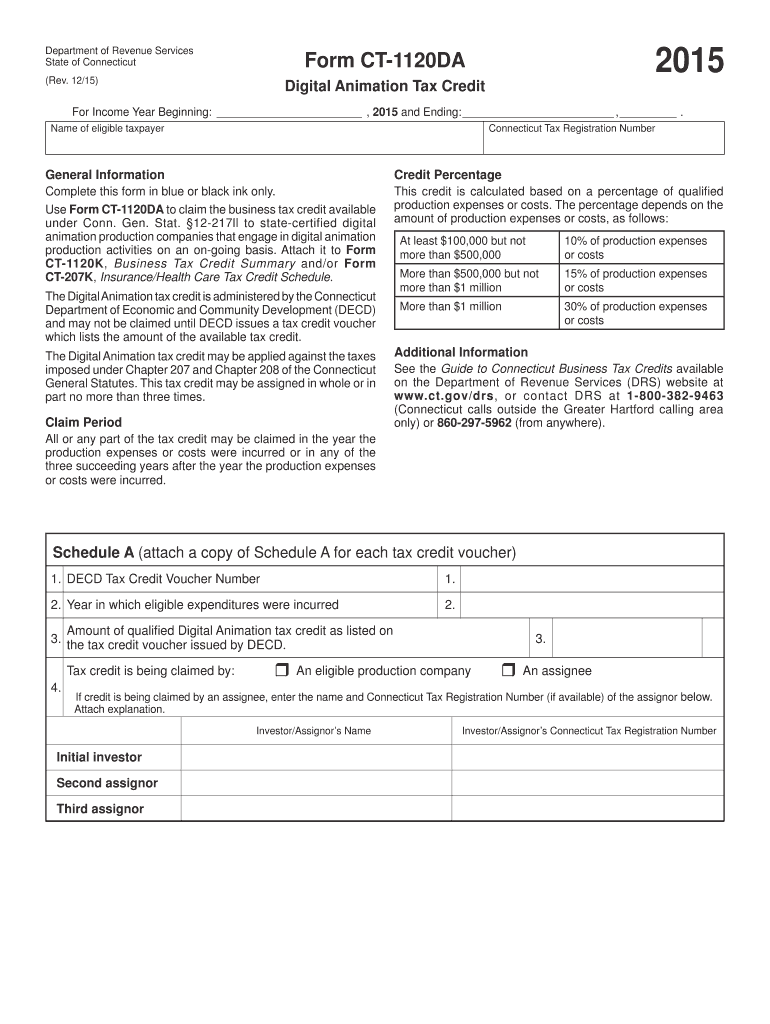







Definition and Purpose of the 2015 CT-1120DA Form
The 2015 CT-1120DA form is a specialized document issued by the Connecticut Department of Revenue Services. It is designed specifically for state-certified digital animation production companies to claim a tax credit based on their qualified production expenses. This opportunity allows such companies to offset a portion of their tax liability, offering an incentive for investing in the digital animation sector within Connecticut.
Instructions for Completing the 2015 CT-1120DA Form
-
Gather Required Information: Begin by collecting all necessary financial data related to your production expenses. This includes receipts, invoices, and other relevant documents that substantiate your claims.
-
Fill Out the Form in Black or Blue Ink: The form must be completed legibly in black or blue ink to ensure it is processed correctly. Digital submissions, where applicable, should follow the given guidelines for electronic completion.
-
Detail Production Expenses: Clearly outline and categorize all qualified production expenses. It's crucial to distinguish these expenses as they directly impact the tax credit percentage that can be claimed.
-
Calculate the Tax Credit Percentage: Use the form instructions to compute the eligible tax credit. The percentage can range from 10% to 30% based on the total qualified production expenses incurred.
-
Submit As Required: Once completed, ensure that the form is submitted along with any additional documents required as per the form's guidelines.
Obtaining the 2015 CT-1120DA Form
To obtain the 2015 CT-1120DA form, digital animation companies can access it directly from the Connecticut Department of Revenue Services website. Alternatively, physical copies can be requested through the mail by contacting the department's customer service.
Key Elements of the 2015 CT-1120DA Form
-
Eligibility Criteria: This form is exclusively for digital animation companies that meet certification requirements as outlined by the state.
-
Qualified Expenses: Expenses that qualify must directly relate to digital animation production. Detailed record-keeping is essential for substantiating these claims.
-
Computation Instructions: Clearly laid out instructions guide users through calculating the precise tax credit based on their reported expenses.
Who Typically Uses the 2015 CT-1120DA Form
Primarily, this form is utilized by businesses within the digital animation industry in Connecticut. These organizations typically include large studios, independent producers, and any entity involved in producing digital animation content that meets the state’s criteria for tax credits.

State-Specific Regulations for the 2015 CT-1120DA Form
Connecticut state laws govern the use and processing of the CT-1120DA form. Companies should be aware that these regulations dictate what qualifies as eligible expenses and the exact procedure for claiming credits. It’s advisable for users to thoroughly review these rules or consult with a tax professional.
Examples of Using the 2015 CT-1120DA Form
Consider a digital animation studio that has incurred $500,000 in production expenses within the qualifying period. By utilizing the CT-1120DA form, the studio can apply for a tax credit that ranges from $50,000 to $150,000, depending on the specific percentage that applies to their level of expenditure.
Filing Deadlines and Submission Methods
Filing deadlines for the 2015 CT-1120DA form coincide with other corporate tax deadlines in Connecticut. Companies can submit the form electronically through the state’s official portal, or via mail if required to accompany additional physical documents. Timeliness is crucial to avoid penalties and ensure credit application is processed within the tax year.
Legal Context and Compliance
Adherence to the rules set forth by the Connecticut Department of Revenue Services is paramount. Misreporting, incorrect categorization of expenses, or late submissions can result in denial of tax credits or legal penalties. Maintaining detailed records and compliance with all form instructions is essential for legal and financial protection.
Required Documentation for Submission
When submitting the 2015 CT-1120DA form, companies need to attach supporting documentation that verifies all claimed expenses. This includes detailed financial records, receipts, and any certification forms proving state eligibility. These documents ensure the accuracy and legitimacy of the claimed tax credit.




