
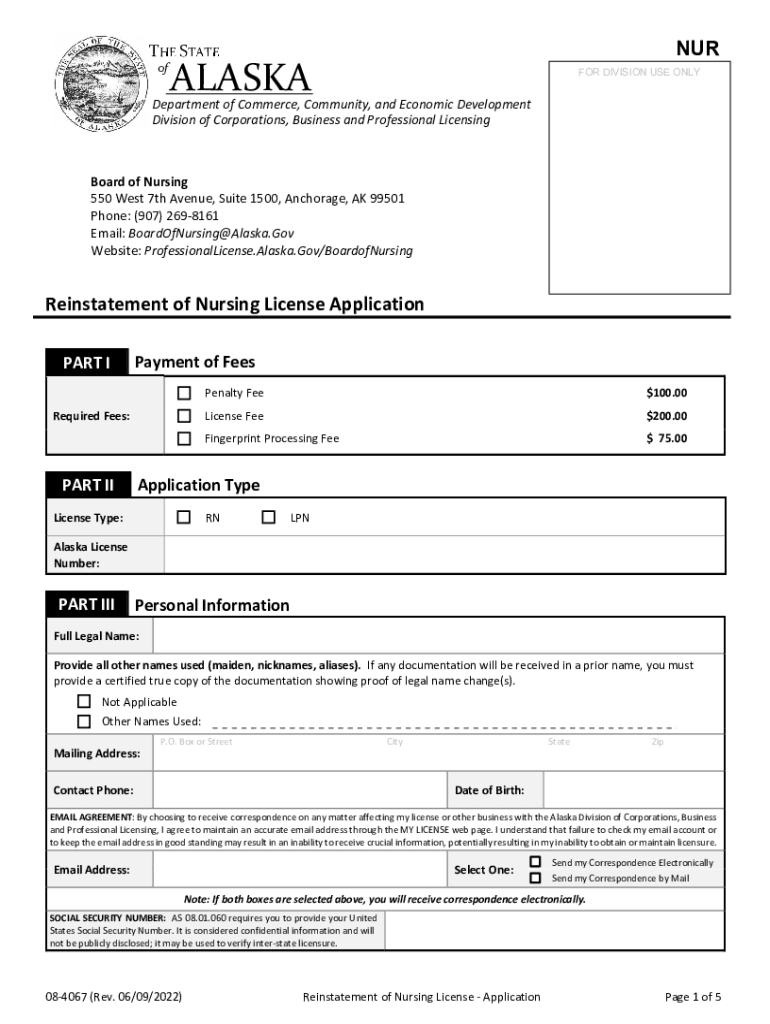







Definition & Purpose of the Alaska Nursing License Application
The Alaska nursing license application is a formal process used by nursing professionals to obtain the necessary credentials to practice nursing within the state. This application serves to verify an individual's qualifications, including education and training, to ensure they meet the standards set by the Alaska Board of Nursing. The application is part of a regulatory process designed to safeguard public health by ensuring only qualified individuals are licensed to provide nursing care.
The form requires detailed information about the applicant's educational background, professional experience, and any licenses previously held in other states. Applicants are also required to disclose any disciplinary actions or legal issues related to their professional practice. The goal of this application is not only to verify a nurse's qualifications but also to uphold the integrity of the nursing profession in Alaska.
Steps to Complete the Alaska Nursing License Application
Completing the Alaska nursing license application requires several key steps to ensure that all necessary information is provided and verified:
-
Gather Required Documentation: Applicants must collect documents such as transcripts from nursing schools, proof of national examination results, and verifications of any other licenses held.
-
Complete the Background Check: Applicants must undergo a fingerprint-based background check. This includes submitting fingerprints to the appropriate authorities as part of the application process.
-
Fill Out the Application Form: The form requires personal information, educational and employment history, and details of any nursing licenses held in other states.
-
Submit Application Fees: A non-refundable fee must accompany the application. This fee covers the cost of processing and verification.
-
Review and Submit the Form: Before submission, ensure that every section of the form has been completed accurately to avoid delays in processing.
-
Await Verification and Approval: After submission, the application undergoes a verification process. This may include confirmation of credentials and checking for any disciplinary actions.
Required Documents for Application
Various documents are required to support the information provided in the application. These documents help verify an applicant's qualifications and are necessary for the application to be considered complete:
- Transcripts: Official transcripts from the institution where the applicant completed their nursing program.
- Examination Results: Proof of passing a national nursing examination, such as the NCLEX-RN.
- License Verification: If the applicant holds or has held a nursing license from another state, verification of these licenses must be provided.
- Identification: A government-issued identification document is required to confirm the applicant's identity.
Each document must be submitted according to the requirements specified in the application instructions, often directly from the issuing institution to ensure authenticity.
Important Terms Related to the Alaska Nursing Application
Several key terms are crucial for understanding the Alaska nursing license application process:
- NCLEX-RN: The National Council Licensure Examination for Registered Nurses, a standardized exam that all nursing candidates must pass to obtain licensure.
- Endorsement: The process by which a nurse licensed in another state can obtain an Alaska nursing license without retaking the NCLEX, provided they meet Alaska's requirements.
- Temporary Permit: A short-term permit that allows nurses to practice in Alaska while their license application is being processed.
Familiarity with these terms can help applicants navigate the licensing process more efficiently.
Eligibility Criteria for the Alaska Nursing License
The eligibility criteria for obtaining a nursing license in Alaska are designed to ensure that applicants are competent and fit to practice. To be eligible, applicants must:
- Complete an Accredited Nursing Program: Candidates must graduate from a nursing program that is approved by the Alaska Board of Nursing or equivalent.
- Pass the NCLEX-RN Exam: All candidates must pass the NCLEX-RN to demonstrate their competency in the essential aspects of nursing practice.
- Submit to a Background Check: A clear criminal background check is necessary; any findings of concern must be disclosed and may affect eligibility.
Meeting these criteria is essential for the successful processing of an application.


Application Process & Approval Time
The Alaska nursing license application process is multi-faceted and requires careful attention to detail to ensure timely approval:
- Application Submission: Submit the completed form along with the required documentation and fees.
- Processing Time: The processing time can vary but typically takes several weeks. Delays may occur if additional information is requested or if any part of the application is incomplete.
- Final Decision: Once processed, the Board of Nursing will issue a decision regarding licensure. If approved, applicants will receive their license and can begin practicing.
Timeliness and accuracy in submitting applications and documentation are critical to prevent unnecessary delays.
State-Specific Rules for Nursing Licensure in Alaska
Alaska has specific rules regarding nursing licensure that applicants must be aware of:
- Continuing Competency: Alaska requires proof of continuing education or professional activities for license renewal, ensuring ongoing professional development.
- Practice Hours Requirement: Nurses must have practiced a minimum number of hours within specified periods to maintain active licensure.
- Remote Practice: Rules concerning telehealth and remote nursing practice may apply, given Alaska's unique geographic challenges, promoting accessible healthcare delivery.
Understanding these state-specific regulations is vital for those seeking to practice nursing in Alaska.
Legal Use and Implications of the Alaska Nursing License
Holding a valid Alaska nursing license carries both privileges and responsibilities:
- Scope of Practice: The license defines the legal scope of practice, outlining what activities a nurse can perform.
- Disciplinary Actions: Violations of nursing standards can result in disciplinary actions, such as fines, suspension, or revocation of the license.
- Liability and Insurance: Nurses should be aware of legal liabilities and consider maintaining professional liability insurance to protect against potential claims.
Adhering to the legal requirements and standards upheld by the Alaska Board of Nursing preserves licensure status and professional reputation.




