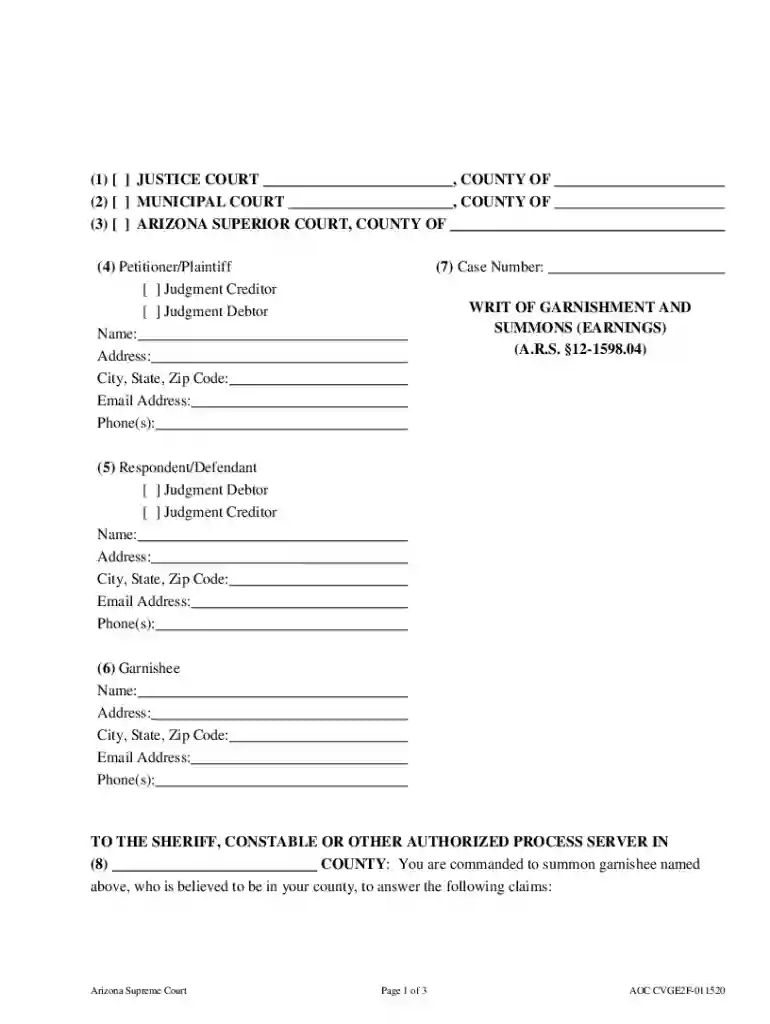
Definition and Purpose of Wage Garnishment Form 2
The Wage Garnishment Form 2 (Word) is a legal document used to enforce the collection of a debt through direct deductions from the debtor's earnings. Typically issued by courts, this form mandates an employer to withhold a portion of an employee's wages to repay a creditor as part of a garnishment order. Its primary function is to ensure creditors receive payments efficiently while providing legal protection to all parties involved — the creditor, debtor, and garnishee (employer).
How to Use the Wage Garnishment Form 2
To use the Wage Garnishment Form 2 effectively, the involved parties must follow certain steps:
- Employer Notification: The garnishee (employer) receives the form, which outlines the employer's obligations for wage deductions.
- Calculation of Deductions: The form provides guidelines on how to calculate the appropriate wage portion for garnishment, ensuring compliance with legal limits such as those established under the Consumer Credit Protection Act.
- Deduction Implementation: Employers should adjust their payroll systems to initiate the wage withholding process as specified in the form.
- Submission of Payments: The deducted amount is then forwarded to the creditor or the court, following the timelines and instructions detailed in the form.
Obtaining the Wage Garnishment Form 2
Wage Garnishment Form 2 can usually be obtained from:
- Legal Authorities: Courts or other legal institutions issuing the garnishment order typically provide this form.
- Online Databases: Many states offer downloadable versions through their official websites to ensure easy access for employers and legal professionals.
- Direct Request: In some cases, creditors may supply the form directly to employers upon initiating a garnishment claim.
Steps to Complete the Wage Garnishment Form 2
Completing the Wage Garnishment Form 2 involves several important steps:
- Review Legal Orders: Start by thoroughly reviewing the garnishment order and pertinent legal documents to understand the debtor’s obligations.
- Employer Identification: Fill in the employer’s details, including name, address, and contact information.
- Debtor Information: Include the debtor's details, such as name, Social Security number, and employee ID, to ensure accurate processing.
- Payment Instructions: Follow guidelines for calculating and withholding appropriate wage amounts as indicated on the form.
- Submission and Record Keeping: Ensure the form is signed and submitted as required, and maintain a copy for future reference and compliance confirmation.
Key Elements of the Wage Garnishment Form 2
Understanding the essential components of the form ensures proper compliance and adherence to legal mandates:
- Identification Details: Includes sections for the parties involved — creditor, debtor, and employer.
- Deduction Formula: Specific instructions on determining the garnishable portion of wages.
- Payment Schedule: States the frequency and method for forwarding withheld funds to the creditor.
- Legal Compliance Section: Outlines the legal obligations and limits, such as maximum allowable garnishment percentages.
Legally Binding Use of the Form
This form is instrumental in executing lawful wage garnishment actions:
- Court Authority: The document serves as enforceable proof of a court order, requiring employers to comply strictly.
- Compliance Assurance: Employers must adhere to the form to avoid potential penalties for non-compliance, which could include fines or further legal action.
- Rights and Obligations: Clearly outlines the rights of both debtor and creditor, ensuring the debtor’s income is garnished within lawful limits.
Examples of Using the Wage Garnishment Form 2 in Practice
Illustrative scenarios demonstrate the utility of the form:
- Consumer Debt: Used when a creditor wins a judgment against a debtor for unpaid credit card debt.
- Child Support: Often employed to enforce child support orders, ensuring timely payments through wage withholding by employers.
- Tax Liens: Government authorities may use the form to recover unpaid taxes by mandating employers to garnish wages.
State-Specific Rules for Wage Garnishment Form 2
The application and regulations surrounding wage garnishment can vary significantly across states:
- Limits on Garnishable Amounts: Some states impose stricter limits than federal guidelines on the percentage of wages that can be garnished.
- Procedure Variations: Variations may exist in how forms must be submitted or reviewed, such as additional documentation requirements.
- State Specific Forms: Certain jurisdictions may require additional forms or modifications to the Wage Garnishment Form 2 to comply with local laws.